

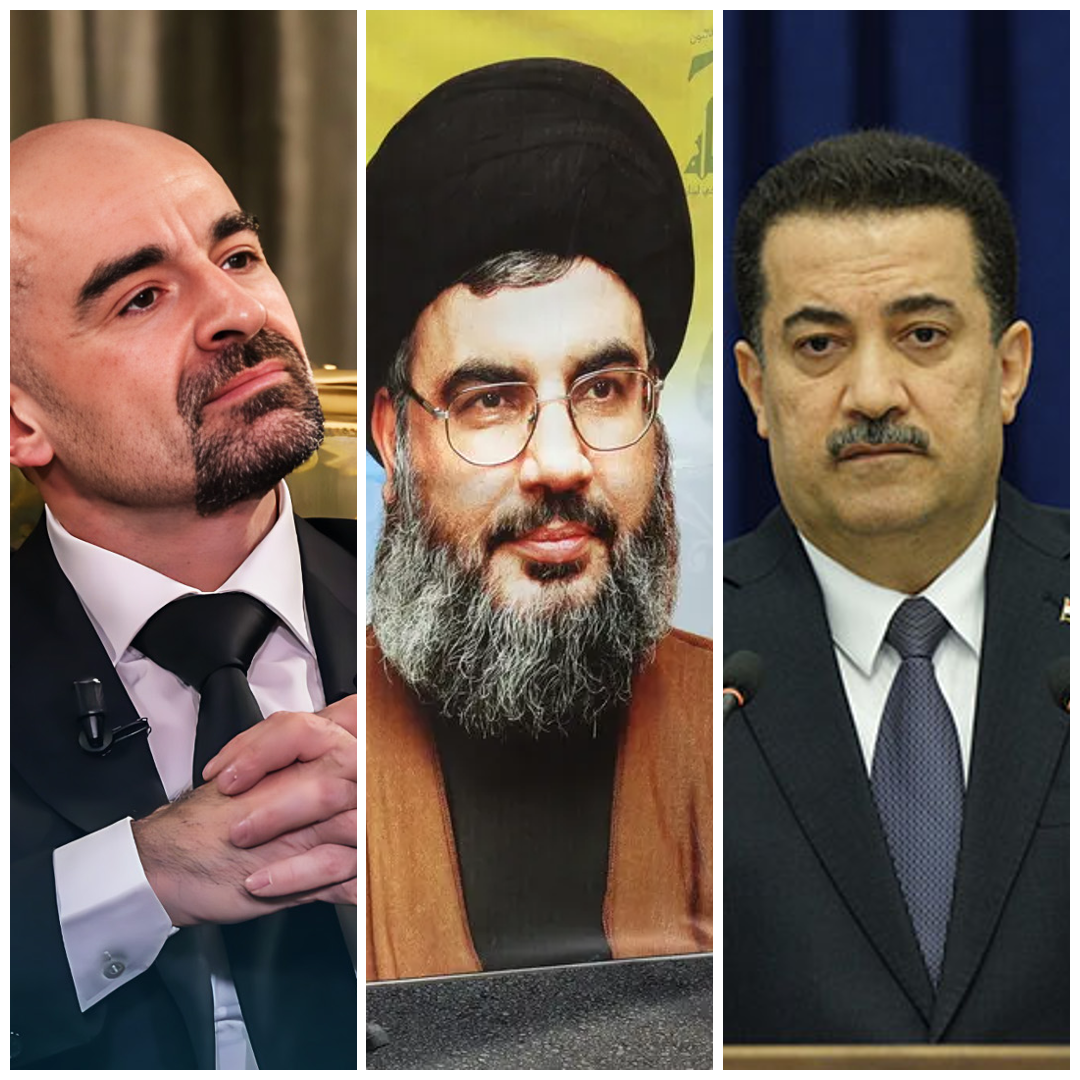
The death of Hassan Nasrallah, the Secretary-General of Hezbollah, in an Israeli airstrike has ignited widespread condemnation across Iraq and the Kurdistan Region. Iraqi Prime Minister Mohammed Shia al-Sudani denounced the act as a crime, while Bafel Jalal Talabani, President of the Patriotic Union of Kurdistan (PUK), expressed deep sorrow and called for international intervention to prevent further violence. This event has heightened tensions, raising fears of a broader conflict in the region.
Hezbollah’s Official Statement
Hezbollah has officially confirmed the death of its Secretary General, Sayyed Hassan Nasrallah, following an Israeli airstrike on Beirut’s southern suburb. The group issued a statement on Saturday, referring to Nasrallah as a “great martyr” and highlighting his nearly 30 years of leadership. The statement described Nasrallah as a “heroic, brave, wise, and faithful leader,” noting his significant contributions to events such as the liberation of Lebanon in 2000 and the conflict with Israel in 2006. It emphasized his commitment to supporting Palestine and the Palestinian people.
In light of his death, Hezbollah extended condolences to Iranian Supreme Leader Ayatollah Ali Khamenei, Nasrallah’s family, and the broader “nation of resistance.” The statement congratulated Nasrallah on what it termed his attainment of martyrdom and the “highest ranks of faith.” Hezbollah reaffirmed its commitment to continuing Nasrallah’s legacy, pledging to maintain resistance against Israel and support Gaza and Lebanon. The leadership emphasized the importance of remaining loyal to Nasrallah’s vision during these tumultuous times.
Protests Erupt in Iraq
Following the news of Nasrallah’s death, some residents in Baghdad took to the streets on Friday, holding demonstrations and raising images of the Hezbollah leader. Protesters intended to march toward the US Embassy in the Green Zone, indicating the unrest brewing in response to the airstrike. Anticipating potential unrest, Iraqi security forces were deployed around the Green Zone to prevent protesters from entering the highly secure area, with one of the main gates leading to the Green Zone in central Baghdad being closed.
Meanwhile, the United States issued security directives to its embassy in Iraq, instructing personnel to remain on high alert due to the potential for escalating tensions. The protests arose after reports indicated that an Israeli airstrike on Friday evening targeted a meeting of Hezbollah leaders in Lebanon, resulting in Nasrallah’s death alongside several high-ranking commanders. The Israeli military has intensified airstrikes across southern and eastern Lebanon since Monday, leading to over 500 deaths and nearly 1,700 injuries, according to local reports. As a result, Baghdad authorities are closely monitoring the situation for further developments.
Iraqi Government Condemnation
Iraqi Prime Minister Mohammed Shia al-Sudani condemned the Israeli killing of Hezbollah Secretary-General Hassan Nasrallah, labeling it a “crime” and a “shameful attack.” He referred to Nasrallah as “a martyr on the path of the righteous” and noted that “in a new heinous act of aggression, the Zionist entity has crossed all red lines.” Al-Sudani emphasized that Nasrallah followed in the footsteps of previous martyrs who fought against “the oppressive occupation,” reinforcing the notion of martyrdom within the broader context of resistance.
The Prime Minister asserted that the attack in Dahieh, Beirut, demonstrated “a reckless desire to expand the conflict at the expense of the region’s security and stability.” He stressed that ongoing struggles, including “the just Palestinian cause” and Lebanon’s confrontation with Israeli aggression, would ultimately lead to victory for the people. Al-Sudani called on international organizations, the United Nations Security Council, and regional powers to “take decisive action” to prevent further aggression and halt the “ethnic genocide of the Palestinian people,” which has escalated since October of the previous year.
He highlighted the need to address the recent attacks that have led to the deaths of countless innocent Lebanese civilians, questioning whose interests such violence truly serves. Reaffirming Iraq’s position, Al-Sudani expressed support for both the Palestinian and Lebanese peoples, grounded in international legitimacy, humanitarian principles, and the moral obligation to defend those resisting oppression. His statement concluded with a tribute to Nasrallah, saying, “Allah’s mercy and peace upon the martyr Sayyed Hassan Nasrallah. Glory and honor to all the martyrs of Lebanon, Palestine, and the righteous confrontation against aggression and oppression.”
Patriotic Union of Kurdistan (PUK)’s Response
In a statement released following Nasrallah’s assassination, Bafel Jalal Talabani, President of the Patriotic Union of Kurdistan (PUK), expressed deep sorrow over the loss and extended condolences to the late leader’s family, the Lebanese people, Muslims worldwide, and Hezbollah members. “With great sorrow and pain, we received the news of the martyrdom of His Eminence Sayyed Hassan Nasrallah, Secretary-General of the Lebanese Hezbollah,” Talabani remarked in his statement, emphasizing the significance of Nasrallah’s role and lamenting the loss as a major blow to Lebanon and the broader region.
Talabani called on the international community to fulfill its legal and humanitarian obligations to halt ongoing violence in Palestine, Lebanon, and the region. He urged all parties involved to exercise maximum self-restraint to avoid escalating tensions into a full-scale war. “We condemn these acts and crimes committed by Israel against civilians and the assassination of leaders,” he stated, sharply criticizing Israel’s actions in the ongoing conflict. He prayed for mercy for the martyrs and healing for the wounded, invoking the phrase, “To God we belong and to Him we shall return.” Talabani’s statement underscores the heightened tensions across the region and the fears of escalation following recent acts of violence and assassinations.
The Legacy of Hassan Nasrallah
Hassan Nasrallah, born in 1960 in East Beirut, was a figure of immense influence in Lebanon and across the Middle East. He became the Secretary-General of Hezbollah in 1992, following the assassination of his predecessor, Abbas al-Musawi, by Israeli forces. Under Nasrallah’s leadership, Hezbollah transformed from a relatively small militia into a powerful political and military force in Lebanon.
Nasrallah’s rise began early in his life; he was deeply religious and politically aware, often walking long distances to purchase books on Islam. His admiration for the Shia scholar Musa al-Sadr, who founded the Amal Movement in 1974, significantly influenced his political and ideological development. Initially, he joined Amal but later broke away to form Hezbollah in 1982, in response to Israel’s invasion of Lebanon.
Hezbollah, under Nasrallah’s leadership, became known for its staunch opposition to Israel. The group’s ideology, heavily influenced by Iran, positioned it as a defender of Lebanon’s Shia community and a key player in the broader struggle against Israel. Hezbollah’s military wing carried out numerous operations against Israeli forces, culminating in the withdrawal of Israeli troops from southern Lebanon in 2000.
Nasrallah’s leadership was further marked by the 2006 war with Israel, which solidified his status as a hero among many in Lebanon and the broader Arab world. Despite the destruction caused by the conflict, Nasrallah was seen as having stood up to one of the most powerful militaries globally, earning Hezbollah widespread support. However, his reputation began to wane in the Arab world after Hezbollah’s involvement in the Syrian Civil War. The group’s decision to support Syrian President Bashar al-Assad, an ally of Iran, alienated many Sunni Muslims who had previously supported Hezbollah’s resistance against Israel.
Despite controversies, Nasrallah remained a revered figure among Hezbollah’s supporters, particularly within Lebanon’s Shia community. His speeches, often blending religious and political rhetoric, were highly influential and helped to maintain his image as a humble and dedicated leader. Known for his simple lifestyle, Nasrallah reportedly slept on a foam mattress and spoke in the colloquial Arabic of the Lebanese streets, endearing him to many.
Escalating Violence and Regional Implications
The recent Israeli airstrikes on Lebanon have resulted in a staggering death toll. Since September 23, Israeli attacks have killed 783 individuals and injured approximately 2,312, according to official Lebanese sources. The total death toll since confrontations between Israel and Hezbollah began last October has risen to 1,622, with over 5,549 injuries reported. The violence has displaced nearly 98,800 people and has been described as Israel’s most intense assault on Lebanon in the past year.
In retaliation, Hezbollah has launched hundreds of rockets at Israeli targets, including the Mossad headquarters in Tel Aviv. The international community remains deeply concerned about the potential for these strikes to escalate the Gaza conflict into a broader regional war. As tensions rise, the consequences of Nasrallah’s death could reverberate throughout the Middle East, affecting the delicate balance of power in the region and prompting calls for restraint and dialogue among involved parties.
The death of Hassan Nasrallah has sent shockwaves through Iraq, the Kurdistan Region, and the broader Middle East, resulting in widespread condemnation and protests. Leaders from Iraq and the PUK have voiced their grievances against Israeli aggression, emphasizing the need for international intervention to address ongoing violence. As the situation unfolds, the potential for further escalation looms large, prompting urgent calls for peace and stability in a region long plagued by conflict.