
For the past week, our markets, streets, trees, lampposts, and walls have been alive with color. Everywhere you look—on walls, in village courtyards, throughout neighborhoods, on tall buildings, playgrounds, parks, and other public spaces—there’s a burst of color, like the “four seasons,” filled with the familiar hues of political campaigns. Posters, flyers, and advertisements compete for attention.
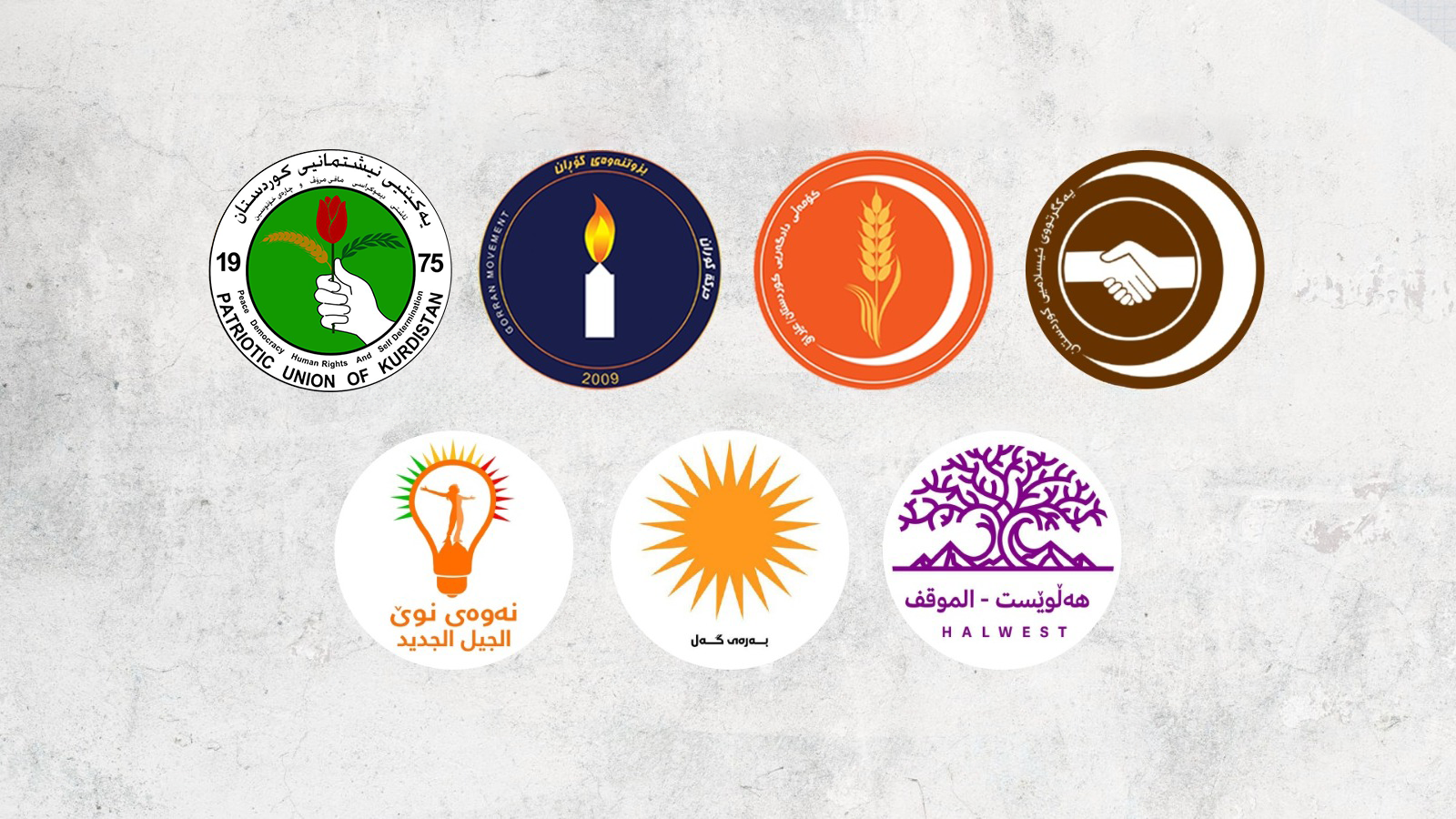
This campaign is for the long-delayed Kurdistan parliamentary elections, originally scheduled for 2022. Preparations now suggest that the elections will take place on October 20. Alongside 15 parties, lists, and coalitions, dozens of independent candidates have also entered the race, bringing the total number of candidates to 1,190.
This year’s Kurdistan parliamentary elections in 2024 (and I sincerely hope they will not be the last!) are taking place under entirely different political, security, economic, and even cultural circumstances. The region, along with Iraq and neighboring countries, faces significant threats, with the flames of conflict growing ever closer to our borders—if not already touching the hearts of our cities. Given this, while we celebrate advances in science, technology, and artificial intelligence, it is equally crucial that we work to safeguard Kurdistan from the perils of cyber warfare and the rising threat of smart drones.
There are notable differences in this year’s election campaign. Most of these changes are positive, though some may be seen as unfavorable. However, regardless of whether the elections are held on time, this campaign itself has been distinct, captivating, and powerful. It is a clear sign of the increasing level of awareness in our society.
This election is the primary driver behind the campaign, influencing the legal framework, its execution, and the composition of the future parliament. The number of seats in the four provinces has been reduced, with the total number of seats in the Kurdistan parliament now limited to 100 instead of 111. Above all, there is general optimism for cleaner elections than in the past, as the Iraqi Higher Election Commission (IHEC) will conduct and monitor the process with the oversight of international organizations. This has invigorated the parties’ campaigns, evident in their messages, discourses, and agendas.
Campaign for Parliamentary Election in Erbil Province
If we examine the campaign for the 2024 Kurdistan parliamentary elections in Erbil province, which will receive 36 percent of the seats in the Kurdistan parliament, we notice a significant difference. For the first time in Erbil, the ruling forces have insisted on removing the leader of a list who was previously a journalist (Sherwan Sherwani, leader of the Halwest List [National Stance Movement], No. 161). This reflects the evolving dynamics of the election.
Moreover, for the first time in Erbil, three advertising videos from the PUK list have become trending topics, dominating conversations in the market and society. These videos have captured the attention of the city’s residents, inspiring songs sung in the streets, neighborhoods, cafes, and public places. Each video campaigning for Shalaw Kosrat Rasul (leader of the PUK list in Erbil, No. 129) serves as a powerful demonstration, reflecting the backdrop of events in Erbil and the despair of a segment of society. The campaign addresses various issues, from breaking the silence surrounding the situation of journalists to the outcry over the stark division of Erbil into affluent and impoverished areas. It also highlights concerns such as water shortages, flooding, foreign influence, and the exile of native Erbil residents. This time, the campaign in Erbil possesses a different strength, as the Kurdistan Democratic Party (KDP) list (No. 190) features several talented candidates across all levels—a consideration that has never been taken seriously before. Overall, the discourse of the lists has become simpler and more socially focused on Erbil.
Sulaimaniya’s Electoral Landscape: Candidates and Challenges
The campaign in Sulaimaniya province, which holds 38 percent of the seats in the Kurdistan parliament, takes on a completely different form. In Sulaimaniya, the focus is primarily on Bafel Talabani (PUK President, No. 129), his statements, campaigns, movements, and messages. This is a noteworthy aspect, not only for the current election campaign but also for the historical significance of an established party like the PUK. At this stage, all other lists, media outlets, candidates, professionals, activists, and journalists are eagerly awaiting the impactful speeches, expressions, statements, and concise remarks from the PUK president. This campaign is filled with phrases like “Lo Mare,” “Zab Khude,” and “Muder Aam,” exposing the internal problems and criticisms of other parties. From the rise in prostitution to the suppression of religious teachers, from the mistreatment of educators to the silencing of freedom fighters—these are issues that have amplified his silence even more than his words. This campaign, for the first time, has made this stark difference.
In Sulaimaniya, competition among the lists is fierce, and both the election campaigns and advertisements are highly effective, drawing considerable attention and analysis. The New Generation Movement (No. 157) views the city with hope, akin to the view from Chavilland amusement park. The People’s Front (No. 169), as a new political force, is pushing for significant change.
It is also the first time that a party, specifically the Gorran Movement (No. 114)—which was once the second-largest political party in the region—has changed its leader and relocated its headquarters during an election campaign. Meanwhile, the Kurdistan Islamic parties are running a warmer, softer, and more straightforward campaign from Sulaimaniya. For the first time, the plans, rhetoric, media, and debates of the Kurdistan Justice Group (Komal, led by Ali Bapir, No. 147) are resonating more deeply with the public. The Islamic Union (Yakgrtu, led by Salahaddin Mohammed Bahaddin, No. 148) has adopted a more influential religious and educational approach for this campaign. Notably, the Kurdistan Islamic Movement (IMK, No. 198) has nominated the brother of Mullah Krekar (former leader of Ansar Al-Islam), the prominent speaker of the 1990s, though only the videos of the Takbirs from the “Jihad Mosque” in Sulaimaniya remain for him. As for the Halwest Movement (National Stance), No. 161, led by Ali Hama Saleh, a well-known parliamentary figure, their campaign—referred to as the “Candidate Society”—has centered around its candidates, making them the focal point of the movement. This approach has been more luxurious, effective, and peaceful thus far. If this trend continues, it could potentially increase voter turnout compared to previous elections.
Duhok’s Situation in the Upcoming Parliamentary Election
The election campaign in Duhok province, which accounts for 25 percent of the seats in the Kurdistan parliament, has been relatively spontaneous and low-key. Most political forces and lists are keen to prevent the Kurdistan Democratic Party (KDP, No. 190) list from gaining dominance and are focused on securing the provincial seat. Polls are showing promising figures for the election results in the county, suggesting that despite the subdued nature of the campaign, the outcomes may generate excitement and signal a shift in the balance of power in the region. The Kurdistan Islamic Union (No. 148) is seeking substantial support in Duhok, while the PUK (No. 129) and New Generation (No. 157) are working hard to flex their political muscle. Komal (No. 147) and Halwest (No. 161) are aiming to solidify their presence in this competitive environment. Notably, this campaign has brought Kurdistan Democratic Party (KDP, No. 190) leaders closer to the public, with their media appearances and platforms resonating beyond the provincial scope. Hemn Hawrami, head of the KDP’s organizing foundation, has emerged as one of the most prominent figures in the campaign. He has been involved in the most tours, participated in numerous media interviews, and made the most strategic and timely statements. His speeches touch on a wide range of issues, from Sulaimaniya, which he addresses from Erbil, to the balance of power in Duhok, which he discusses from Halabja. As Hawrami’s proverb says: “They don’t throw good money after bad.”
Halabja’s Voter Priorities and Election Dynamics
The campaign for the upcoming elections in Halabja province is more intense than ever. Although Halabja holds only 3 percent of the seats in the Kurdistan parliament, it has attracted an unusually high number of candidates competing for these three seats. More notably, over 18 candidates with an Islamic background, spread across 6-7 different lists, are vying for the provincial seat. The influence of these Islamist candidates has been so pronounced that even the national parties have shifted their discourse, partly turning their campaigns into platforms to advocate for the rights of religious teachers, defend Islamic sanctity, and prevent the crossing of religiously prohibited boundaries.
Finally, while the election campaign is heated and expected to intensify further, the security and political situation in the region calls for restraint, calm, and a reduction of clashes to prevent further upheaval. There is hope that the election results will ultimately “strengthen” Kurdistan. Just as the campaign has presented a vivid picture of Kurdish society—one that has learned to embrace diversity, engage in free campaigning, and adopt modern discourse—it is essential that this same society be ready to accept the election results and prepare for a rebalancing of power.
-
This article was authored by (Dr. Momen Zellmi) and published in the Xendan News in Kurdish. It has been translated by (Hevar Sherzad) for Kfuture.Media.