

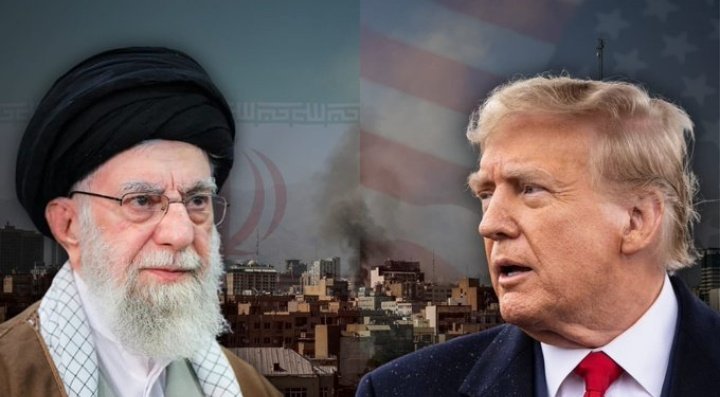
On February 6, 2026, negotiators from Tehran and Washington gathered in Muscat, the capital of Oman, to draft a framework aimed at preventing military conflict. The composition of the delegations reflected the gravity of this phase. President Trump entrusted his inner circle: the delegation was led by Steve Witkoff, Trump’s Special Envoy for the Middle East, and Jared Kushner, Trump’s son-in-law and Senior Advisor. Kushner’s presence signaled that Washington wants the agreement to have a strong regional and economic dimension.
Rumors of the presence of Admiral Brad Cooper, CENTCOM Commander, on the sidelines of the meetings carried a military message to Tehran. It appeared the U.S. wanted to directly resolve issues regarding maritime security, drones, and missiles before discussing sanctions.
Tehran entered the arena with an experienced diplomatic team led by Abbas Araghchi, Minister of Foreign Affairs. Araghchi, the architect of previous agreements and the diplomat credited with helping Iran navigate the 12-day conflict with Israel, was accompanied by Majid Takht-Ravanchi, Deputy for Political Affairs, and Esmaeil Baghaei, Ministry Spokesperson. Araghchi stated that they had come to the negotiating table with “eyes wide open” and without forgetting last year’s military strikes.
As discussions were expected to continue in the coming days, an undeniable truth emerged: the cost of war for both sides is devastating. Peace and negotiation, even if “by necessity,” have become the only viable option. Washington seeks Iranian submission, while Tehran, caught between the blades of economic sanctions, is simply struggling for the survival of its system.
Strategic shifts and economic pressures
The Trump administration, although initiating its approach with a “maximum pressure” policy, has anchored its movements within the 2025 National Security Strategy. In this document, the U.S. clearly indicates that the Middle East is no longer Washington’s top priority. The U.S. intends to allocate its financial and military resources to competition with China and stability in Ukraine.
The great fear is that in the event of a long-term war with Iran, the region would open up entirely to China and Russia, ultimately benefiting them. Additionally, the new strategy emphasizes a lasting peace for Israel, where Iranian nuclear threats are neutralized at the lowest possible cost. Washington knows that the cost of a new war—without the financial support of Arab nations who assisted in previous conflicts but do not support an attack on Iran this time—would drain the American domestic budget. Given Trump’s aversion to financial loss, an “imposed peace” is deemed preferable.
As for Iran, it is in its worst economic state in decades. With inflation exceeding 50 percent and the collapse of the Toman, Tehran is under immense domestic pressure. For the Iranian leadership, these negotiations, peace, and the removal of sanctions are not just a diplomatic choice; they are the only way to prevent a total infrastructure collapse and to recover billions of dollars blocked in countries like South Korea, Japan, and Iraq.
Four key pillars
Prior to the meeting, four main themes were publicized.
First, the nuclear issue. The U.S. demands “zero enrichment” and the export of the entire stockpile of 400–440 kg of 60 percent enriched uranium to a third country. It also demands “anywhere, anytime” inspections by the International Atomic Energy Agency. In contrast, Iran views enrichment as “national pride” and has only proposed more intensive international monitoring without renouncing its right to enrich.
Second, sanctions and the economic situation. Tehran demands the immediate removal of sanctions on the oil and banking sectors. However, Washington insists that it is only willing to begin easing sanctions phase-by-phase after seeing “real action,” such as the export of the uranium.
Third, military capability and drones. The U.S. wants limits placed on the range of ballistic missiles—briefly put: Iranian missile capabilities must not be able to reach Israel—and a halt to drone shipments to Russia and armed groups. Tehran considers this a red line, stating that missiles are its only means of “defense” and a deterrent against rivals.
Fourth, guarantees. Due to the bitter experience of 2018, Tehran is demanding legal guarantees that the U.S. will not unilaterally withdraw from the agreement again. The Trump administration insists that only a “comprehensive deal” addressing all issues—nuclear, missile, and regional—will serve as the sole guarantee to prevent war.
Post-meeting insights
Following the meeting, several sources in Muscat indicated that a framework titled “Less for Less” has been proposed.
The U.S. demand is an immediate halt to 60 percent uranium enrichment and the delivery of Iran’s stockpiles to a third country, likely Qatar or Oman. The U.S. offer is granting “temporary waivers” to buyers of Iranian oil, such as China and India, to allow Iran to legally sell up to 1.5 million barrels per day.
Sources close to Tehran report that Araghchi has set a condition that all frozen assets in Iraq, Japan, and South Korea must be released—not just for humanitarian goods, but for the development of the energy sector as well. However, American diplomats have hinted in their communications that this time Trump wants a “Grand Bargain” that encompasses not only the nuclear issue but also maritime security in the Red Sea and the Houthi issue.
Furthermore, sources say the U.S. delegation, led by Witkoff, emphasized that without cutting Iran’s military aid to Russia, no long-term understanding will be realized. Tehran has labeled this as “interference in international relations” but has shown a willingness to discuss “export limitations.”
Cold peace over hot war
Both sides have reached the conviction that a “Cold Peace” is far better than a “Hot War.” The U.S. wants to close the Iran file in its favor at the lowest cost to focus on its other global strategic interests, while Iran seeks to save its political and economic system from collapse through a diplomatic compromise. The Muscat negotiations represent not just a diplomatic exercise but a mutual acknowledgment that neither side can afford the alternative.