
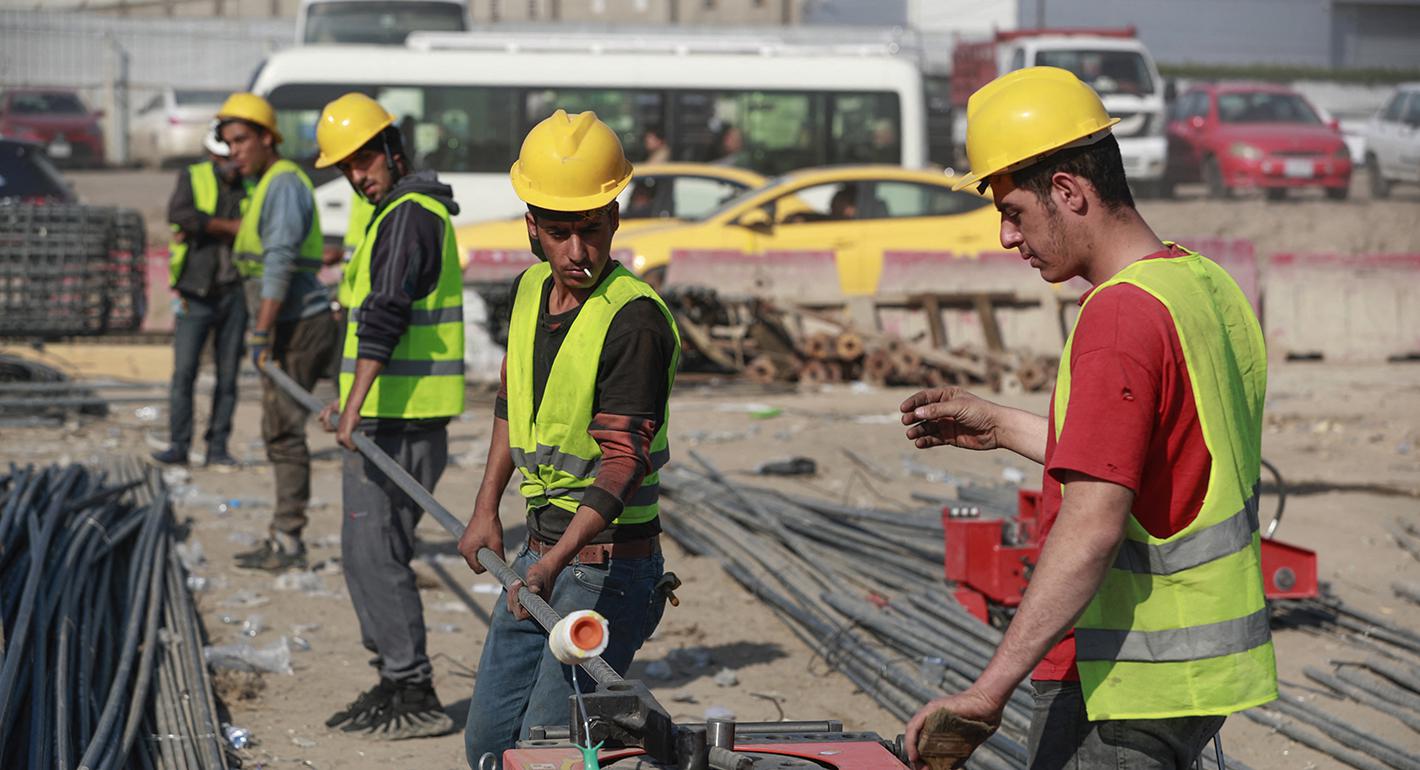
Kurdistan Region of Iraq KRI has begun to develop industries such as cement, iron, and brick. According to a private sector manager, KRI is already selling cement, iron and other construction materials to other parts of Iraq: “we are good because Iraq is very underdeveloped”. Although from an economic sense, this kind of industries/productions called non-trade goods but for the KRI bring quick profits, and has been massively advanced over a last decade. After 2003 Iraq was massively needed reconstruction and Iraq has become a good market for the KRI. This is because during the 1990s, the Iraqi economy underwent a sudden change as a result of the almost complete stop of oil exports because of international sanctions over Iraq between 1991-2003. After 2003 because of poor and partial damage of infrastructure and wars against ISS three main provinces has been completely ruined, so Iraq needs reconstruction martials for many years. Currently and in the future, this would be a good market for the KRI.
Although these industries bring a good income for the KRI and a large work force are working there, however, one can argue that the elites who have taken charge of them, support these kinds of economic activities. This is because of quick profit that can be earned from these activities as well as monopoly has been granted for some investors. According to an official: the political ruling elites support projects that bring very fast benefit i.e. cement, iron bring for them and very important benefits because it is substantial for construction inside the KRI and to the rest of Iraq. If anyone wants to build such industries, it is very difficult to obtain a license. He/she must first find an important political figure to give him a share in the project i.e., 20-50 %. Unfortunately, this is a mentality of the business in the region.
Construction is an important source for generating very fast rents. In this respect, entrepreneurs are given lands by a very cheap price that mostly by political support from the elites where they have established monopolies. Members of the political elites control some industrial plants and materials and are resistant to competition which could reduce the value of their assets. An economist expert explained how the elites have gained control over the construction sector “These activities made many entrepreneurs to be rich in a matter of years. Elites also become millionaires because many of them have stakes in these construction projects”. Therefore, political elites who have stocks and shares in industrial enterprises, are interfere with the market to protect these enterprises from outside competition. In industries where elite members have little or no interest or control, elite members encourage foreign industrial imports over which they have established monopolies, causing the collapse of some factories that have historical roots in KRI. By contrast, cement factories are now protected from imports of cheaper Iranian cement because of deals struck between ruling elites.
In addition to constructions, commercial business i.e., importing foreign commodities are regarded as an important source for generating very fast rents. Commercial business that involves mainly in importing huge amounts of commodities from the outside into the KRI with a much cheaper price than locally made products, mainly due to subsidies of export by Iran and Turkey and devaluation both national currencies versus Iraqi dinar. But it is not just only brought cheap productions from outside into KRI but the business has been fragmented between two zones of PUK and PDK geographical areas.
So, these activities have been developed and become very popular practices and bring faster rent/benefits for businessmen/entrepreneurs and political parties. Industrial diversification has become absorbed into the prevailing system of political investment as another means of gaining rent for political elites and recruiting more supporters for political parties. More importantly, because of the flow of this cash revenues from oil and appreciation of the Iraqi currency, everything would be cheaper if bring it from outside rather than produced inside KRI. Therefore, the dominant feature is continuous of importing foodstuffs, furniture, fats, rice, fruits, … with this situation the KRI economy can be damaged and elites and businessmen could make more faster rents.
According to an economist expert and private business owner, the policy makers in the KRI do not fully understand the industrial sector in the KRI and there has been limited analysis of the parts of it that are most promising for development and the best ways to promote them to contribute to import substitution and export production. Further, there is a shortage of skilled manpower. It is difficult to achieve competitiveness in industries in the short-term because skills need to be developed and this takes time. An expert on the private sector who is a manager at a large company argued that: in the long-term, KRI needs to invest in education to develop the skills that industry needs, as well as to enhance skills in linked sectors such as finance, banking, technology and knowledge-based services.
Another problem in the KRI is a fragile financial system in order to convince international companies to invest in KRI industries. An expert who is involved with business in Kurdistan, said economic diversification of industry depended on strengthening the fragile financial system in order to convince international companies to invest in KRI industries. He claimed that some overseas companies are keen to start businesses in the KRI but because they mistrust the banking system, they are reluctant to invest heavily in the region. According to another expert, until the financial system is made secure, it will be hard to convince firms to inject their funds in industries in KRI. The root of this problem is the lack of an independent financial system in KRI: business is having to manage without a trustworthy banking system mainly by using cash. The political parties control the banks, which undermines the confidence of investors that their financial assets will be safe from political interference. There is no sign that the political parties are willing to relinquish control of the banking system, partly because it is a source of rent in itself, but also because they want to avoid creating a strong foundation for an independent private sector that could challenge their grip on political power. So once again we see how political obstacles are stifling industrial development in Kurdistan region.