

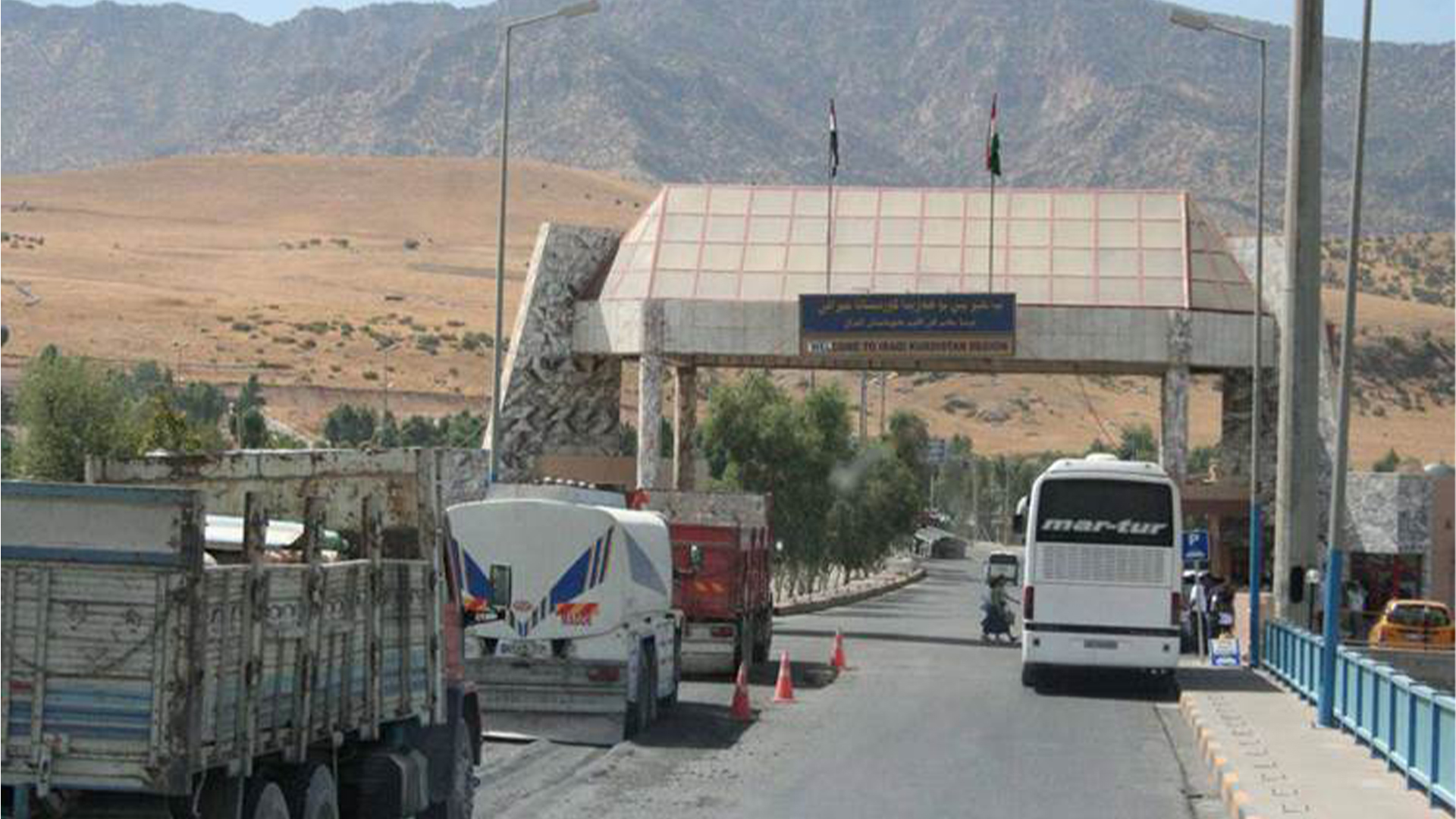
If trade corridors provide investors with opportunities for capital development and income maximization, then for the Kurdistan Region, every commercial route intersects with politics. Beyond this, for a region perpetually under threat, these corridors represent a form of cultural diplomacy and lobbying. They can also serve as instruments for regional positioning within the geoeconomic and geopolitical landscape, potentially functioning as deterrents against calamities and dangers.
In recent times, discussion has emerged concerning the establishment of several new global and regional trade corridors and routes, including the New Silk Road, Davud, Development, Zangezur (Trump), and others. Within these frameworks, Middle Eastern nations emerge as commercial and political actors, while their geography becomes integral to the geoeconomic structure of these corridors. Some of these routes could present opportunities and catalysts for Kurdistan. Through the possibilities of development, lobbying, and rapid integration with these corridors, this region could be regarded as a new gateway for both political unblocking and economic revitalization. However, this requires that these corridors be analyzed through the lens of rational political, international, and regional economic perspectives, rather than being subordinated to partisan or group agendas, ideological considerations, or retrograde bloc alignments.
Trade corridors are not merely conduits for the transfer of commodities, capital, and revenue; they have also historically transmitted culture, ideology, and religion from ancient times to the present day. These corridors serve as indicators of vitality and survival, while simultaneously functioning as protectors and harbingers for every city, entity, and nation. Throughout history, the weakening of a commercial corridor has frequently resulted in the decline of great cities, ultimately leading to their political demise. Numerous cities have served as beacons of civilization throughout history, only to be extinguished with the deterioration of their trade routes. For instance, the great and historic city of Nishapur, situated along a major trade route, lost its vital position due to shifts in corridor trajectories.
At the global level, China has spent several years pursuing the revival of the New Silk Road. Turkey, Iran, and the Caucasus nations are endeavoring to become integral components of this comprehensive framework and seek to assume prominent roles. Azerbaijan, Iran, Turkey, and recently Iraq and the Gulf states, both independently and collectively, have been seeking to establish new commercial corridors for several years to ensure their relevance.
Iraq and the Kurdistan Region constitute essential components of some of these corridors and should not be viewed as passive entities in the activities of other nations. In the majority of historical and proposed corridors, a segment of Kurdistan has served as a critical juncture for the completion of these routes. For example, in the ancient 1,700-year-old Silk Road (Kermanshah and Jalawla), in the Ottoman Gulf-Baghdad-Istanbul route (Kifri-Kirkuk/Erbil-Tal Afar), Kurdistan has been the vital artery of these corridors. In contemporary corridors as well, Kurdistan’s geopolitical position remains significant, and the world cannot calculate the viability of corridors passing through Kurdistan without the Kurds themselves considering their interests.
Corridors have frequently established civilizations, or at minimum, political entities, such as the discovery of routes including: “the Cape of Good Hope to the West, Suez for Britain and the Arab and Indian worlds, Columbus’s discovery of America, and so forth.” However, to an equal extent, many routes have proven detrimental to their implementers, such as the Berlin-Baghdad railway, which Britain sabotaged against the Ottomans, or the route through which Reza Shah intended to facilitate Hitler’s access to the Gulf from Iran—not only did this fail to materialize, but Reza Shah lost his crown as a consequence. Any route for Kurdistan may similarly prove to be either successful or unsuccessful.
Thus far, much of the Kurdistan Region’s public policy has been determined by threats, historical grievances, and political conflicts among factions, rather than by constants, future interests, and identity-based considerations. This implies that the political approach in the region is governed by the interests of particular partisan blocs. To transform this destructive strategy, it would be preferable not to view every movement through a narrow regional or partisan lens. It is essential that Kurdistan’s political parties, instead of engaging in the “zero-sum confrontation” of mutual destruction, consider a “win-win” strategy, whereby political conflicts and balances are managed such that both parties, the region, and the citizenry emerge as victors. More importantly, they should not confine their thinking to the geography of the Region (South), but rather consider all of Kurdistan and indeed the strategic depths of external actors who, either as soft power of the South or as other Kurdistan segments, play roles in these corridors. The Region and all of Kurdistan can become integral to development processes or constitute components without which corridors remain incomplete—whether as economic facilitators and transit routes, or as guarantors of commercial security for these corridors. This perspective envisions Kurdistan and the Region, through their parties, government, organizations, merchants, and investors, becoming part of the collective interests of certain regional and global corridors.
Contemplating the establishment of commercial corridors for every city in Kurdistan must become the responsibility of policymakers, particularly for a region whose conventional routes are perpetually endangered. Therefore, the establishment of new corridors signifies the creation of opportunities and the mitigation of persistent threats from dominant powers. However, is every route necessarily a new opportunity?
In any case, this contemplation is crucial. It is necessary to analyze the risks and opportunities for both the present and future—whether in implementation or abandonment. There must be consideration of creating alternatives and future substitutes for the conventional routes between the Region and its neighbors, who do not recognize our legitimate existence in this geography.
For the Kurdistan Region, beyond organizing and controlling its entry and exit points (input and output) and their governance, by examining the situation of regional countries where Iran, Turkey, and Iraq continuously pursue new commercial-political corridors, it is necessary that the Region adopt the perspective that in these new corridors being contemplated by countries such as the Gulf states, Turkey, Iran, Azerbaijan, Armenia, America, and China, the Region should not remain a passive non-state actor relegated to the margins—a marginalization that could potentially result in catastrophic political strangulation. Furthermore, these corridors should be viewed as additional commercial opportunities that can be expanded.
At the external level, it is necessary, by whatever means possible, that the interests of third and fourth-party nations such as Azerbaijan, Armenia, the Caucasus, and the Gulf states be incorporated into the conventional regional trade routes connected to Tehran and Ankara. This ensures that in times of crisis, Iran and Turkey alone are not the sole determinants of opening and closing routes, and that other lobbies exist to defend these corridors.
- Originally published in Publishing Section by the Center for Future Studies and translated by Nawroz Mohammed for Kfuture.Media.