

Shanaz Amer Badran – Goran Qader Hamafaraj
Tourism is considered one of the most prominent economic and social sectors in the world, as it has become one of the drivers of sustainable development that contributes to creating employment opportunities, promoting economic growth, developing infrastructure, and enhancing cultural understanding among peoples. With the growing global interest in this sector, developing countries, including Iraq, have begun to realize the importance of investing in tourism as a tool for economic diversification and reducing dependence on natural resources, particularly oil. However, tourism in Iraq has not yet reached the optimal level of utilizing its potential due to a set of challenges related to infrastructure, the political and security environment, as well as the absence of clear policies for developing this sector.
In this context, the Kurdistan Region, especially Sulaymaniyah province, is considered one of the most prominent Iraqi areas that has witnessed relative development in the tourism sector in recent years, as the province hosts a group of natural and cultural landmarks, in addition to its diverse climate and distinguished geographical location. However, this development also faces multiple obstacles, including weak investment in both public and private sectors, limited external promotion, and the absence of an integrated strategic vision.
This research aims to provide a comprehensive academic analysis of the concept of tourism, its importance and types, and its economic and social impacts, with a special study of the tourism reality in Sulaymaniyah province, the obstacles that hinder the development of this sector, and proposing a set of recommendations for developing tourism in the region. This research adopts the descriptive-analytical methodology, based on a set of studies, research, and reports issued by local and international bodies, in addition to governmental data. Through this work, we seek to contribute to developing the tourism vision in Iraq in general, and the Kurdistan Region in particular, by highlighting the available potential and existing challenges, in an attempt to provide a practical and strategic framework for advancing the tourism sector.
First: Brief Overview of Tourism (Definition, Importance, Types, and Economic and Social Impacts)
- Definition of Tourism
Definitions of tourism have varied according to the different schools and approaches that have addressed it; however, most of them agree that it is a human activity related to the movement of individuals from their usual places of residence to other places for purposes not related to permanent work. The World Tourism Organization defined tourism as “the activities of people who travel and stay in places outside their usual environment for not more than one consecutive year, for leisure, business, or other purposes not related to the exercise of paid work in the place of destination.” This definition highlights tourism as an economic, social, and cultural activity in which humans interact with different places, times, and cultures.
- Importance of Tourism
Tourism is considered one of the most vital sectors in the global economy, contributing approximately 10% of the global gross domestic product and providing direct and indirect employment opportunities for hundreds of millions of individuals. The importance of tourism lies in multiple aspects:
- Economically: It contributes to generating national income, attracting foreign investment, and stimulating related industries such as hotels, restaurants, and transportation.
- Socially: It enhances communication between peoples and contributes to spreading a culture of tolerance and acceptance of others, while supporting the preservation of cultural heritage by transforming it into a source of income.
- Developmentally: It serves as a catalyst for developing infrastructure and services in tourist areas, which has a positive impact on local populations.
- Types of Tourism
Tourism types vary according to the purpose of travel and the nature of the activity practiced, and among the most prominent are:
- Leisure Tourism: The most widespread type, practiced for the purpose of rest and recreation.
- Cultural Tourism: Focuses on visiting archaeological sites and museums and learning about local customs and traditions.
- Religious Tourism: Practiced to visit holy places and perform religious rituals.
- Eco-Tourism: Aims to interact with the natural environment within a framework of respecting and preserving it.
- Business and Conference Tourism: Includes business trips to participate in conferences and economic events.
- Medical Tourism: Undertaken by individuals for the purpose of receiving treatment in places known for their medical services.
It is worth noting that Iraq, especially the Kurdistan Region, possesses multiple components that allow for the development of all these types to varying degrees, making it fertile ground for tourism investment if adequate infrastructure and institutional support are available.
- Economic Impacts of Tourism
Tourism is considered one of the most important sources of foreign income for countries and plays a pivotal role in stimulating the local economy through:
- Creating direct employment opportunities in hospitality and travel sectors. • Supporting small and medium enterprises related to tourism services. • Increasing demand for local products and traditional crafts. • Stimulating investment in infrastructure such as airports, hotels, and roads.
International experiences have shown that every million tourists can create more than 2,000 direct and indirect job opportunities in developing countries, highlighting the enormous potential that tourism can provide in countries like Iraq.
- Social Impacts of Tourism
In addition to its economic impact, tourism contributes to bringing about social and cultural transformations, including:
- Enhancing cultural awareness and exchanging values and customs between peoples. • Raising the standard of living for local populations in tourist areas. • Reducing rural-to-urban migration by developing remote areas through tourism. • Contributing to preserving cultural heritage by investing in it.
However, tourism may also leave negative effects in the absence of regulation, such as environmental pollution or negative impact on local values, necessitating the need for balanced development policies.
Second: Tourism in the Kurdistan Region of Iraq with Focus on Sulaymaniyah Province
- General Overview of Tourism in the Kurdistan Region
The Kurdistan Region is considered one of the most prominent tourist areas in Iraq due to its relative stability, geographical and climatic diversity, and its geographical location that makes it a point of attraction for tourists from inside and outside the country, especially from Iran, Turkey, and Gulf states. The Regional Government has paid increasing attention to the tourism sector, especially after 2006, through establishing the Kurdistan Tourism Authority and preparing strategic plans to improve infrastructure and basic services, and develop tourist sites.
Official statistics indicate that the number of tourists who visited the region reached more than 4 million in 2022, with expectations of this number rising in the coming years if an encouraging political and economic environment is available. The region’s main cities, such as Erbil, Sulaymaniyah, Duhok, and Halabja, include a diverse range of tourist attractions, ranging from natural, cultural, historical, and recreational sites.
- Tourism Reality in Sulaymaniyah Province
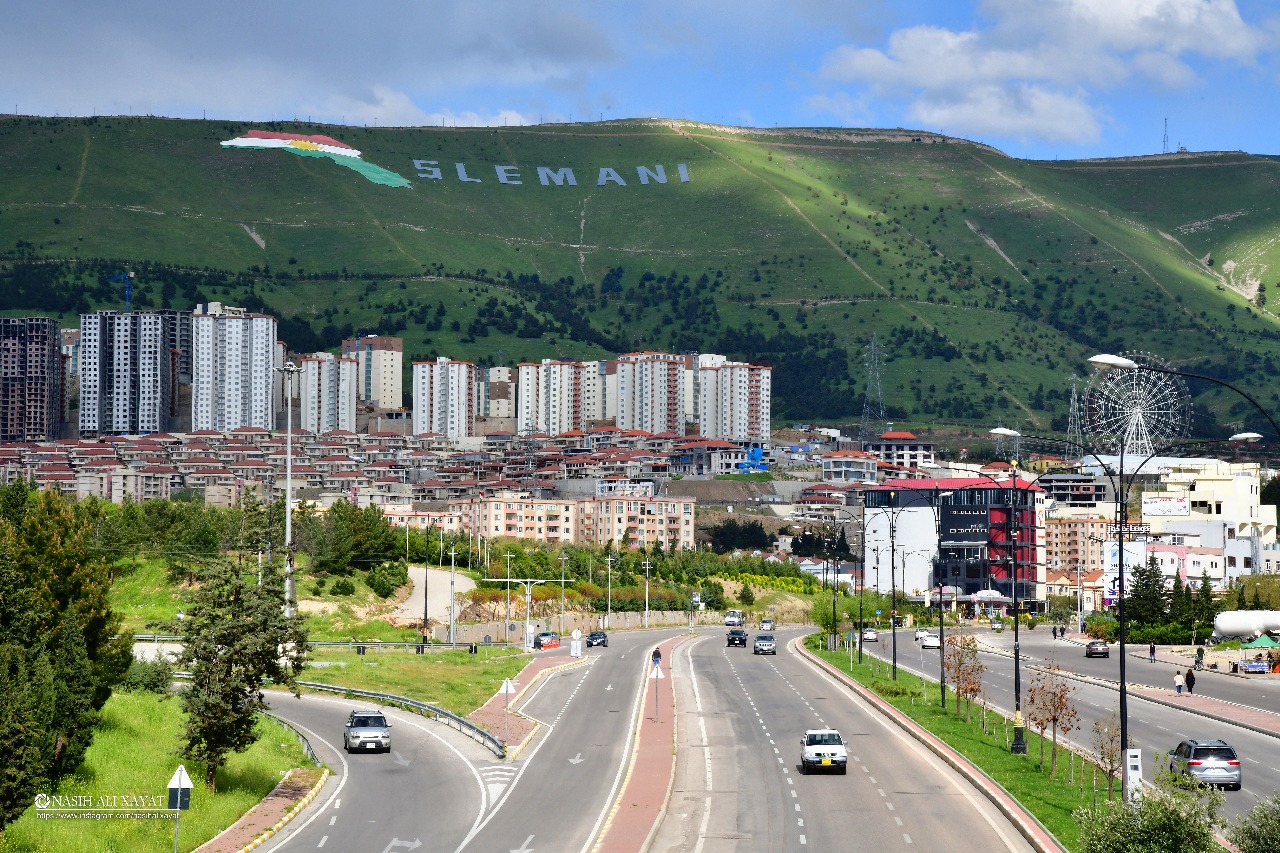
Sulaymaniyah is considered one of the most important tourist destinations in Kurdistan, due to its cultural and natural richness and its hosting of prominent literary and artistic centers and museums. The tourism sector in the city is witnessing remarkable development in infrastructure, with an increasing number of hotels, resorts, and restaurants. Sulaymaniyah’s mountainous location, green nature, moderate climate, and the hospitality of its people have contributed to making it a preferred destination for visitors from various regions of Iraq and beyond.
Main Tourist Sites in Sulaymaniyah Province:
Sulaymaniyah province is distinguished by numerous different tourist sites. The following table shows some of the most important and prominent tourist sites in the province, and their diversity between natural, historical, and recreational sites:
| No. | Tourist Site | Site Type | Description and Benefit |
| 1 | Sulaymaniyah Museum | Archaeological Museum | Displays artifacts from prehistoric and post-historic eras, considered the second largest museum in Iraq. |
| 2 | Red Security Building Museum (Amna Soraka) | Historical Museum (Human Rights) | Documents the crimes of the former regime against the Kurdish people, serving as a witness to the tragedies of Anfal and torture. |
| 3 | Kurdish Heritage Museum | Cultural Museum | Displays Kurdish heritage, traditional crafts, and manuscripts, reflecting the cultural identity of the region. |
| 4 | Sulaymaniyah Bazaar | Traditional Market | An economic and cultural center reflecting the city’s commercial and traditional character since the 18th century. |
| 5 | Goizha and Azmar Mountain | Natural Area | Visited by tourists for climbing and hiking, considered a popular destination for nature and adventure lovers, providing panoramic views of the city. |
| 6 | Public Garden, Azadi Garden, and Hawari Shar Garden | Natural Gardens | Extensive gardens that can be described as urban parks, used for outings, family gatherings, tourism activities, and other occasions. |
| 7 | Chavi Land Park | Amusement Park and Game City with Cabins | A comprehensive entertainment complex at the foot of Goizha Mountain, featuring games, cafes, and panoramic tours. |
| 8 | Doukan Lake | Doukan Dam Site | A famous tourist lake providing water activities, restaurants, and resorts. |
| 9 | Sarjinar Resort | Sarjinar Garden and Spring | A natural area characterized by enchanting beauty visited by tourists to spend their time and enjoy their vacations. |
| 10 | Ziwe Resort | Mountainous Area | A tourist area visited by tourists to enjoy natural scenery and moderate climate in summer and see snow in winter. |
| 11 | Qizqaban Cave | Archaeological Site | Located in the Jami Razan area and contains archaeological carvings. |
| 12 | Grand Mosque in Sulaymaniyah | Religious and Archaeological Site | One of the oldest mosques in Sulaymaniyah, built with the city’s construction and was a high-level religious center, also containing tombs of prominent figures in Sulaymaniyah, especially the Hafid family. |
Table No. (1) Some of the Most Important and Prominent Tourist Sites in Sulaymaniyah
Tourism Infrastructure Features in Sulaymaniyah (Tourism Facilities)
Recent statistics from the General Directorate of Tourism show that Sulaymaniyah includes an increasing number of tourism facilities, with special attention to the hotel sector, where the number of rooms in hotels, furnished apartments, and tourist villages reaches 7,813 rooms and the number of beds reaches 19,239 beds. There are also many upscale cafes as well as other facilities. The following table shows details of tourism facilities in Sulaymaniyah province:
| No. | Type of Tourism Facility | 5 Stars | 4 Stars | 3 Stars | 2 Stars | 1 Star | Total |
| 1 | Hotel | 9 | 10 | 31 | 25 | 31 | 106 |
| 2 | Furnished Apartments (Motel) | 0 | 0 | 19 | 35 | 63 | 117 |
| 3 | Tourist Village | 1 | 2 | 2 | 6 | 10 | 21 |
| 4 | Tourist Umbrellas | 0 | 0 | 0 | 0 | 4 | 4 |
| 5 | Tourist Restaurants | 0 | 19 | 30 | 10 | 11 | 70 |
| 6 | Restaurant and Bar | 8 | 13 | 26 | 15 | 25 | 87 |
| 7 | Park | 0 | 0 | 0 | 0 | 3 | 3 |
| 8 | Tourist Cabins | 0 | 0 | 0 | 0 | 4 | 4 |
| 9 | Tourist Clubs | 0 | 2 | 1 | 1 | 0 | 4 |
| 10 | Cafeteria | 1 | 10 | 24 | 52 | 154 | 241 |
| 11 | Fast Food | 0 | 4 | 28 | 25 | 18 | 75 |
| 12 | Tourism Companies | 0 | 0 | 0 | 0 | 69 | 69 |
| 13 | Tourism Offices | 0 | 0 | 0 | 0 | 110 | 110 |
| 14 | Tourism Agencies | 0 | 0 | 0 | 0 | 11 | 11 |
| 15 | Spa | 0 | 0 | 0 | 0 | 1 | 1 |
| 16 | Alcoholic Beverage Store (Retail) | 0 | 0 | 0 | 0 | 99 | 99 |
| 17 | Alcoholic Beverage Store (Wholesale) | 0 | 0 | 0 | 0 | 12 | 12 |
| 18 | Cinema | 0 | 0 | 0 | 2 | 0 | 2 |
| 19 | Amusement Park | 0 | 0 | 0 | 1 | 1 | 2 |
| 20 | Event Hall | 0 | 1 | 2 | 1 | 6 | 10 |
| 21 | Game Hall (Skating) | 0 | 0 | 0 | 0 | 1 | 1 |
| 22 | Game Hall (Ping Pong) | 0 | 0 | 0 | 0 | 1 | 1 |
| 23 | Massage | 0 | 0 | 0 | 1 | 0 | 1 |
| 24 | Marina | 0 | 0 | 0 | 0 | 1 | 1 |
| 25 | Kiosk | 0 | 0 | 0 | 0 | 7 | 7 |
| 26 | Seasonal Kiosk | 0 | 0 | 0 | 0 | 6 | 6 |
Table No. (2) Types and Numbers of Tourism Facilities in Sulaymaniyah for 2025
Development of Tourism Projects in Sulaymaniyah
The General Directorate of Tourism in Sulaymaniyah supervises the implementation of tourism projects in the province, which shows the extent of tourism development in the province. The following are the projects that are under direct implementation by the General Directorate of Tourism in Sulaymaniyah for 2025, with a total cost of approximately 6,371,000,000 Iraqi dinars, as shown in the following table:
| No. | Location | Project Name | Purpose | Cost |
| 1 | Central District | Facilities and Prayer Area/6 units | Service for visitors to Hawari Shar Garden | 194,676,000 |
| 2 | Central District | Solar Lighting near Peshro Tunnel | Service for visitors to Goizha and Azmar Mountain | 151,425,000 |
| 3 | Central District | Tourist Entry Point Services | Service for visitors to Sulaymaniyah Province | 7,660,000 |
| 4 | Central District | Family Tourist Club in Sarjinar | Service for visitors to Sarjinar Tourist Resort | 1,680,000,000 |
| 5 | Central District | Khor Tourist Complex | Service for visitors to Sarjinar Tourist Resort | 2,000,000,000 |
| 6 | Central District | Service Project | Service for visitors to Sarjinar Tourist Resort | 500,000,000 |
| 7 | District (Central, Doukan, Darbandikhan) | 16 Small and Medium Projects | General tourist services | 407,000,000 |
| 8 | Doukan District | Supply and Installation of Seating | Tourist services in the district | 17,906,000 |
| 9 | Doukan District | Supply and Installation of Pergolas on Doukan River Banks | Tourist services in the district | 24,750,000 |
| 10 | Doukan District | Zoroaster Cabins | Tourist services in the district | 150,000,000 |
| 11 | Doukan District | Zhiwar Tourist Project | Tourist services in the district | 300,000,000 |
| 12 | Doukan District | Sheds and Gardens/1 | Tourist services in the district | 300,000,000 |
| 13 | Doukan District | Sheds and Gardens/2 | Tourist services in the district | 300,000,000 |
| 14 | Doukan District | Venezia Project | Cabins for tourist services in the district | 400,000,000 |
| 15 | Doukan District | Bir Mol Project | Cabins for tourist services in the district | 400,000,000 |
| 16 | Doukan District | Sheds and Gardens | Tourist services in the district | 300,000,000 |
| 17 | Darbandikhan District | Humidity Treatment for Tourism Directorate Building | Tourist services in the district | 2,650,000 |
| 18 | Darbandikhan District | Solar Lighting for South Complex Road | Tourist services in the district | 70,181,500 |
| 19 | Darbandikhan District | Sirwan/1 Tourist Project | Tourist services in the district | 300,000,000 |
| 20 | Darbandikhan District | Sirwan/2 Tourist Project | Tourist services in the district | 350,000,000 |
| 21 | Mawat District | Tourist Services Extension to Sarsol Mawat | Tourist services in the district | 45,000,000 |
| 22 | Mawat District | Six Facilities and Prayer Area | Tourist services in the district | 38,568,000 |
| 23 | Mawat District | Supply and Installation of Pumps for Sarsol Waterfalls | Tourist services in the district | 60,450,000 |
| 24 | Qardagh District | Platforms and Seating Chairs | Tourist services in the district | 49,000,000 |
Table No. (3) Tourism Projects Under Implementation in Sulaymaniyah for 2025
- Obstacles Facing the Tourism Sector (Public and Private)
- In the Government Sector
Some factors and causes that hinder serious work in the tourism field can be identified as follows:
- Strategic Planning: The need for a comprehensive and integrated vision for tourism development, with tourism projects often relying on individual initiatives or random investment.
- Incomplete Infrastructure: Deteriorating condition of roads leading to tourist areas, and lack of public utilities such as water and electricity in some resorts.
- Administrative Bureaucracy: Difficulty in obtaining licenses for new tourism projects due to bureaucracy, and lack of government incentives for investors.
- Limited Media Promotion: Weak advertising campaigns directed internally and externally, limiting the attraction of international tourists.
- In the Private Sector
- Lack of Expertise and Trained Personnel: Many private tourism projects are managed in traditional ways that lack international standards in service and management.
- Limited Financing: Difficulty for investors to obtain adequate financing due to the absence of banking support dedicated to the tourism sector.
- Coordination with Government Agencies: The need to establish an effective partnership between public and private sectors in designing and managing major projects.
- Proposed Recommendations for Developing Tourism in Sulaymaniyah
Based on the above analysis, several basic recommendations can be presented for developing tourism in Sulaymaniyah province:
- Prepare a comprehensive tourism strategy that includes clear objectives for tourism development in the short, medium, and long term, with the involvement of local authorities and the private sector.
- Improve infrastructure, especially roads and public services, in active tourist areas.
- Launch international promotional campaigns in partnership with media and tourism companies to market Sulaymaniyah province as a distinguished tourist destination.
- Establish tourism training institutes aimed at preparing specialized personnel in hotel services, tourist guidance, and tourism management.
- Provide investment incentives including tax exemptions and loan facilitation, to encourage the private sector to enter quality tourism projects.
- Develop rural and eco-tourism by providing support to local communities that possess natural resources suitable for tourism development.
- Establish a joint tourism council that brings together representatives from local government, private sector, experts and academics in tourism, and civil society to follow up and evaluate tourism development plans.
Conclusion
It is clear from this research that tourism does not represent merely a recreational or secondary sector in the economy, but has become a strategic element in sustainable development at both economic and social levels, and a fundamental pillar for diversifying sources of national income, providing employment opportunities, and enhancing cultural identity. International experiences have shown that investment in tourism can bring about structural transformation in the economies of developing countries, if directed within a comprehensive and integrated vision.
In the Iraqi context, and despite the political and security challenges that have afflicted the country for decades, the opportunity still exists to advance the tourism sector, especially in relatively stable areas such as the Kurdistan Region. It has been shown through the case study of Sulaymaniyah province that this city possesses all the required tourism components, from stunning nature, rich cultural history, developing infrastructure, and an open social environment.
However, obstacles still exist, whether at the level of weak government planning, absence of professional training, or limited private investment, necessitating that concerned authorities establish clear and practical policies to stimulate growth in this sector. Furthermore, involving local communities, expanding partnership between public and private sectors, and intensifying international promotion constitute fundamental steps for advancing tourism in Sulaymaniyah and making it a model that can be generalized in other Iraqi provinces.
Thus, activating the tourism sector in Sulaymaniyah not only benefits the city’s residents and its local economy, but can also contribute to drawing a new image of Iraq as an important cultural and natural tourist destination in the region.
References
- Abdullah, Marwa, “Tourism and Its Social and Cultural Impacts in Developing Countries,” Journal of Social Sciences, Cairo University, 2020.
- Hamasaeed, Sarhang. Kurdistan Region Tourism Potential: A Missed Economic Opportunity. Washington, DC: United States Institute of Peace, 2021. https://www.usip.org/publications/kurdistan-region-tourism-potential
- Hassan, Heivar, “Eco-tourism in Iraqi Kurdistan: A Case Study of Sulaymaniyah Province,” Salahadin University Journal of Humanities, No. 49, 2022, pp. 85-104.
- Hassan, Mohammed, “Tourism Reality in Iraq: Challenges and Opportunities,” Journal of Economics and Development, No. 12, 2021.
- International Labour Organization, Tourism and Employment, Geneva: ILO, 2022.
- Iraqi Ministry of Planning, Sustainable Development Vision 2030, Ministry of Planning Press, Baghdad, 2022.
- Kurdistan Region Tourism Authority, Report on Tourism Reality in Sulaymaniyah Province, General Tourism Authority, Erbil, 2023.
- Kurdistan Tourism Authority, Strategic Plan for Tourism 2020-2025, Ministry of Municipalities and Tourism, Erbil, 2020.
- Shahab, Dlair, “Challenges Facing Tourism in the Kurdistan Region,” Journal of Development and Local Economy, Salahadin University, 2022.
- Shahab, Khalid, “Tourism as a Tool for Economic Growth in Iraq: Opportunities and Challenges,” Iraqi Journal of Economic Development, Vol. 10, No. 2, 2023, pp. 112-130.
- Sulaymaniyah Chamber of Commerce and Industry Report, Economic and Tourism Reality in the Province, Sulaymaniyah, 2023.
- Tourism Guide for Sulaymaniyah Province 2022-2023, Sulaymaniyah.
- United Nations Development Programme (UNDP). Tourism for Sustainable Development in Iraq: Policy Brief. New York: UNDP, 2022. https://www.undp.org/iraq/publications
- World Tourism Organization, Global Tourism Development Report 2023, UNWTO, Madrid, 2023. Available at: https://www.unwto.org/global-tourism-dashboard
- Translated by Nawroz Mohammed for Kfuture.Media.