

Bakhtiyar Ahmad Salih
Abstract
This research presents a comprehensive analysis of Turkey’s Red Book, officially known as the National Security Policy Document (Milli Güvenlik Siyaset Belgesi – MGSB). The study examines the nature of this constitution as a strategic document that is simultaneously unconstitutional and secretive, profoundly shaping Turkey’s domestic and foreign policy. The research explores the historical origins of the constitution’s development through military coups and its role as guardian of Kemalism, while also highlighting significant shifts in threat perception, including the reclassification of alliance with the West as a major threat and adaptation to challenges such as cybersecurity. This research critically examines the implications of the Red Book’s secretive operation on transparency, democracy, and the rule of law, concluding that the Red Book represents a paradox in the evolution of Turkey’s political landscape, which leans toward a more centralized and ideologically driven governance model.
First: Defining Turkey’s Secret Constitution
Official Designation and Popular Perception
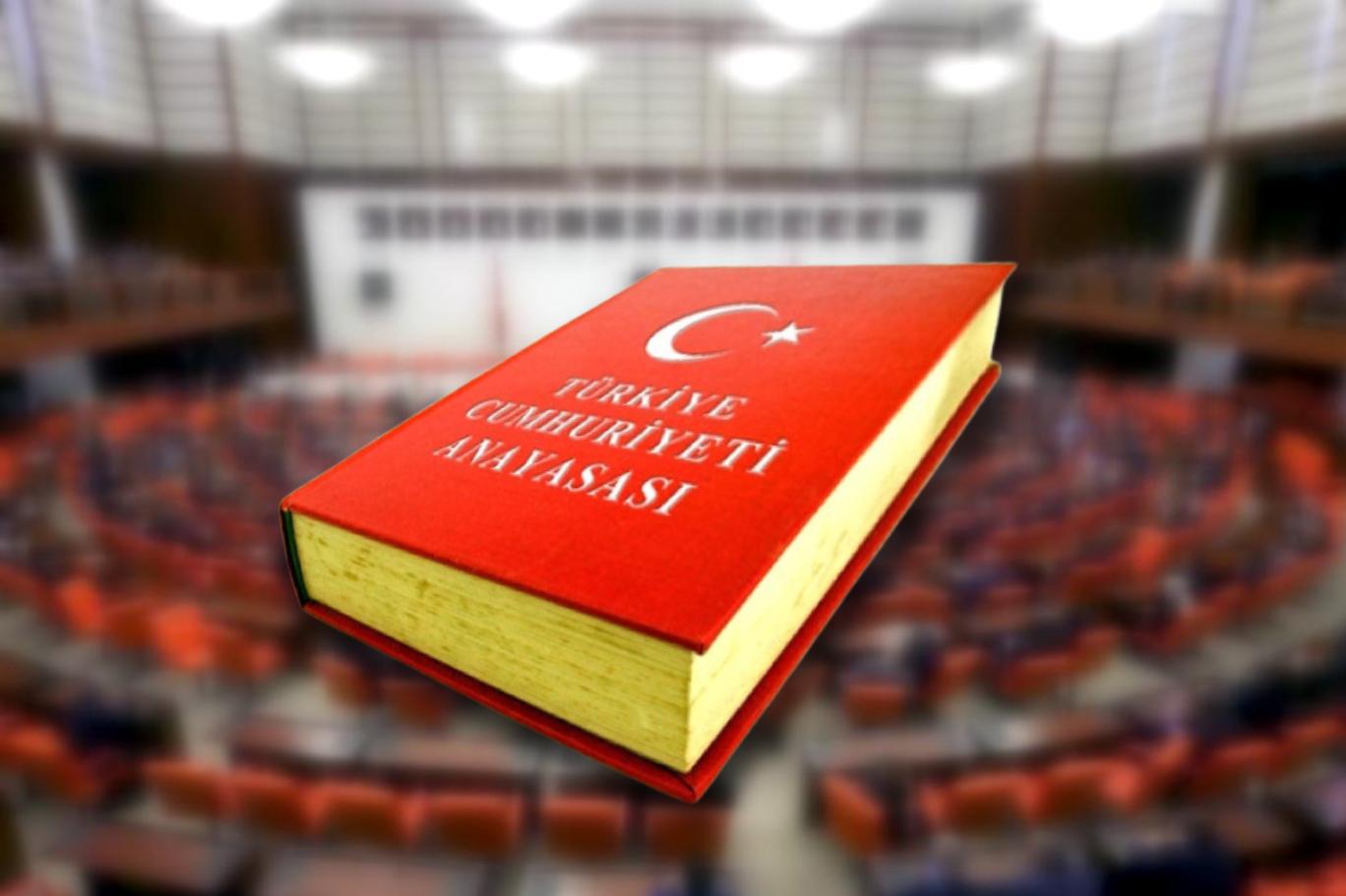
The document is officially known as the National Security Policy Document (Milli Güvenlik Siyaset Belgesi). This official designation emphasizes its strategic importance within the state apparatus. However, despite its official name, it is popularly known among the public as the Red Book (Kırmızı Kitap) and is widely referred to as Turkey’s “Secret Constitution.” This terminology reflects the constitution’s central role in directing state affairs similar to a constitutional document, while simultaneously highlighting its secretive nature, as it is often called Turkey’s most classified document(1).
Purpose and Significance
Functionally, the Red Book is discussed as a political and strategic concept rather than a binding legal document. This distinction is crucial because it operates outside the formal legal framework, yet in practice is considered a fundamental document for identifying internal and external threats and has a direct impact on shaping policy decisions made by various government institutions(2). This book serves as the foundation for national strategic and military concepts and guides the organizational structure and various components of Turkey’s government, demonstrating the deep entrenchment of this constitution in the state’s strategic planning.
Classification and Legal Implications
This document in Turkey is protected at the highest level of secrecy, and its disclosure is a criminal offense punishable by imprisonment. This severe punishment emphasizes the state’s commitment to protecting its secrets. On the other hand, considerable controversy arises from the fact that despite lacking legal standing in Turkey’s Criminal Code (TCK) or Criminal Procedure Law (CMK), Turkish courts have begun referencing the Red Book in their decisions, sentencing government critics according to the document over the past decade(3). This practice raises profound concerns about legal procedure, judicial independence, and the rule of law, particularly when an unconstitutional document is used as the basis for judicial decisions.
The Controversy Between Myth and Reality
There is a significant contradiction in how the Red Book is understood. Experts such as intelligence and security specialist Serkan Yilmaz dismiss it as a fabricated myth, emphasizing that “strangely, no one has seen this book, nor will anyone see it”(4). Yilmaz argues that its mystique derives more from the conspiratorial drama of Turkish television series than from any actual existence, suggesting this sensitivity prevents rational understanding of state policies.
Conversely, numerous statements and official reports confirm its existence, official designation, continuous updates, and manifest impacts on state policy(5). Discussing a widespread and effective yet simultaneously secret document, alongside a public narrative that dismisses its existence as myth, indicates the deliberate creation of ambiguity to exploit it strategically.
If a document is widely claimed to exist and influence policy, yet is not officially available and is even denied by some, it creates a powerful source of governmental authority. This mechanism allows the government to invoke the Red Book to justify sensitive actions, such as suppressing protests and redirecting foreign policy, without subjecting it to public scrutiny, parliamentary inquiry, or legal challenge. Conversely, by labeling it as myth, it can be used to evade criticism and dismiss questions and investigations as sensitive or abnormal. In this way, government operations are placed at a level where they are less accountable. This ambiguity significantly contributes to Turkey’s democratic regression. It establishes an invisible layer of governance operating outside legal and parliamentary oversight, preventing civil society, opposition parties, or international institutions from holding the government accountable for decisions ostensibly derived from this document.
Second: Historical Context and Evolution of the National Security Council (MGK) and the Red Book
Military Coups and Constitutional Establishment
The National Security Council (MGK) is a Turkish civil-military-intelligence institution chaired by the President himself, with members including the Ministers of Defense, Foreign Affairs, Justice, and Interior, the Chief of General Staff, the commanders of the Air and Naval Forces, and the head of Turkey’s National Intelligence Organization (MIT). This institution was not organically established with the creation of the Turkish Republic but was the direct result of the military coup of 1960 and was subsequently enshrined in Turkey’s 1961 Constitution(6). This fundamental connection to military intervention reveals its original purpose as a mechanism for military supervision over civilian authority. The 1961 Constitution effectively established what scholar Sakallıoğlu termed a “two-headed political system,” in which the civilian cabinet works alongside the National Security Council at the executive level, and the military judicial system operates independently alongside the civilian system. This directly embedded the military’s influence within executive authority(7). The role and influence of the National Security Council increased with the adoption of the 1982 Constitution, imposed by military rule following the 1980 coup. This constitution stipulated that the National Security Council’s directives must be given priority consideration by the Council of Ministers, lending the directives considerable weight(8).
The Military as Guardian of Kemalism
The National Security Council is widely interpreted as the institutional embodiment and widespread influence of the Turkish military over national policy. This perception stems from the role the military has defined for itself. When Mustafa Kemal Atatürk established the modern secular Turkish Republic in 1923, the Turkish military continuously viewed itself as the guardian of Kemalism, despite Atatürk’s own insistence on separating the military from political affairs. This understanding led to a series of military interventions, including the coups of 1960 and 1980, the 1971 coup known as the “coup by memorandum,” and the 1997 coup known as the “postmodern coup”(9). These interventions occurred when civilian governments were identified as deviating from Kemalist principles or threatening the secular order. The extent of military power was explicitly expressed in 1992 by General Doğan Güreş, then Chief of Staff of the Turkish military, who confidently declared: “Turkey is a military state,” reflecting military hegemony(10).
Civilian Governments and European Union Reforms
Historically, the relationship between civilian governments and the military has fluctuated, characterized by civilian authorities either marginalizing the military or, conversely, granting it excessive autonomy. In response to the European Union’s Copenhagen criteria—political requirements for beginning accession negotiations—Turkey implemented significant reforms aimed at strengthening civilian control over the military while attempting to restructure the National Security Council. The pivotal moment of transformation was the passage of the seventh reform package by the Turkish Parliament on July 23, 2003, which the Financial Times described as nothing less than a silent revolution. This package attempted to limit the military’s role and influence within the National Security Council(11).
Strategic Direction
The historical trajectory of the National Security Council and the Red Book reveals who guards the core principles and strategic direction of the Turkish state. Initially, this role was firmly held by the military, which viewed itself as the embodiment of the secular Kemalist path, with the Red Book reflecting this ideology. The reforms implemented under European Union pressure formally reduced military influence, but informal channels persisted. During the rule of the Justice and Development Party (AKP) and Recep Tayyip Erdoğan, the ideological content of the Red Book clearly shifted toward foreign policy based on Islam and the revival of Ottoman values. This means that the protection of the state’s strategic vision effectively shifted from the Kemalist military establishment to a civilian government led by the AKP, which actively worked to redefine national identity and strategic priorities(12). This ideological reorientation, formalized through a highly classified document, signals a profound institutional transformation that redefines Turkey’s domestic political character and international role. This deep transformation created significant friction with Turkey’s Western allies, who historically supported Turkey’s secular Kemalist identity.
Third: Structure and Decision-Making Process of the National Security Council (MGK)
Structure
The National Security Council functions as the supreme governmental body, where Turkey’s President serves as Commander-in-Chief of the Armed Forces and uses it to monitor and coordinate national security matters, military affairs, and foreign policy. He also chairs the National Security Council, signaling the centralization of strategic authority. The National Security Council’s composition includes civilian and military leadership: the President and his deputy, the Ministers of Justice, Interior, Foreign Affairs, and Defense, the Chief of General Staff, and the commanders of the Land, Naval, and Air Forces, and the head of the Intelligence Organization (MIT). This mixture of civilian and military leadership is notable. One of the important outcomes of the seventh reform package was establishing a civilian majority within the National Security Council, considered a formal step toward controlling military affairs by civilian authority.
Decision-Making Process and Advisory Role
Officially, the National Security Council functions as an advisory body to the government. This status was strengthened by the 2003 reforms. The Council meets once every two months. Historically, it met more frequently, sometimes monthly, indicating a change in its operational rhythm. The National Security Council Secretariat, chaired by a civilian Secretary-General (in April 2004, a civilian was appointed to this position for the first time), plays an important role in assisting the Council in implementing its duties(13). The National Security Council’s task is to prepare guidelines for national security policy, as well as to smooth and review such national policy, plans, and programs related to security issues. Historically, decisions were made by majority vote, with the President having a tie-breaking vote.
Reform and Limitation of Military Authority
The seventh reform package of 2003 was effective in significantly reducing the military’s role and influence within the National Security Council. After the reform, the National Security Council no longer possessed broad executive and supervisory authority. More importantly, it lost the power to monitor the implementation of directives by the President and Prime Minister, reducing its direct oversight capabilities. Additionally, access to all civilian institutions, which was previously unlimited, was restricted, and the Public Relations Command (Toplumla İlişkiler Başkanlığı), which secretly influenced public opinion, was dissolved(14). The aim of these changes was to reduce widespread and informal military influence. While formal reforms, particularly the seventh reform package, succeeded in transforming the National Security Council to a civilian majority and reducing its powers, the persistence of informal channels of military influence (as referenced in European Union reports) demonstrates that the legacy of military institutional culture has not been completely terminated. More importantly, the concentration of power in the hands of the President, who chairs the National Security Council and has direct influence over Red Book revisions, means that even with a civilian majority, strategic decision-making remains highly centralized and opaque. This effectively transforms military dominance into presidential hegemony, rather than increasing parliamentary oversight or public accountability. The absence of a parliamentary role in reviewing this fundamental document emphasizes this centralization.
Fourth: The Role of the Red Book in Governance and Policy Formulation in Turkey
Defining Objectives and National Strategy
The Red Book functions as a comprehensive guideline for developing strategies to ensure national defense and achieve national objectives, revealing its central role in defining the state’s core security priorities. The fundamental principles related to domestic, foreign, and defense strategies are determined and approved by the National Security Council, indicating the broad scope covering all aspects of national security. The document details internal and external threats according to their importance, then discusses the material and psychological tools and methods necessary to confront these threats, presenting a detailed action plan(15).
Government Policy and Guideline Formation
The Red Book is not merely a guideline but actively assists in formulating political decisions issued by various government institutions. In reality, the National Security Council, which discusses and approves the document, functions as a shadow government. The national strategic and military concept that organizes different government branches is directly prepared based on the Red Book, demonstrating its widespread influence throughout state structures. The information for drafting and reviewing the Red Book primarily originates from major state institutions, including the Ministry of Interior, the National Intelligence Organization (MİT), and the General Staff Presidency(16).
Justification for Government Actions and Suppression of Dissent
A critical aspect of the Red Book’s role, particularly since 2014, has been its use by Erdoğan’s government to target critics, political opponents, and dissidents, demonstrating its transformation into a tool for entrenching political authority. The document has controversially been used to justify actions described as illegal and unconstitutional, including those related to political beliefs or national/religious affiliations, raising serious human rights concerns(17). Despite its unconstitutional status, Turkish courts have referenced the Red Book in their decisions to sentence government critics.
Periodic Review and Current Status
The Red Book undergoes periodic review, generally once every four to five years, or once or twice per decade, to adapt to changes and emerging threats. During the review process, information is requested from various relevant ministries and institutions, followed by highly secret meetings to evaluate and approve changes after implementing strict security procedures, such as prohibiting mobile phone use in these meetings, emphasizing the document’s extreme secrecy(18). The Red Book’s function goes far beyond being merely a strategic planning document. It operates as a powerful and secret tool through which the ruling government can entrench and present its ideological agenda. By identifying threats and guiding policy decisions outside parliamentary scrutiny, it enables swift and unchallenged implementation of guidelines, including those aimed at suppressing domestic dissent and redirecting foreign policy.
Fifth: Evolution of Dangers and Threats
Internal Threats: Shift from Reactionism to Religious Exploitation
A major ideological shift occurred in the 2010 Red Book with the removal of the term reactionary threat (İrtica)(19). Generally, irtica viewed all religious Muslims as a potential threat to the secular republican establishment. This change reflects a more nuanced vision that distinguishes between religion generally and extremist groups specifically. The removal of irtica as a comprehensive internal threat represents a profound ideological departure from rigid Kemalist secularism and directly reflects the AKP’s Islamic roots and its ascent to power. Through this distinction, the Red Book effectively grants religion a broader role in public life while establishing a framework for targeting and suppressing specific religious groups or movements deemed threats to state authority, such as the Gülen movement. This new definition coincided with a silent uprising against Kemalism that characterized the Erdoğan era. This change demonstrates the AKP’s success in drafting the state’s internal security thesis to consolidate its ideological base and entrench its authority, while granting it the ability to suppress elements it believes threaten its power.
Social Media Platforms as Threats
In a notable 2015 update, Recep Tayyip Erdoğan, by decree, established social media platforms such as Twitter and YouTube as threats in the latest revision of the Red Book. This step came after widespread anti-government protests and a major corruption investigation involving his government in 2013(20). The classification of platforms as threats in the Red Book reflects the challenge these platforms created in sensitive and unstable situations. This classification provides strategic justification for subsequent legal measures, such as the comprehensive Cybersecurity Law and amendments to Internet Law(21). These laws grant the state extensive authority to control digital content, impose data localization, impose severe penalties, and punish distributors of false information, effectively expanding government surveillance and censorship over social networks. The criminalization of producing and disseminating fake content and restricting access to information directly stems from this perspective. This development highlights the evolution of Turkey’s authoritarian tendency to control information and suppress freedom of expression on social networks, using the justification of protecting national security.
Classification of the Gülen Movement (FETÖ)
In May 2016, Turkey officially designated the Gülen movement, the former ally of the Justice and Development Party (AKP), as a terrorist organization under the names Fethullahist Terrorist Organization (FETÖ) and Parallel State Structure (PDY)(22). This designation, which came after the 2016 coup attempt, is undoubtedly reflected in the Red Book and serves as the primary justification for widespread purges and suppression across state institutions and civil society.
External Threats
Zero Problems Era (2010): The 2010 Red Book, strongly influenced by the “zero problems with neighbors” strategy of Ahmet Davutoğlu, then Turkey’s Foreign Minister, introduced significant changes in perspectives on external threats(23). The zero problems policy, as manifested in the 2010 Red Book, was a pragmatic reconfiguration of Turkey’s regional strategy. By reducing threats, Turkey aimed to strengthen regional influence, economic relations, and diplomatic standing. This change coincided with a broader direction of “less Western, more Middle Eastern” and “revival of Ottoman values,” reflecting the desire for strategic autonomy and greater leadership in the region. This policy was the direct result of changes in the National Security Council’s composition, where civilians became the majority and gained increased influence from 2003, allowing Davutoğlu’s ideas to become the operational foundation(24).
Iran: While the 2005 Red Book considered Iran a major threat due to its nuclear program and efforts to export Islamic ideology, in 2010 Iran was not considered a threat; rather, the document praised Iranian-Turkish cooperation, particularly against the Kurdistan Workers’ Party (PKK).
Greece: The 2005 Red Book considered Greece’s intention to expand its maritime borders from six to twelve miles a cause for war, while the 2010 Red Book considered war with Greece in the Aegean region remote and no longer considered the twelve-mile issue a cause for war, emphasizing cooperation instead.
Syria: Syria was removed as a direct threat in the 2010 Red Book, reflecting the desire for regional rapprochement policy.
Iraq: While the Kurdistan Workers’ Party (PKK) remained a major threat, the 2010 Red Book emphasized cooperation between Ankara and the central government in Baghdad against the PKK.
Russia: Previously, Turkish strategic thinking focused on conflict with Russia, but the 2010 document calls for cooperation and trade with that country.
Sixth: Changes After 2010 and Renewed Tensions (The Erdoğan Era)
The West (NATO, European Union, and America)
In a harsh and controversial change, Interior Minister Süleyman Soylu indicated in March 2022 that in the latest version of the Red Book in 2020, the West, including America, was defined as a major danger to national security(25). Soylu announced that the book in no way acknowledges America or Europe, reflecting a deep anti-Western sentiment within some governmental circles. This stance contradicts Turkey’s long-standing NATO membership and aspirations to join the European Union. The explicit identification of long-standing NATO and European Union allies as major threats in a core national security document, despite ongoing military and diplomatic cooperation, signals a profound ideological and strategic divergence.
Israel
While the 2010 Red Book proposed maintaining relations with Israel, it highlighted regional instability caused by Israel. Reports in 2010, following the Mavi Marmara incident, clearly indicated that Israel was considered a strategic danger. In the 2025 version, Israel’s genocide in Gaza, which began in 2023, is specified in the Red Book, reflecting Turkey’s strongly stated position regarding the conflicts and complex diplomatic relations. The classification of Israeli instability in the Red Book from a shared source of instability, to strategic threat, to accusation of genocide, reveals how responsive threat perceptions in the document are to events(26).
The Kurdish Issue and Syria
The evolution of Syria’s civil war had a profound impact on Turkey’s internal security, leading to the collapse of the Kurdish peace process in July 2015. Turkey’s primary objective in Syria shifted from overthrowing the Assad regime to a more urgent concern: preventing Syrian Kurds led by the Democratic Union Party (PYD) from establishing an autonomous region on Turkey’s borders. Russia’s military presence in Syria, including the installation of the S-400 anti-aircraft missile system and support for anti-Turkish groups like the PYD, intensified Turkey’s security concerns. The Syrian crisis is a stark example of how external geopolitical developments directly and profoundly intensify Turkey’s internal security challenges, particularly regarding the Kurdish issue.
Emergence of New Threats
For the first time, the 2010 Red Book clearly identified new global and domestic challenges, including: cyber threats, global warming, energy security policy, space technology, and the future impacts of population growth(27). Presenting non-traditional security threats such as cyberwarfare and climate change is a notable innovation in Turkish strategic thinking. It is a step beyond military or ideological concerns to include broader social, technological, and environmental vulnerabilities that can impact national security, revealing a more comprehensive and contemporary understanding of the multifaceted challenges facing a modern state.
Seventh: The Red Book’s Impact on Turkey’s Foreign Policy and Domestic Laws
Directing Foreign Policy
The profound changes in threat perception in the Red Book are directly connected to the emergence of major shifts in Turkey’s foreign policy direction. This change is characterized as less Western, more Middle Eastern, reflecting a reconfiguration of regional engagement priorities. This new direction is often interpreted as the revival of Ottoman values and pursuit of a more independent and multilateral foreign policy that seeks to assert Turkey’s influence outside traditional alliances. However, critics argue that Turkey’s foreign policy since the Justice and Development Party took power in 2002 has not been stable, although based on the principles of “peace at home, peace in the world” and non-intervention(28).
Examples of Policy Changes and Interventions
Syria: Turkey’s intervention in Syria’s civil war witnessed significant evolution. Initially, Turkey’s primary objective was overthrowing the Assad regime, but it later evolved into a more urgent concern: preventing Syrian Kurds led by the Democratic Union Party (PYD) from establishing an autonomous region on its borders, demonstrating the Red Book’s capacity to adapt to the dynamic evolution of regional and internal security concerns.
Acquisition of S-400 Defense System: Despite strong objections and sanctions from NATO allies, Turkey’s acquisition of the S-400 air defense system from Russia can be seen as a direct manifestation of the Red Book, which likely defines Western allies as threats and Russia as a partner. This decision created significant tensions in Turkey’s relations with NATO and America.
Israel-Palestine: The Red Book’s changed stance on Israel, including designation as a strategic danger and genocide in Gaza in 2023, directly translates into deteriorating diplomatic and economic relations, such as limiting and eventually halting trade with Israel in 2024.
Eighth: Red Book Update in 2025
With the expanding circle of dangers in 2023-2024, Ankara began a comprehensive review of the Red Book document, which concluded in National Security Council meetings in January 2024 and December 2025, where it was officially decided to abolish the 2020 version and approve the National Security Council version of 2025(29). The most apparent changes included:
- Presenting artificial intelligence as a threat to national security and expanding the concept of security to include economy, energy, and natural disasters, while emphasizing the continuation of the war against terrorism (PKK, YPG, ISIS, and FETÖ).
- Legitimizing security depth in northern Syria: The document emphasizes that any security vacuum in northern Syria could be exploited by the PYD, necessitating Turkey’s continued presence and establishment of a security buffer.
- Iraq – Continuation of military presence: The document strengthens the legitimacy of Turkey’s presence in northern Iraq, justified by pursuing PKK sanctuaries in the Qandil Mountains and Sinjar.
- Linking the Kurdish issue to external support: The document indicates that Western support for Kurds is a direct threat, legitimizing Turkey’s pressure on its Western allies against the Kurds.
Conclusion
Turkey’s Red Book, or the National Security Policy Document (MGSB), is a core document for understanding the dynamics of power and policy formulation in Turkey. Despite its secretive nature and unconstitutional status, it has a profound impact on the country’s domestic and foreign policy.
The document’s roots trace back to military coups and the military’s role as guardian of Kemalism, while revealing a long-lasting legacy of military influence over civilian authority.
During the rule of the Justice and Development Party (AKP), significant changes have emerged in this book, with state protection shifting from the Kemalist military establishment to civilian leadership with an Islamic orientation.
The secrecy of the Red Book, combined with its controversial use to justify state and government actions and suppress protests, has created serious concerns about transparency, accountability, and the rule of law in Turkey. This strategic ambiguity allows the government to legislate without public or parliamentary scrutiny, contributing to democratic regression in Turkey.
Footnotes:
[1]. This coup was not carried out with tanks in the streets, but rather through a military memorandum sent by military commanders to the government. That memorandum forced the government to announce its resignation, demonstrating the military’s ability to control the political process without the need to completely dissolve parliament.
[2]. This coup occurred in February 1997 against the government of Necmettin Erbakan. The coup was not a traditional military coup, but was executed through institutional, media, and judicial pressure, which ultimately resulted in the government’s resignation.
- Originally published in Research Section by the Center for Future Studies and translated by Nawroz Mohammed for Kfuture.Media.