

Prepared by: Dr. Zhilwan Latif Yar-Ahmad
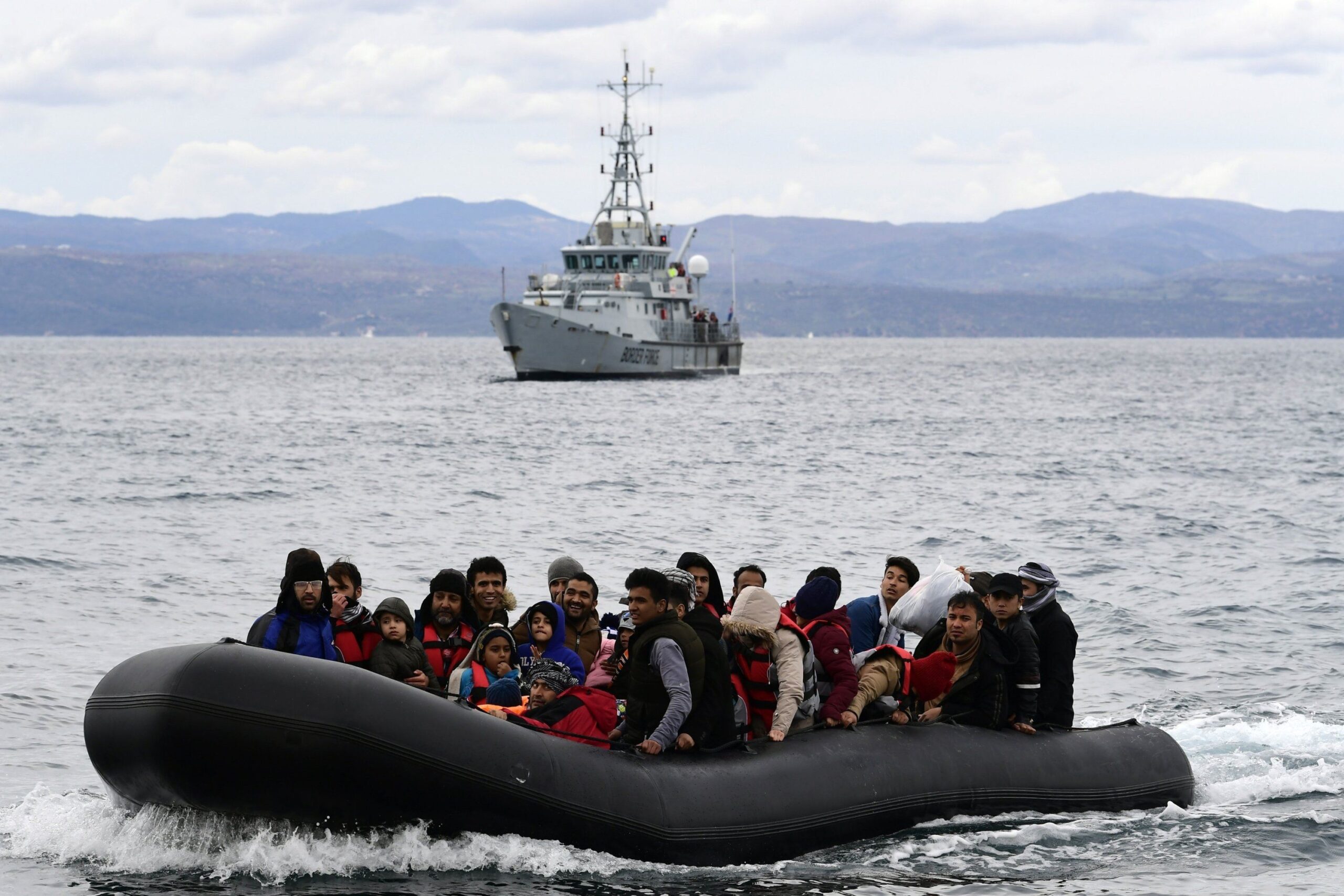
Migration, as one of the most significant social and political phenomena globally, currently has a direct impact on the lives of millions of people. The Kurdistan Region, as part of the Middle East, has not been immune to these political and social transformations over the past two decades, and is recognized as a producer of the phenomenon of migration and emigration toward Western countries. This report is an attempt to examine in detail the causes of migration by the people of the Kurdistan Region and to present a clear picture of this complex issue, particularly the migration of Kurdish citizens toward Western countries. It also analyzes the political changes in migration to Western countries following the COVID-19 pandemic and the Ukraine war, and then explores the different understandings and treatment of those countries toward different migrants at the global level, relying on recent statistics from the years 2024 and 2025 and data from Kurdish and international organizations.
Causes and Drivers of Migration in the Kurdistan Region
The concept of migration refers to the movement of residents of a specific area from one place to another in order to change their normal place of residence. When such migration occurs within the borders of a country, it is called internal migration, but if it involves crossing the political borders of the country, it is called international migration. This process causes migrants to move from their social, economic, and political centers to different social, economic, and political centers. At the same time, the process involves the repetition of adaptation and integration of migrants with various aspects of life in the new society, because migration, despite being the abandonment of a place of residence for a new place, simultaneously encompasses all those customs, traditions, behaviors, and conduct that may be close to or distant from those characteristics that the migrant carried from the country they migrated from to the country they migrated to. Based on that distance and proximity, the migrant’s readiness for self-adaptation and acceptance of change and the phenomena of the new environment and their translation into behavior and conduct are determined. Undoubtedly, these steps within the framework of the migration phenomenon involve a set of primary and secondary causes and drivers.
In this regard, Mardin Hama Rashid, Head of the Media Department at the “Lutka” Agency for Refugee and Displaced Persons Affairs, points out regarding the drivers of migration in the Kurdistan Region that the continued migration of youth and young people is due to a set of causes and successive crises that citizens have faced in the ambiguity of the political, economic, and social future, which has become the main problem for citizens of the Kurdistan Region, in addition to the unemployment of university and institute graduates and their poor living conditions. Dr. Kurdistan Omar Mohammed, an expert on social work and Kurdish migrants in Western countries, believes that in discussing the migration phenomenon, the central and important point is the factors behind the decision to migrate, meaning what brings the practical step of migration into play. The factors of migration work in two directions and complement each other for the decision to take the implementation step, namely the push factors of migration and, in contrast, the pull factors of migration. These factors are so influential and powerful that the migrant no longer pays attention to many things, and even after migration, they continue to affect them for a long time, and the pain of those causes that led to their uprooting requires much time to heal. Therefore, very often when you ask a Kurdish migrant, they do not give you a good and beautiful picture of Kurdish society and are rarely regretful that they migrated and left their homeland behind, because the push factors of their society still remain as they are and continue to push them, in contrast to a systematic, organized society where pull factors are displayed in an organized manner with a solid program that deserves attention.
Based on these principles, the most important push factors of migration by citizens of the Kurdistan Region can include several different causes. In this regard, Dr. Kurdistan Omar Mohammed emphasizes that the migration process from East to West primarily stems from the collapse of the Soviet Union, the failure of the Islamic experiment, and the failure of nation-states to resolve internal problems. The populations of areas under the control of socialist, nationalist, and religious countries have lost hope in building a prosperous future. Moreover, what had been built earlier, instead of progressing, declined and was destroyed. The examples of Iraq, Afghanistan, Ukraine, Libya, and several other countries have made the people of those countries lose hope. On the other hand, portraying the West as advanced and the East as backward, especially by taking advantage of social media and technological advancement and its use in daily life, has made the image of the Western world more beautiful and the East more unattractive. Another factor is the humanitarian laws of the West that are ignored in the East. China, Russia, Malaysia, the UAE, Saudi Arabia, South Korea, Japan, and several other countries are examples of stability and technological progress in the Western view, but their laws are dry and insensitive toward migrants. Therefore, migrants have no guarantee of human rights when entering those countries as to whether they will remain safe upon arrival in that state or not. Therefore, hopelessness in the East, portraying the West as paradise, and the absence of migrant rights in the developed countries of the East are three main factors for the increase in migration from East to West.
On the other hand, economic causes and unemployment rates and low income have become the main reasons for migration. According to statistics from the Kurdistan Region Statistics Office (KRSO) at the end of 2023, the population of the Kurdistan Region reached more than 6.5 million people, of whom 3.3 million were men and 3.26 million were women. However, the reading conducted in coordination with international parties points to a deep problem. According to the latest survey by “Kurdistan 24” published in early 2024, 87% of Kurdistan Region families have an income of less than $850 per month. This percentage indicates the difficulty of the economic situation that has caused many people to consider migration.
Youth unemployment statistics in the Kurdistan Region show a different complexity. According to the “Rudaw Research Center,” the unemployment rate among youth reached 13.6% as of September 2023. Also, according to statistics from the “Kurdish Globe Organization,” the youth unemployment rate in May 2025 was approximately 37.2%. Furthermore, the Statistics and Information Office in the same month of 2025 indicated a rate of 27.2% unemployment among the youth of the Kurdistan Region. The demographic situation and the overall population rate of the Kurdistan Region are dangerous statistics and a cause of a high level of youth migration to Western countries.
On the other hand, social characteristics show a significant difference in women’s work patterns in the Kurdistan Region. For example, women work at a rate of 16.1% compared to 61.5% for men, and the unemployment rate among women reaches 13.5%. Additionally, the rate of NEET (neither in education, employment, or training) youth in the Kurdistan Region is at a high level. These are among the most important causes of attempts to migrate to Western countries, because according to an estimate by “Rudaw newspaper,” approximately 20,000 people from Iraq and the Kurdistan Region migrated for the same reasons in 2023, while the Middle East Research Center presents different statistics, estimating approximately 26,000 people. Part of the causes of migration are attributed to political and security factors and the government’s indifference to youth problems and the absence of a clear program to solve the unemployment problem and services.
Changes in Western Policy and Their Impact on Kurdish Refugees
After several decades of migration by Eastern citizens toward the West, Western countries are currently facing radical changes in migration policy and their treatment of refugees and their rights. In this regard, Mardin Hama Rashid points out regarding changes in Western policy toward refugee rights that due to the high number of migrants taking dangerous routes, the presence of a high percentage of migrants in countries, the reduction of labor availability for native citizens of European countries, and their protest demonstrations against the entry of migrants and the adoption of violent paths by some migrants, these have become reasons for changing the policy of European countries toward migrants. European countries, when there was war in any Middle Eastern country and a lack of stability, welcomed migrants in a humane manner and always felt that these migrants fled their countries due to danger to their own lives and their families’ lives. The Ukraine war was another factor in changing countries’ positions toward migrants from other countries due to the high rate of Ukrainian war refugees.
The Ukraine war has had an impact on migrants from the Kurdistan Region. On one hand, the significant international attention to Ukrainian refugees has caused less attention to be paid to the problems of the Kurdistan region. On the other hand, the different treatment by Western countries of Ukrainian refugees has affected refugees from the Kurdistan Region. According to UNHCR statistics in 2024, the majority of Kurdish migrants who reached European countries via Turkey and Greece, whereas during the Ukraine war the route through Eastern European countries for Kurdish migrants increased, although the approval rate of Kurdish refugee applications is less than 30%, which indicates difficulty in Western treatment of Kurdish refugees, especially since according to statistics from the “IOM” organization in 2024, the majority of migrants who reached Europe from the Kurdistan Region are youth aged 18-35 years, and many of them have completed college or are technical specialists, but the majority have remained without refugee status in European countries.
Within the framework of changes in Western countries’ policies toward migration and war and instability in the Middle East and their negative role on the image of migrants as human beings, while at the same time Western countries’ treatment after the Ukraine war and Corona, Dr. Kurdistan Omar Mohammed believes the main reason for changing Western policy toward migrants has been the increase in the number of migrants in the West. The high number of migrants means an increase in those who possess a culture different from the West. Within Western culture, the migrant either wants to preserve their culture, or wants to develop it, or wants to adapt it to Western culture. In both cases, they put pressure on Western culture. Here, a collision occurs within the dominant culture that wants to digest the migrant’s culture with the migrant’s culture, whether they want it or not, which has placed pressure on Western culture. The increase in migrant pressure on the West has caused a change in Western policy on humanitarian and political issues and issues specific to migrants.
Based on these foundations, the system for evaluating refugee applications has undergone noticeable changes. In 2024, European countries established a new system for evaluating applications that focused more on “genuine refugees.” This has further reduced the likelihood of accepting applications from Kurdistan migrants, who mostly migrate for economic and social reasons, more than any other country. Accordingly, regarding the increase in rejection rates of refugee applications or migrant rejection, according to the latest UNHCR statistics at the end of 2024, the number of people forced to migrate globally reached 123 million and 200 thousand people, which is the highest level in human history up to that stage. Within this context, for migrants from the Kurdistan Region, although the migration rate and number of migrants toward Western countries has increased, along with the increase in asylum applications, acceptance by Western countries has decreased. UNHCR statistics indicate an increase in the number of migrants from the Kurdistan Region toward Western countries and an increase in the use of new routes for migration, for example through the Red Sea and North Africa. With this increase, a significant portion of acceptance and reception as refugees by Western countries has decreased due to the tightening of migration laws in many European countries, increased border control, and decreased approval rates for Kurdish refugee applications. Furthermore, the rate of refugee reception and granting of refugee rights to Kurdish migrants in Germany is approximately 25% for approval of Kurdish refugee applications for 2024, while France at 18%, the Netherlands at 32%, and Britain at less than 15% have approved refugee applications.
Western Countries’ Position Between Acceptance and Rejection of Refugees
At this time, Western policy toward migration is between two negative and restrictive approaches or humanitarian approaches, while the justifications of Western countries for rejecting migration are between two assumptions: humanitarian and civilizational justifications or racist and discriminatory ones, in a way that has generated the most controversy. The majority of Western countries, within a formal framework, emphasize that their political record and roadmap are based on international law and protection of human rights, but the implementation of those policies often shows differences from their official positions. Mardin Hama Rashid believes that because not all countries have the same view on migrants, some countries legally work on rejecting migrants. For example, they examine the stability of the migrant’s country of origin and decide according to the situation. However, some others decide in a racist manner, under the pretext that their culture and religion are threatened. Moreover, Dr. Kurdistan Omar Mohammed points out that the door that was open to migrants in the 19th and 20th centuries is now closed, and the West wants to be selective about whether to accept or not. For example, a country like Germany thinks about how many migrants it needs, what kind it needs, who it wants and who it keeps away. Currently, labor plays an important role in receiving migrants. The issue of building a European army and increasing the military budget of European countries in the NATO alliance changes the reliance on migrants. Also, the aging of European society and the weakening of the family have an impact on society’s need for migrants. All of this has caused Europe in particular and the West in general to need migrants, but partisan conflict, especially between right-wing parties on one side and others on the other side, has caused migration laws to be reviewed in a way that efforts are made to encourage legal migration and reduce illegal migration. Legal migrants are skilled workers who have knowledge about the livelihood and life in that state they are going to, and before migration, the receiving state has provided work and accommodation for them. This type of legal system is implemented in America and Canada, while it prevents those migrants who take routes through gangs and rely on human rights to migrate to Europe. This type of migration has become despised and disliked, and the West, to control the number of migrants and the quality and character of migrants, often overlooks human rights and forcibly returns migrants to another country or deports them to their own country.
Regarding the Kurdistan Region and the characteristics of Kurdish migrants before Western countries, it appears that they are often viewed as (economic migrants) rather than political refugees. This has a direct impact on the approval rate of their applications, although human rights organizations such as Human Rights Watch and Amnesty International continue to criticize European countries’ policies regarding the treatment of Middle Eastern migrants, including Kurdish migrants. However, the West’s justification is the implementation of the (Safe Country) policy for Iraq, meaning many European countries view Iraq and the Kurdistan Region as safe and stable zones. Accordingly, the likelihood of approving refugee applications has decreased significantly. This is while the Kurdistan Region is still under the influence of various political and economic problems.
In addition to what has been mentioned, ethnic and religious discrimination is another factor in the negative positions of Western countries toward Eastern migration. For example, compared to Iraqi Christian and Yazidi refugees, Muslim refugees from the Kurdistan Region face greater difficulty, and the approval rate for religious minority applications is often higher.
The Different Positions of America and Canada Regarding Refugee Rights
America and Canada, which are two main centers for refugee migration from the East after European countries for many political, economic, geographic, and other reasons, have different treatment and perspectives toward migrants and refugee rights. Dr. Kurdistan Omar Mohammed has the view that the difference between Europe and America is that America’s borders are more controlled than Europe’s borders. Europe’s peninsula has more maritime and land routes with the East, but America has only one land route with Mexico and Canada. Reaching Europe and America is not easy, but it is not as easy as Europe’s routes. On the other hand, America and Canada’s laws are purely democratic and capitalist, but in Europe, social democracy is a strong current, and these parties support greater consideration of human rights. Also, Mardin Hama Rashid points out that due to differences in geographic, economic, and political situations, in European countries migrants migrate more illegally, but in Canada they are selected legally, while in America, refugees only come through the Mexican border and the migrations are illegal. Additionally, Europe has common law, but in America and Canada the final decision goes to the federal government.
In the wake of America’s policy differences compared to Western countries, and due to its direct role in Iraq and support for the Kurdistan Region, America has a special program for Kurdish migrants. Therefore, America’s policy toward Kurdish migrants has significant differences from European countries. Statistics on refugee acceptance in America for 2024, according to official UNHCR reports, show that the total number of refugees accepted reached 100,000 people, of whom approximately 3,500 people were from Iraq and the Kurdistan Region. What is special is the approved SIV (Special Immigrant Visa) program for those who have worked with American forces, which has provided a special opportunity for Kurdish migrants.
At the same time, Canada’s policy, similar to America’s, has significant differences from European countries. Canada is one of the best countries for approving applications from Kurdish migrants, especially since the “Provincial Nominee Program” and “Express Entry” systems continuously provide pathways for skilled and educated individuals to migrate to that country. According to UNHCR reports, Canada’s statistics for 2024 indicate that the total number of migrants accepted reached 460,000 people, of whom approximately 8,000 people were from Iraq and the Kurdistan Region. More importantly, the approval rate for Kurdish migrants reached 68%, which is a high and welcoming statistic. While these opportunities demonstrate the realities that America and Canada are significantly different from European countries, because geographically they are far from the Kurdistan Region, which means migrants must have greater preparation. Also, the legal systems of these two countries allow Kurdish migrants to legally apply for refugee rights. Moreover, the labor markets of America and Canada need skilled workers, which fits with the characteristics of many educated Kurdish migrants.
The Migration Phenomenon as an Opportunity for Humanity and an Element of Progress and Exchange
The migration phenomenon, as a permanent global tradition, is viewed by refugees as a new opportunity to start a new life, while migration has been viewed as a dangerous threat by some refugee-receiving countries. Between these two different perspectives, Dr. Kurdistan Omar Mohammed points out that in the shadow of globalization and the opening of borders and multinational companies and technological advancement, capital and labor are in much greater movement, and air travel, train and automobile travel, and waterways have greatly increased. Finding job opportunities through social media has increased, and foreign labor has developed globally. With all this, the market is also a great driver of migration. Therefore, as long as factors related to progress are seen, the mixing of societies increases more, and one of the results of mixed integration is the migration phenomenon. Therefore, Western countries have understood that the migration phenomenon is a consequence of globalization and is a natural phenomenon, and preventing it is limited. But now efforts are being made to make migration legal and regulated. Additionally, Mardin Hama Rashid reiterates that migration can be viewed as an opportunity for progress in terms of language, culture, thought, economy, and politics for bringing in innovation and serving and advancing the country. Examples of countries that see migration as an opportunity include (America, Canada, Australia, and Germany).
Within the framework of countries that view the migration phenomenon as an opportunity, Canada becomes a successful example because it systematically uses migration as an activity for economic development. Within the framework of Canadian refugee law for migration, the (Century Initiative) program is seen as an appropriate legal framework, which aims to bring Canada’s population to 100 million people by 2100, which is more than double the current population. This program is based on the view that migrants can directly participate in economic and social development.
Regarding the successful participation of Kurdish refugees in receiving countries, UNHCR reports emphasize that statistics on the success of Kurdish migrants in Canada show that the employment rate within one year was 78%. The average income after five years of work was 52,000 Canadian dollars. The rate of starting private businesses was 23%. Also, in Australia, through the (Regional Sponsored Migration Scheme) program, the process of settling migrants in remote areas has been implemented. This policy has helped fill the large gap in labor in underdeveloped areas. Kurdish migrants have often participated significantly in local economic development in various professions such as agriculture, industry, and services.
Within the framework of UNHCR reports, Sweden is a successful example, especially before the policy changes in 2022. Those Kurdish migrants who went to that country in the 1990s are now an important part of Swedish society’s economy. Refugees in that country have not only participated as an influential workforce but have also played an important role as company founders. Also, Norway follows the (High Skilled Migrant) program, through which it attempts to attract specialized individuals. Kurdish migrants, particularly in technology and medical fields, have been significantly successful. This program has had a positive impact on the development of technological sectors in this country.
Nevertheless, some countries see the migration phenomenon as an opportunity for progress and have established special programs for this purpose, including: Canada and the Start-up Visa system. This system allows migrant company founders who have innovative projects. This program has led to the creation of thousands of new jobs and advancement in the technology sector. Also, Germany and the EU Blue Card program, which attracts specialized individuals from the European Union. This program, by facilitating migrant procedures and providing social rights, has been able to attract many experts from around the world.
The Negative Consequences of the Migration Phenomenon in the Kurdistan Region
Despite the significant success of a portion of Kurdish refugees in Western countries, generally the migration phenomenon has had negative impacts on the Kurdistan Region, most notably:
First: The increase in the phenomenon of Brain Drain. Accordingly, the migration of educated and specialized individuals from the Kurdistan Region has had a negative impact on internal development. According to statistics from the Ministry of Higher Education of the Kurdistan Region in 2024, 38% of university graduates desired to migrate. The majority of those who migrate are in the fields of medicine, engineering, and technology, which has caused a significant decrease in domestic specialists.
Second: Impact on the economic situation and development. According to an estimate by the Ministry of Finance and Economy, the Kurdistan Region loses approximately 2.3 billion dollars annually due to the migration of capable individuals. This has directly left impacts on reduced investment in technological sectors, increased reliance on foreign labor, and weakened capacity for innovation and creativity.
An Illustrative Chart for 2024: Migration from Iraq’s Kurdistan Region toward the West, Europe, and Internal Iraq
Source: Official statistics from IOM, KRSO, UNHCR, and ICMPD
Solutions for Transforming the Migration Phenomenon into Opportunity and Progress
In order to transform the global phenomenon and tradition of migration from threat and challenge into opportunity and self-construction, several political and systematic steps must be taken, most importantly:
First: Circular Migration Policy. In order to transform migration from threat to opportunity, there is a need to create a program that allows Kurdish migrants to work temporarily and then return. Also, through remote technology programs that allow specialized individuals to work from the Kurdistan Region for Western companies.
Second: Investment in international organizations. For example, participation with partners such as UNDP, World Bank, and EU to create opportunities and increase jobs domestically can have a significant impact. Investment in technology and innovation can create new opportunities and jobs that are equivalent to those offered abroad.
Third: Remittances. According to statistics from the Central Bank of Iraq, Iraqi and Kurdish migrants send approximately 4.2 billion dollars home annually. This money can be systematically used in development projects, such as investment in infrastructure, education, and technology.
For the Kurdistan Region to be able to use the migration phenomenon as an opportunity for creation and self-construction, several steps must be taken, including:
First: Creating the Kurdistan Talent Magnet Program, meaning allocating a special budget for returning Kurdish students from abroad. This is through providing low-interest loans or grants for establishing companies and creating technology parks in Erbil, Sulaymaniyah, Duhok, and other cities.
Second: Implementing the Digital Nomad Kurdistan program, meaning allowing Kurdish migrants abroad to work from Western countries. This is by providing fast internet and shared workspaces, along with legal facilities for the operation of foreign companies, which can be helpful.
Third: Investment in education and the technical side. Cooperation with international universities to create new programs, teaching English and other European languages, and team work training and skills that can provide a deep and strong foundation for this purpose.
Characteristics of Kurdish Migrants and Their Success Rate in Western Countries
The Kurdish diaspora has played an important role in the migration and unification process, although accurate statistics and information about the migration rate of Kurdish citizens to Western countries are not yet available. However, according to some unofficial statistics, approximately 2.5 million Kurds live outside the Kurdistan Region, with approximately 1.5 million Kurds in Germany alone. However, due to the lack of necessary identification and the distribution of Kurds across Iraq, Syria, Iran, and Turkey, the success rate of migrants in Western countries cannot be obtained in detail. As Mardin Hama Rashid points out, due to the absence of Kurdish documentation, all Kurdish asylum seekers from the Kurdistan Region are shown in statistics as Iraqi. Therefore, they face many obstacles in this regard. However, due to the high migration of Kurdistan Region citizens annually, the rate is 70% to 75% of asylum seekers who are Kurds who apply for asylum rights throughout Iraq and in European countries. According to a study by the “Kurdistan Research Center” in 2024, Kurdish migrants have been successful to a significant extent because they possessed several characteristics. For example, 78% of them know English at a good level, 65% have college degrees or higher, 42% had work experience before migration in technology or engineering fields, and 56% had savings for starting a new life. Accordingly, these statistics show that Kurdish migrants had preparedness and the necessary plan to face this stage.
What Statistics and Data Say
Based on the necessary statistics and information within the report, several points are identified as conclusions:
First: The migration phenomenon from the Kurdistan Region today shows a complex and challenging picture. With the youth unemployment rate in the Kurdistan Region reaching a high level of (27.2% – 37.2%), and 87% of families having an income of less than $850 per month, we see that the region is not in a normal state economically and socially. This has increased migration causes and drivers.
Second: Migration from the Kurdistan Region is not merely a phenomenon of adventure and selfishness, but rather a reflection of deep political, economic, and social problems. According to statistics, approximately 20,000 people migrated in 2023, and this is a significant rate for a population of 6.5 million people in a region.
Third: The Ukraine war and the COVID-19 pandemic have had a clear impact on migrant acceptance policy. The different treatment of Ukrainian refugees (broad and rapid approval) compared to refugees from the Kurdistan Region (approval of less than 30%) indicates the existence of two completely different treatment standards.
Fourth: While European countries have announced a formal framework for humanitarian and legal policy, practical implementation often shows differences from official statements. The rate of granting refugee rights varies by country: Germany (25%), the Netherlands (32%), but Britain (less than 15%).
Fifth: America and Canada have different policies toward migrants. Canada, with an approval rate of 68% for Kurdish migrants, has shown itself as a positive example, while America, with its special programs (SIV), accepted approximately 3,500 people in 2024.
Sixth: Although some countries like Canada, Australia, and to some extent Germany view migration as an opportunity for development, for the Kurdistan Region this means the departure of creative minds, which causes an annual loss of 2.3 billion dollars to the region.
- Originally published in Publishing Section by the Center for Future Studies and translated by Nawroz Mohammed for Kfuture.Media.