

Dr. Zana Karim / Expert in International Politics
Global trade routes, whether terrestrial or maritime, represent the arteries connecting the world and the manifestation of globalization and the hope of realizing “One World, One Dream”[1] through these pathways. National economies gain access to new markets and opportunities through them and expand accordingly. Commercial goods and commodities, both before and after their production, transit and move through these routes. Therefore, the destabilization of the security situation of these routes has negative implications for the global economy. The Red Sea is one of the most important global waterways and holds political, economic, and strategic significance for regional and international powers. Currently, this trade route faces challenges and has fallen under the influence of global, regional, and domestic conflicts and crises, which have negatively impacted global trade, to the extent that some observers view it as the beginning of the unraveling of globalization and the transformation of globalization into deglobalization. What are the complexities of the Red Sea? What is their relationship to global transformations and international conflicts, and what impact do they have on the future of global trade and economy? Will these complexities lead to the end of a phase in the history of international relations and become the beginning of a new phase and the restructuring of global relations on a new foundation?
First: The Red Sea as More Than a Trade Route
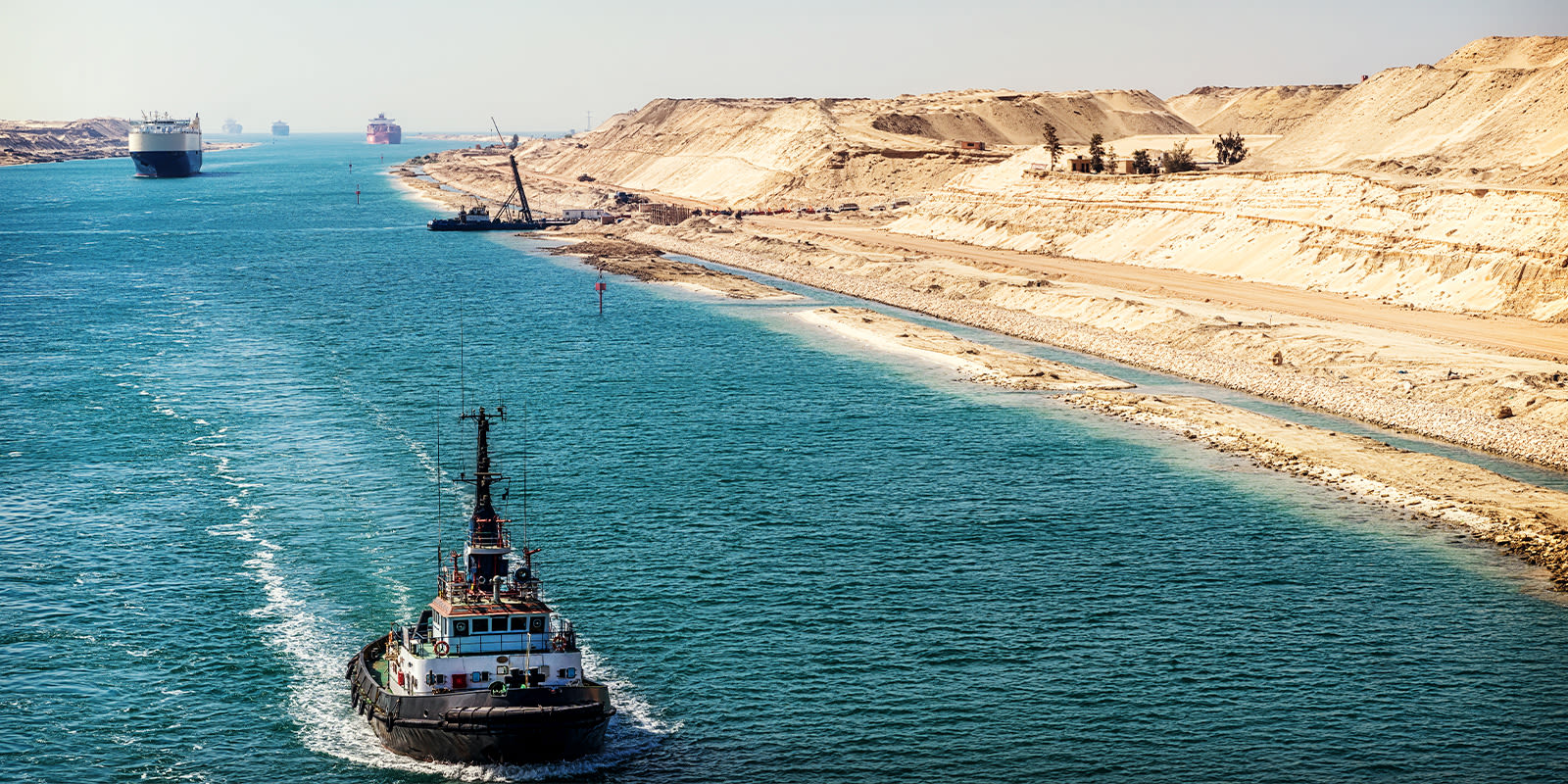
The Red Sea is an important strategic global waterway that connects East and West. Historically, it has been an important route for connecting the continents of the Old World (Asia, Africa, Europe), and with the opening of the Suez Canal and the discovery of oil, it gained additional importance and became a focal point for competing regional and global powers and an arena for confrontation and interaction among various actors.
This waterway includes several important ports used for regional and international trade and serves as important stations in maritime transport. Therefore, the route is considered one of the arteries of the global trade system[2].
According to Richard Heyman, Professor of Strategic Geography at the University of London, one of the factors determining the importance and value of a waterway (strait) is the volume of international trade and the type and strategic importance of the goods passing through it[3]. The importance and value of the Red Sea is evident in both the large volume of international trade passing through this route and the type and strategic significance of its goods.
Approximately 15% of global trade by maritime route passes through this waterway. Annually, $700 billion worth of total trade value between Asia and Europe passes through the Bab al-Mandab Strait, which falls within the Red Sea domain. Additionally, 4.8 million barrels per day of crude oil and petroleum products, equivalent to 4% of global oil trade, pass through this maritime route. Moreover, it serves as the main route for transporting oil from Arab Gulf countries, which ranges from one to one and a half million barrels daily to global markets, as well as the main route for communication and internet cables (approximately 17% of global internet volume passes through these cables). Beyond all this, the Red Sea region and the Horn of Africa [4] have recently become one of the most important investment attraction areas in the world, particularly as the region is rich in mineral, oil, agricultural, and livestock resources [5].
The importance and value of the Red Sea transcends commercial and economic dimensions and also holds strategic and geopolitical significance. Geopolitically, domination of this waterway means control over one of the most important global trade routes and production chains, as well as exercising political and military influence and affecting regional issues. Therefore, it holds important value for the development, domination, and protection of the hegemony of regional and international powers. To understand the geopolitical importance of the Red Sea route, the theories of Alfred Thayer Mahan [6] on sea power may open an important gateway for us. According to Alfred Mahan, sea power is crucial for the development, progress, prosperity, and security of states, and when he discusses the factors that have unique and singular importance in state development, he mentions the geographical situation of the state in terms of its oversight of multiple seas, the existence of connections between seas, the level of state control over major waterways and strategic bases, and he reached this conclusion through detailed research on British naval power[7]. Mahan believes that Britain, by possessing important passages and strategic bases like Gibraltar, was able to control the Mediterranean Sea—a control that has had tremendous impact on world history from both commercial and military perspectives [8]. Following Mahan’s views, we understand what impact dominance over a route like the Red Sea and the Bab al-Mandab Strait has on the power and development of states.
This importance and value of the Red Sea has made the region an arena for regional and international geopolitical competition as well. There are several indicators of regional and international geopolitical competition in the Red Sea region; perhaps the most apparent of these indicators are the competition for military concentration and the expansion of maritime influence. This is manifested in the establishment of military bases and the strengthening of maritime presence in the region by the United States, China, Russia, and France, in addition to regional powers such as Iran, Turkey, Israel, the UAE, and Saudi Arabia [9]. Currently, each of the United States, France, Russia, China, Turkey, Israel, Iran, Saudi Arabia, and the UAE have military bases in Djibouti, Somalia, Eritrea, and Sudan [10]. Egypt also announced the opening of the Southern Fleet Command in Safaga in January 2017 and opened the Bernice military base in January 2020, which is the largest military base in the Red Sea region [11].
Another indicator of geopolitical competition is the rivalry among regional and international powers to dominate maritime routes, with the aim of imposing their influence over these routes and controlling them for their own interests, in addition to forming conflicting alliances and contradictory partnerships between international and regional powers with the states of the region, which are often formed on contradictory foundations, as well as economic competition and strategic projects that emerge from the efforts of regional and international powers to control the economic resources of the region’s states through the implementation of major strategic projects in those states, such as port development or infrastructure that strengthens their economic and political influence[12].
The geostrategic and geopolitical importance of the Red Sea waterway for regional and global powers, in addition to internal divisions and ethnic and sectarian conflicts in the states on both sides of the waterway, has provided fertile ground for intervention and has made the Red Sea region an arena for diverse interests and conflicts among influential regional competing states such as Egypt, Saudi Arabia, the UAE, Turkey, Iran, and global powers such as the United States, China, Russia, and France, in addition to non-state actors such as the Yemeni Houthis and armed and terrorist groups, and the clash of their interests. This situation has led to the creation of an unstable security situation full of crises and an escalation of complexity and tensions in the region.
Second: The Complexities of the Red Sea and the Crisis of Global Transformation
In the last decade of the previous century and with the end of the Cold War, the United States became the sole global power and hegemonic state in the international system. Since then, America, as a status quo state, has been trying to preserve its hegemony and prevent any other power from challenging it. In contrast, revisionist states are not satisfied with the new international situation and are concerned about the balance of power and the rules of the international system. These states are trying to end this unilateral American hegemony and envision a multipolar world. Currently, the Russian Federation and the People’s Republic of China can be identified as two revisionist states; these two states, despite their differences, are aligned and united on this point. Each of these two states has adopted a form of confrontation and has taken several steps and employed various strategies toward this end. If Russia has adopted a military solution, then China competes with its rival more through economic instruments and is trying to end the unilateral hegemony of the United States [13].
In 2022, Russia attacked Ukraine and chose confrontation; the United States and China disagreed over the nature of their coexistence, and the threat of China being drawn into a war similar to Russia’s war with Ukraine over Taiwan exists. Two new poles are emerging, and unlike the two poles of the Cold War, these two poles are not based on military alliances but rather on commercial alliances [14].
The conflict of these great powers has become more intense and explicit over the past two decades, and the international system has witnessed profound structural transformations, such that the formation of the balance of power and the instruments of managing conflict have been restructured, producing a hybrid type of threat that transcends traditional concepts of defense and sovereignty. These transformations are not limited to changes in the position of great powers or the redistribution of influence, but have also affected the essence of the global security system and introduced new concepts regarding non-state actors, asymmetric defense, and cyber warfare, as Tokhm Karan has put it, into the calculations of stability. In this context, the Red Sea has emerged as a strategic arena embodying the intersection of geopolitical, military, and economic transformations in the face of escalating competition over vital routes and increasing non-traditional threats that create obstacles to freedom of navigation and the stability of global supply chains [15].
Currently, the Red Sea region faces several complex and intersecting security challenges, such that they have put the stability of the region under threat. The escalation of regional competition among a group of powers trying to impose their influence, as well as the increasing complexity of internal crises in the countries bordering the Red Sea and the spillover of the effects of these internal crises across the borders of these countries, the spread of the threat of terrorist groups and organized criminal activities that have exploited the unstable situation to advance their agendas—these, in addition to classical threats such as piracy and energy security and maritime routes, as well as the security impacts of climate change, such as rising sea levels and their effects on infrastructure and coastal communities, are among the most important challenges[16].
In addition to these challenges, the Yemen crisis and Houthi control over the north of the country have made the situation more complex, and with the escalation of the war between Israel and the Hamas movement, the complexities have reached another phase and escalated. Israeli ships and ships of Western states supporting Israel, particularly American and British ships, have been targeted by the Houthis. According to data from the International Institute for Strategic Studies, between November 2023 and December 2024 alone, the Houthis carried out more than 300 attacks on ships in the Red Sea [17].
These Houthi attacks became the reason for further intensification of the militarization level of the Red Sea region. In December 2023, the United States announced Operation Prosperity Guardian. Prosperity Guardian is a multinational security initiative operating under the umbrella of the Combined Maritime Forces and the Combined Task Force 153 (CTF 153), which was established in 2022 to protect navigation in the Red Sea and the Gulf of Aden. Similarly, the European Union announced Operation Aspides in February 2024, whose mission was to escort commercial ships [18].
Despite these efforts by Western naval forces and the targeting of the Yemeni Houthis on land by American and British forces, attacks on commercial ships continue, and maritime movement has significantly declined, such that the passage of ships through the Suez Canal, which connects the Red Sea to the Mediterranean, has decreased by two-thirds [19].
From this, we can conclude that the Red Sea region, in its political and geostrategic context, given the continuation of the unstable situation for several years due to the war in Yemen, as well as the current conflict among Horn of Africa states and the behaviour of some states and the existence of a state of political regression and instability in the region, has become one of the most expected regions for conflict, and this has actually produced a state of intensification of political and strategic crisis, becoming a headline for a long future period, particularly considering the factors supporting this state and the development of latent conflicts[20]. Therefore, considering the givens and the regional and international situation, it can be predicted that at least in the medium term, the unstable situation in the Red Sea will continue and will negatively impact global trade and economy.
Third: Global Trade at the Foot of Red Sea Complexities
Global trade encompasses countless goods and services, and industrial goods constitute the lion’s share of this trade. Global trade consists of the total of global exports, or alternatively the total of global imports—there is no difference; we can say it is the total of global exports, and we can also say it is the total of global imports. This equivalence of exports and imports is because global exports, if you deduct shipping costs and insurance, become equal to global imports, and what is exported from one country is the same thing that is imported into another country [21]. On the other hand, global trade is both an instrument for economic progress and a measure for gauging economic progress, thereby fulfilling the long-term objectives of trade in the international economy when it facilitates the distribution of raw materials to producers and goods and products to consumers, thus serving the objectives of the international and national community [22]. Therefore, international trade is a factor for the welfare and progress of nations and the accumulation of capital and power, so any threat to global trade and the movement and routes of this trade is a threat to the national security of nations.
Due to low cost and efficiency in transportation, maritime transport constitutes more than 80% of total global trade worldwide, making the security of maritime routes one of the most important factors of energy security in the world, and any disruption to these routes exposes the world to an energy crisis. Therefore, securing maritime routes imposes its strategic importance on global naval powers [23].
Hence, any threat facing the Red Sea directly impacts international trade. The threat to maritime operations in this waterway becomes a cause for rising energy prices and increased levels of inflation, slowed growth, and overall investment decline in the context of economic uncertainty and the disruption of global trade movement, creating obstacles to global economic recovery [24].
The complexities of the Red Sea have temporarily led to the redrawing of the global trade map; hundreds of ships have been forced to redirect their routes toward the Cape of Good Hope route. According to reports from global shipping companies such as Maersk and Hapag-Lloyd, this change causes ship journeys to take 10 to 14 days longer and incurs additional costs ranging from $500,000 to $1.2 million per voyage [25]. Moreover, insurance cost levels have also risen; whereas previously and normally insurance costs reached 0.6% of the value of goods in the ship, they have increased to reach 2% of the value of goods in the ship [26]. The rise in insurance prices in 2024 caused approximately eighteen companies to suspend plans to resume passage through the Red Sea [27].
This complexity is not limited to the scope of additional fuel costs or high maritime insurance and coverage prices, but extends to the strangulation of the global import chain, particularly in vital sectors such as:
Energy: Delays in oil and liquefied gas shipments impact European and Asian importing states, creating pressure on energy markets.
Electronics and Automobiles: Factories in Europe and Asia face shortages of components used in manufacturing, slowing production and raising prices.
Consumer Goods: Rising transportation costs are reflected in retail prices [28], raising overall inflation in several states [29]. For example, the deterioration of the Red Sea security situation has had negative implications for the economy of Egypt, Eritrea, and Sudan, and has brought inflation rates to high levels, such that in April 2024 the inflation rate in Egypt reached approximately 32.5%, in Eritrea 6.4%, and in Sudan 145.5% [30].
According to a Bloomberg Economics report, if the crisis continues until the end of the year, the continuation of the crisis will cause a decrease in the overall global GDP growth rate by 0.3 to 0.5 percentage points. As for small and medium-sized companies, they become more entangled in the inability to absorb this sudden increase in costs and quickly adapt to alternative supply chains [31].
These escalating threats in the Red Sea have pushed several major shipping companies such as Denmark’s Maersk, Italy’s MSC, and France’s CMA-CGM to suspend their ships’ passage through the Red Sea, while other companies like Germany’s Hapag-Lloyd impose additional fees on goods passing through the Red Sea region. In contrast, other companies such as Taiwan’s Evergreen and Orient Overseas, in an effort to avoid being targeted, have adopted the approach of not dealing with Israeli cargo or suspending their trips through this important route [32].
In the context of these complexities, the Freightos Platform recorded an increase in maritime transportation prices from mid-December 2023 by 173%. Tesla announced the suspension of a large portion of production at its factories in Germany due to delays in the arrival of components for those products via the Red Sea route [33]. Supply chain problems have not only faced Tesla but are challenges for the vast majority of Western companies, and in 2023, 69% of Western multinational companies’ supply chains faced disruptions due to geopolitical events [34].
Conclusion
In the preface to the Arabic edition of the book “The Backlash Against Globalization [35],” which she wrote for the Arabic print of the book, Swedish author and researcher Elisabeth Braw makes the Red Sea complexities the beginning and emergence of a new form of conflict and a programmed attack against the operations framed by globalization. Elisabeth writes: Western ships are strongly confronted with attacks and are targeted, such that despite great costs, they were forced to change their water traffic direction and use the “Cape of Good Hope” route. But what is noteworthy and striking in this matter is that only Western ships face attacks and strikes. In the midst of these complexities, Chinese and Russian ships calmly conduct their navigation and pass through this waterway without any obstacles confronting them [36].
Elisabeth considers this the end of the era of neutrality and the redistribution of the world anew, writing: “Now the era of neutrality has ended.” With the intensification of geopolitical tensions between the West on one side and China and Russia on the other, companies and other businesses find themselves becoming targets of conflicts. When Russia attacked Ukraine, Western governments began imposing sanctions on Russia, with the aim of paralyzing the Russian economy. But Russia resorted to other commercial partners, particularly those countries that became wealthy through globalization, and also punished Western governments by seizing the ownership of those Western companies still operating in Russia [37].
In a world increasingly divided where conflicts and divisions become more pronounced, the policy of economic protection and trade wars among great powers escalate toward intensification; the balance of power becomes unstable and faces the possibility of transformation. How can we envision the future of the world and the state of global trade? Will that phase that began after the end of the Cold War and rested on the foundations of liberalism still have enough momentum to continue and not fall into crisis? Is the world, as Elisabeth Braw says, “being redistributed anew,” or can these obstacles and crises be overcome and the world once again unite around the table of one dream? Do the rules and organizations of the international system still have the capacity to contain and overcome these crises and complexities? Where does the Kurdistan Region stand in these transformations, and how can it protect its position, role, and even its survival as an entity? The answers to these questions remain open, with the hope of opening the door to productive dialogue…