

By: Raber Siweli
Throughout human history, religion has played a role not only as an aspect of faith, but also as a unifying force in organizing societies, political structures, and cultural identities. Although the role of religion in the process of building societies has been constant, it has taken different interpretations at various stages; these interpretations have sometimes led to harmony and sometimes to controversy and discord at both theological and sociological levels. Particularly in the Islamic world, different sects, intellectual schools, and cultural approaches represent clear manifestations of this diversity. Within this framework, the subject of “different views on religion” is not merely a theoretical topic, but also an important key to understanding the intellectual dynamics and political transformations of societies.
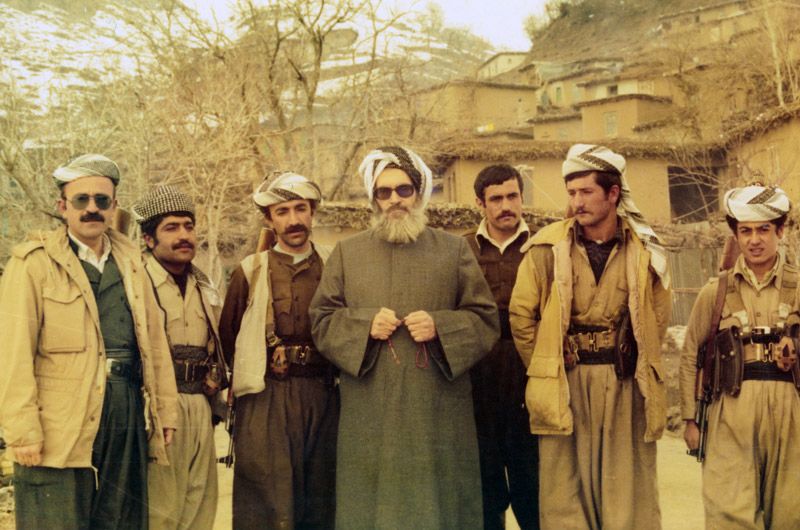
Within the framework of this research, we discuss the personality and religious vision of Sheikh Izzeddin Husseini as one of the prominent religious scholars of Kurdish society, who represents a prominent example of the late twentieth century due to his different religious beliefs and social and political positions. His effort to reconcile classical understanding of Islam with contemporary issues is clearly evident! At the same time, he advocates those different intellectual lines can coexist. This has had an impact on the fact that the aforementioned individual has emerged not only as a religious scholar, but also as a social leader and opinion holder.
Sheikh Izzeddin Husseini’s views on religion go beyond a one-dimensional understanding. He does not portray religion solely as a sphere of individual worship, but rather sees it as a foundation for social justice, freedom, and the pursuit of national identity. That is, Sheikh Izzeddin Husseini simultaneously emphasized the preservation of religious values and also advocated that these values can be interpreted in a way that responds to the contemporary needs of society, because religion does not possess a static structure, but rather is dynamic.
It is worth mentioning that the era in which Sheikh Izzeddin Husseini lived was a phase when the struggle for Kurdish people’s identity intensified and political and cultural tensions increased. During this phase, the positions of religious leaders were not limited to religious issues alone; rather, they had an impact on public consciousness and the formation of political awareness. In his views, there is a strong connection between religious content and society’s demands for justice, equality, and freedom. Here, Sheikh Izzeddin advocates that religious thought is a constructive social force and demonstrates that religion has the ability not only to clarify the past, but also to shape the future. This understanding, in addition to accepting the legitimacy of different interpretations of religion, also allows them to be viewed as an opportunity for social development.
Life and Family
Sheikh Izzeddin, whose name is Rashid and known as Sayyed Izzeddin Husseini, was born in 1922 in the city of Baneh in a religious and Kurdish nationalist family[1]. Sheikh Izzeddin’s father’s name is Sheikh Hama Salih, also known as Sayyed Salih or Qazi Sheikh Salih, and they consider themselves Sayyids and descendants of the Barzanji Sadats[2]. Originally from the village of Waja in Sharbazher, they later moved to Baneh. Sheikh Izzeddin’s father married twice. From his first wife, he had only one daughter named Amina. After some time, his wife passed away, then he married Halima, with whom he had four sons and one daughter. Sheikh Izzeddin was the first child of their household, and after him, Abdul Qadir, Sheikh Jalal, Zakiya, and Aziz were born respectively.
Sheikh Izzeddin started studying with his father at the age of five[3]. Although he would have liked to go to school, the city of Baneh did not have a modern school until 1936. Later, when a school was opened in that city, Sheikh Izzeddin’s father did not allow his children to go to school, because he viewed the education and training system of Reza Shah’s rule as a call for racist authority. He said regarding his dislike of religious education: “Like every mullah’s son, I studied in a religious school. For a while, I did not like religious education; I wanted to go to school, but my father did not allow it! Then I went into religious studenthood. When I entered among the religious students, my thinking changed. I started studying very seriously and traveled to most of the cities and towns of Kurdistan until I completed all the religious sciences, and in 1946 I received the certificate of religious scholarship from Mamosta Mala Baqir Balk[4].”
Sheikh Izzeddin married Zulaykha, the daughter of Sayyed Baba Gawra, at a young age and stayed in the village of Hamamian for about two years. The fruit of this marriage was seven children named Aysha, Fatima, Shirin, Sayran, Parwin, Jamila, and Jamal. Sheikh Izzeddin Husseini passed away due to illness on Thursday, February 10, 2011, at the Academic Sciences Hospital in Uppsala, Sweden, at the age of 89, and was laid to rest in the Saywan Hill in the city of Sulaymaniyah.
A Different Vision in Religious Practice
Sheikh Izzeddin Husseini possessed a prominent political history. On one hand, he was a mullah; on the other hand, he was a well-known political personality and a supporter of the leftist movement in Kurdistan [5]. After completing his religious education, he became an Arabic language teacher at the Red Mosque in Mahabad, and also taught Islamic sciences courses at the religious school. He then became the Friday Imam of the city of Mahabad. After the teaching profession, this was the second position given to him, and with this, his influence in the city of Mahabad increased [6].
He was among those mullahs who had good ability in Quranic sciences. Many of the mullahs of Kurdistan did not know the Quran well and had learned Islam secondhand or thirdhand, but the aforementioned had complete familiarity with the primary source of Islamic religion. Therefore, he was known as a greater, more distinguished, and more progressive scholar than all of them. He had his own special view and opinion on many sectarian matters. He believed that religion has a spiritual and metaphysical aspect. He believed that two things exist in the human soul: one is emotion and the other is reason and logic. The emotional aspect of humans consists of the relationship of humans with God, the relationship of humans with humans, etc. Sometimes this feeling becomes mixed with evil. Sometimes a person worships a stone, or goes to a sheikh’s grave and believes it will save them! This is not religion at all and originates from emotion [7]. He believed that Islamic religion must undergo change in political perspective and governance management. Many things might have had grounds for implementation in the past, but not now. We should not behave as in the past.
He was among those mullahs who was bold enough to say that our view of Islam must change and be renewed. The past should not be copied exactly as it was in the present. He said religion came in every era to guide humanity. As a sheikh, he did not have disciples and was against sheikhdom and superstitions [8]. The aforementioned combined those ancient Islamic and Arabic sciences with new and progressive beliefs. He believed that religion cannot be made into a tool for controlling people’s lives and determining the fate of individuals in the name of God! Rather, he believed that the existence of the power of reason and knowledge can manage itself, and no one has the right to rule in the name of God and determine the course of human life. In reality, this reading was valuable for a personality like the aforementioned at that time, because it was opposed by other mullahs. Sheikh Izzeddin says: “Religion is a spiritual matter. We are supporters of the process of development. Every human being passes through a series of stages until reaching the goal, like a child who starts from the elementary stage and then passes through middle and high school and university, and after that becomes independent and provides their own needs. Humanity has been like this throughout history, even at that time when there was no prophet. After humans developed, then prophets and reformers came”[9].
Sheikh Izzeddin was often declared an apostate for his views, because saying those things required courage, but in the eyes of some of his colleagues, it appeared to be a departure from Islam. He said very frankly: “I do not believe in religious and sectarian government in any way, neither in Iran nor anywhere else in the world. If religious government was useful at one time and had a role, in today’s world it cannot be beneficial.” Sheikh Izzeddin very quickly realized the fact that a sectarian state based on one approach and one color causes the state to suffer political, cultural, and social closure.
Following the Iranian People’s Revolution and Khomeini’s rise to power, the thesis of “Wilayat al-Faqih” as an Islamic political system based on Shi’ism came under discussion. Sheikh Izzeddin Husseini was one of those prominent personalities who believed that the foundation of Wilayat al-Faqih is based on dictatorship. The Islamic Republic cannot provide freedom and democracy to the people and officially recognize the rights of nations. His view was that the issue is not just Wilayat al-Faqih, but rather religion and government must be completely separated. Otherwise, religion becomes a plaything in the hands of the powerful and loses its sanctity. In other words, the aforementioned very wisely and courageously stood against the participation of clerics in political and administrative governance [10].
Sheikh Izzeddin believed that religion’s duty and role changes according to different stages. In this regard, he says: “When humanity was in the early stage, only religion could organize and manage society, but now religion has given its place to science, and contemporary knowledge in managing society. People must manage their own society and establish laws and regulations, have the right to elect their own leader, and sect and religion should have no role. Religion must fulfill its duty, which science cannot have that role [11].” He did not believe in the religious war between Shi’a and Sunni. In a speech at Sharif Industrial University in Tehran, attended by tens of thousands of people, he said: “The sect that has turned people against each other is not God’s religion. Censorship is an example of the return of conservatism; in whatever form, we condemn it. I call upon us not to allow, based on sectarian differences, people to be turned against each other, because religion must be for people’s comfort and in service of people, and I condemn any kind of religious fanaticism [12].”
Between Religion and Politics
Due to his extensive and significant role in the events of the 1980s in Iran and eastern Kurdistan, Sheikh Izzeddin Husseini is known more as a political personality than a religious one. In the political field, he thought more deeply than many others. He possessed enlightened and Kurdish thought, and tried to bring Islamic texts and perspectives closer together in terms of establishing social justice. He emphasized the national rights of Kurds. The aforementioned says in this regard: “I see no difference between the economy of socialism and the economy of Islam. Therefore, I accept the economic school of socialism, not its philosophical school, because socialism in some aspects agrees with Islam, such as the absence of severe class division, equality of economic opportunity, social justice, elimination of discrimination, etc. [13]”
Apart from his intellectual and religious views and opinions, if we make a reference to the political life of Sheikh Izzeddin Husseini, we can say: even during the period of religious studenthood and in 1944, under the secret name “Hawen,” he made contact with the ranks of the J.K. organization. Then during the rule of Dr. Mohammad Mosaddegh, he supported his government and economic and social reforms. Even Mosaddegh’s liberal reforms between 1951 and 1953 created a favorable atmosphere for oppressed forces and classes to demand their political and social rights and freedoms, which had previously been taken from them. When Sheikh Izzeddin Husseini was a mullah in the villages of Kaneh Rash, Gola, and Qarawai Mukrian, the peasant movement in that area was very strong, and the aforementioned supported the peasants. Therefore, he came under attack from the aghas and landowners of the area, and for this reason was forced to leave those areas.
On the other hand, Sheikh Izzeddin Husseini fell under threat from the SAVAK intelligence agency several times. In 1968, in Shalawa, he was arrested in that agency’s roundup of Kurdish freedom fighters and was released after some time of detention at the Jaldian military base. He was one of those mullahs who, during Friday sermons, although threatened by the authorities of the imperial regime, never prayed for the Shah in Kurdish [14]. He was minimally involved with the government. Even when invited to ceremonies and occasions, he would not go unless absolutely necessary, sending another mullah in his place.
During the Iranian People’s Revolution, as a leader of all Kurdish people inside and outside the country, he played a prominent role. According to his view, Kurdishness consists of struggle for the liberation of the Kurdish nation from all oppressions—first national oppression, then class, cultural, literary oppression, etc. He believed that Kurds as a nation face all kinds of oppression. His goal was for them to be recognized as an independent nation, not to have their right to nationhood taken away in the name of Turk, Persian, Arab, or any sect or religion. He confronted anything that was against the Kurdish liberation movement and prevented obtaining the rights of the Kurdish people, even if it was within a sectarian framework. God created us as people; how does God’s religion allow them to be independent, but does not allow Kurds [15]!
Sheikh Izzeddin had a comprehensive view of the Kurdish nation! In this regard, he says: “When we speak of the Kurdish nation, we speak of all of Kurdistan and the Kurdish people. At that time, we do not view the Kurdish people as a Muslim nation; we view them as a nation that includes Muslims, Shi’as, Sunnis, Ahl-e Haqq, Yezidis, Kakais, secularists, etc. It is a nation that encompasses all beliefs. We do not discuss Muslim and non-Muslim. We say who is Kurdish? Who struggles and works for Kurdish liberation? At that time, anyone who is in that line, whatever religion, faith, and opinion they have, we accept them.” He believed it is necessary for Kurds to stand on their own feet. They must obtain their rights by themselves. For this purpose, they should accept help from anyone and any side, not in the sense of being tied to a side or becoming a servant or subordinate. He also made great efforts for Kurdish unity.
Yusuf Ardalan says about Sheikh Izzeddin’s personality: “He never desired to obtain power. He said if the sect takes power, then Sharia will replace law.” With freedom-loving and humanitarian beliefs, as a political personality, he defended the legitimate rights and interests of the Kurdish people and struggled on that path.
He very much liked to have contact with anyone who struggles for the liberation of the Kurdish nation, whether in Mahabad and its surroundings or in any other part of Kurdistan. According to his view, just as the Kurdish people in Iran must obtain their rights, other Iranian nations also have the same rights. Ahmad Askandari says about Sheikh Izzeddin’s personality: “As a thinker, he discussed humans, life, God, paradise, the universe, and rights advocacy. When he spoke, he brought evidence and did not think about whether this expression benefits him politically or not. He thought about how close what he says is to the truth, how much it serves people and his goal.” Sheikh Izzeddin also said: “We must not tire of struggling. Perhaps some will sit down and give up, but another group will start. The condition is that we change our method of struggle and pay more attention to the political aspect.”
Intellectualism and Social Reform
Sheikh Izzeddin was an intellectual and reader. He was aware of the course of events, both in the field of religion and in the world of politics and social sciences. He knew Arabic, Persian, and Kurdish very well. Apart from reading religious books, he was very fond of reading books on history, philosophy, sociology, literature, and politics [16]. He had a very good relationship with all classes and strata. His house and chamber became a gathering place for Kurdish intellectuals and readers. They came to the aforementioned’s house from other cities. Regarding all religious issues, secular and non-religious people had the right to speak frankly and express their views. Moreover, he would take political refugees to his chamber and receive them as religious students and teach them lessons. In this way, they were both hidden from the government’s eyes and learned to read, and their perspective broadened.
The aforementioned says in an interview with Barbang magazine: “When I became a mullah, I started reading all kinds of books more, especially the books of Jamal al-Din al-Afghani and Sheikh Muhammad Abduh and other writers of that style of thought at that time. They influenced me greatly. During teaching, I conveyed those good thoughts. Besides them, I read other books such as political books and literary books; they all had their impact. Later, it happened to me that through reading newer books, I reached the belief that the books of Jamal al-Din and Muhammad Abduh were written in a specific and previous era. Now great changes have occurred in life and society, and new views need to be presented.” One of the books he taught to students was the book “Risalat al-Tawhid” by Muhammad Abduh. Those students who studied with Sheikh Izzeddin, whether in Mahabad or other cities, possessed their own special thought and were different from religious students in other places [17].
It is appropriate to point out that Sheikh Izzeddin Husseini chose his friends and acquaintances from among intellectuals and politicians. Therefore, Sufi people and traditional Sunni Islamists opposed him. He was not narrow-minded, but rather had broad vision and awareness, and possessed his own thought[18]. The aforementioned was not against study and education, but rather was one of the activists of this path. Therefore, when he was in charge of the Mahabad City Council, in a statement he called on the people of Mahabad to establish Kurdistan University, for the purpose of responding to medical, agricultural, and economic professional needs. For this purpose, he had asked the government to allocate the necessary budget.
Sheikh Izzeddin Husseini, in the social field as well, like all his other fields, had his own special interpretation different from most other religious teachers. He was a freedom-loving person, a supporter of social justice, and against oppression. He called for equality among classes. He did not approve of people being divided into two classes—one class being aghas, prosperous and dominant, and the other class being poor and subordinate. Rather, he believed it is necessary for people to be equal in society and to have their own rights, from the class of peasants, workers, and students to other classes. It is necessary that everyone be treated with respect and be given rank and position according to their ability, not those distinctions be made among them. He always supported the peasant class and faced difficulties and hardships for this position [19]. The aforementioned, in addition to supporting the lower classes of society, constantly encouraged them to be self-confident and raise their rank and position. In a way, he said: “These people, apart from the prophets David and Solomon, etc., many prophets were from the lower class of society—they were the working and laboring class. You should be aware that you are the chosen class. All great men have emerged from among you.”
One of the other aspects that Sheikh Izzeddin discussed is gender equality and the absence of difference and discrimination between women and men. From his perspective, there is no difference between women and men. In terms of rights, both are equal. A woman must have the right, like a man, to pass through the stages of development and have the right to determine her own destiny. He even believed that women have the right to become president. The aforementioned opposed some social phenomena such as woman-to-woman marriage, forced marriage of girls, polygamy, marriage between old and young, child marriage, etc., and many other phenomena. He never married off daughters at a young age. He believed that women are the most important part of society. To the extent that they are half of society, they must benefit from everything in society to that extent.
In conclusion, we can say: Sheikh Izzeddin was a mullah, but possessed open thought and opinion. He thought differently from his colleagues and had a humanitarian and detailed interpretation of things. He was against dogmatism, conservatism, and adherence to superstitions. Nevertheless, he completely emphasized national issues, because for himself, he was an example of a religious and national and progressive teacher who tied together national struggle and religious struggle. Indeed, in many subjects, he made the national aspect dominant over the religious aspect.
- Originally published in Publishing Section by the Center for Future Studies and translated by Nawroz Mohammed for Kfuture.Media.