

Prepared by the National Academy in August 2025
Preface
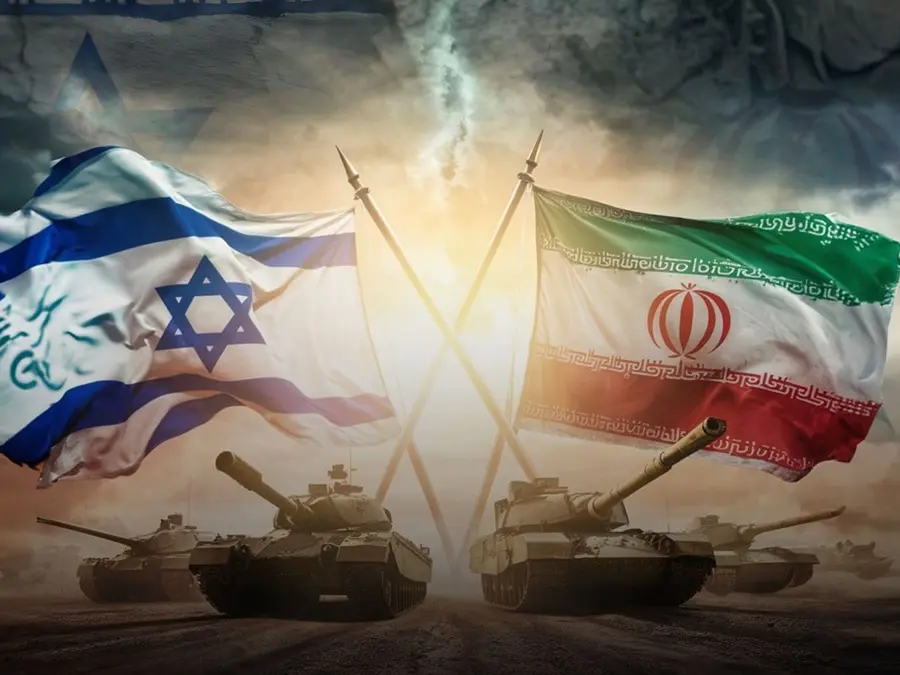
The war that began between Israel and Iran on June 13, 2025, and ended on the 24th of the same month, referred to as the 12-day war, merits detailed examination from multiple perspectives. This confrontation holds important and numerous lessons, not only for Israel and Iran, but also for Turkey and all regional actors. This war is directly connected to the situation that emerged after October 7th. Despite the significant changes following the fall of the Syrian regime, Israel continued to pursue an aggressive policy toward its neighbors. Under the pretext of protecting the Druze, it launched several attacks on Damascus and sensitive centers such as the Presidential Palace and General Staff Headquarters. This indicates that Tel Aviv will continue its aggressive policy in the future.
The confrontations began with a sudden Israeli strike on Iran and concluded with an intensive bombing campaign by American strategic B-2 bombers against Iran’s atomic facilities. These events provided researchers with a wealth of data across all fields, including: diplomacy, alliances, military tactics, defense systems, information technology, intelligence operations, and public relations.
Just as the Russia-Ukraine war presented an example of 21st-century conflict supported by advanced technology, analyzing the various stages of this war and the lessons derived from it is considered an important issue for Turkey, surrounded by a chain of crises.
This report examines the events of the 12-day war from different angles:
In the first section: an analysis of military and technological capabilities is conducted, particularly Israeli air power, electronic warfare, and cyber operations.
In the other sections: the research discusses the diplomatic, political, and domestic social backgrounds of Iran, leading to the lessons that can be derived.
The primary outcome is that proper understanding of the 12-day war, alongside continuous monitoring of the Ukraine war, provides an appropriate tool for determining the policies and necessary steps Turkey must take in the fields of security, intelligence, and technology.
Section One: Old and Hybrid Technology in War
The war between Israel and Iran in June 2025, which lasted twelve days, constituted a comprehensive assessment of all military and technological capabilities of both sides, which they had been preparing for over several years. While public attention focused on the advancement of smart and precision missiles, bunker-buster bombs, and ballistic missiles, there was also an intense parallel electromagnetic war underway.
Israel’s air strikes included cyber operations and electronic warfare (EW) alongside them. At the same time, Iran responded with ballistic missiles and suicide drones along with its cyber efforts. Thus, it can be said that the war continued on two parallel fronts: the kinetic/physical front and the electromagnetic/cyber front.
Israeli Air Superiority
During the war, Israel was able to completely establish air control over Iran, conducting several intensive strikes through fighter aircraft and drones against Iran’s military and strategic facilities. Iran’s defense system collapsed from the first day and was unable to respond effectively. The early warning system and air defense platforms failed, which facilitated the use of American B-2 strategic bombers to strike Iran’s atomic facilities on June 21. However, on the other hand, the Israeli and American air defense systems were able to effectively confront Iran’s ballistic missiles and suicide drones. According to available data, the vast majority of Iran’s drones were shot down before reaching their targets, either through anti-missile interception or electronic warfare.
The situation regarding ballistic missiles was different; Israel’s air defense forces failed to confront all missiles. Some of these missiles reached Tel Aviv and Haifa, causing human and material damage to Israel.
Cyber and Psychological Warfare
Alongside traditional military operations, both sides engaged in intensive information warfare. The Israelis were able to control communication networks and some Iranian command and control systems, and also spread false news and information to confuse Iranian forces. They also spread false news to terrorize people.
What was noteworthy was that Israel had synchronized its cyber attacks and electronic warfare with its air strikes, confirming that the electromagnetic domain has become a primary domain in war, alongside land, sea, and air warfare.
Israeli Air Force
The Israeli Air Force (IAF) is one of the most powerful air forces in the Middle East, comprising approximately 34,000 personnel and more than 340 combat aircraft, all American-made and modified in Israel according to needs.
The combat aircraft consist of (F-16C/D, F-16I, F-15C/D, and F-35I):
- The combat aircraft (F-15I, F-16I, and F-35I) form the backbone of offensive forces.
- The (F-35I) has Israeli-specific capabilities for electronic warfare and armament, with a total number reaching 45 aircraft (with plans to purchase 100 more).
- The F-15I aircraft has been upgraded to the new F-15IA version through an agreement with the United States of America.
Precision Guidance and Guided Weapons
Among the most prominent differences in Israel’s air operations was the intensive use of guided weapons:
- SPICE 1000 & 2000 systems with autonomous guidance capability (GPS), also equipped to directly update target data until impact moment.
- American JDAM bombs of types (GBU-31, GBU-32, GBU-38), including the BLU-109 type for protected fortifications.
- Laser-guided Paveway bombs.
- Small diameter bombs GBU-39 SDB, with a range of 110 km.
- SPICE 250, which can change its direction according to data provided in the final moments.
- Cruise missiles such as Popeye, with a range of 90 km, and Delilah with a range of 250 km, with the ability to loiter around the target.
Air Tactics
On the first day of the war, approximately 200-300 Israeli aircraft participated in bombing targets such as:
- Iran’s atomic program facilities.
- Air defense systems and missile launch platforms.
- High-ranking military and intelligence commanders (including the killing of senior Revolutionary Guard commanders such as Hussein Salami and Mohammad Bagheri).
The strikes also targeted production and storage facilities for missiles and aircraft.
After destroying more than half of the mobile platforms for launching Iranian missiles by June 17, Iran’s ability to respond became limited.
Israeli Electronic Warfare
Since the war in the Bekaa Valley in 1982, Israel has relied on electronic warfare; therefore, Israel is considered a pioneer in this field. In this war, it relied on:
Unit 8200: responsible for cyber penetration and electronic espionage; among their most prominent operations was the Stuxnet virus against Iran in 2010.
Airborne Platforms: including aircraft (G550 Oron, Shavit, Eitam) equipped with AESA radar and electronic surveillance systems.
Oron Aircraft: put into service in 2021 with the capability to collect and analyze data through artificial intelligence, able to display a complete picture of the battlefield.
Cyber Attacks and Psychological Operations
Inside Iran, several attacks were carried out, including the destruction of air defense platforms near Tehran through drones and electronic attacks.
In the first 72 hours, Israel destroyed more than 70 Iranian air defense platforms, including S-300 and Bavar-373 systems.
The attacks also targeted command and control centers and communications through missiles, drones, and electronic jamming.
The Israeli hacker group Predatory Sparrow claimed attacks on Iran’s “Sepah” Bank and the Nobitex electronic currency exchange, causing millions of dollars in losses.
In contrast, the Iranians resorted to disinformation processes through fake written messages and “botnet” attacks on communication platforms.
In addition to the emergence of deepfake usage by both sides to spread manipulated videos and false news.
Summary of Section One
The war confirmed that new wars are not limited to merely firing at each other, but are a combination of:
- Precision air power,
- Electronic and cyber warfare,
- Psychological and media operations.
Israel succeeded in effectively integrating these tools, while Iran could not protect its defensive capabilities against air-electronic superiority.
Section Two: Assessment and Summary of Lessons Learned
The Importance of Diplomacy and Alliances
In international relations, it has been proven that war and diplomacy are two complementary elements. At a historical moment, one may prevail over the other, but they are never completely separated. The relationship between Iran and Israel, although its roots go back to before the Iranian Revolution in 1979, entered a new phase on October 7, 2023, where the logic of dialogue and negotiation retreated, replaced by the logic of confrontation and covert operations.
The Iranian nuclear issue, which was one of the permanent items on the international community’s agenda, became part of the foundations of negotiation failure. Iran’s insistence on continuing its nuclear program without regard to the concerns of other parties led Washington and Tel Aviv to agree on one point: the need to resort to a military resolution of the issue.
This outcome, regarding Iran, was an irreversible strategic mistake, because it disregarded subtle differences in balances and relied on hostilities, which aligned their ranks against it.
Israeli Superiority and Iran’s Response Crisis
The war revealed that Israel does not rely solely on technological superiority, but benefited from the support of regional and international allies.
Iran, which has been trying to build a deterrence strategy through ballistic missiles and regional support, remained unable to protect its airspace and facilities.
Targeting military commanders and atomic scientists from the first hours of the war showed that Israel is a force capable of striking Iran’s core whenever it wants.
Gaps in Civilian Defense
The war revealed that civilian defense is a fundamental element in contemporary conflicts.
While Israel possesses a network of early warning systems and advanced shelters in major cities, Iran lacked this capability, resulting in hundreds of civilian deaths and injuries, especially in the capital Tehran.
This civilian-security dimension must be considered in any defense strategy, not only in Iran, but in all states of the region.
Media and Cyber Battlefields
Cyber attacks and media operations are an inseparable part of war.
Israel deliberately integrated electronic attacks and military operations to disrupt Iran’s command and control network.
Iran attempted a disinformation response through written messages, propaganda, and botnet armies on communication tools, but compared to Israeli capabilities, their effectiveness was limited.
Beneficial Lessons for Turkey
Air and Defense Capabilities:
- The war reaffirmed the importance of possessing comprehensive air power that includes manned and unmanned aircraft.
- The necessity of building a multi-layered air defense system to protect cities and national infrastructure, with emphasis on intercepting ballistic and hypersonic missiles.
Military Production and Industrial Capabilities:
- As in the Russia-Ukraine war, the war revealed that superiority is not achieved by technology alone, but depends on the scale of military stockpiles and speed of production.
- Turkey needs to strengthen its industrial capacity to increase production speed in terms of quantity and quality.
Dual-Use Civil Technology:
- The war confirmed that applications (communication and internet) can be converted into tools of pressure and weapons.
- Hence, Turkey needs domestic alternatives for software and sensitive equipment, especially in government and security institutions.
Civilian Defense and National Preparedness:
- Building national early warning systems,
- Creating ready shelters in major cities to reduce civilian casualties,
- Training residents on emergency procedures during conflict situations.
Summary of Section Two
The 12-day war revealed that victory in modern conflicts does not rely solely on tanks and aircraft, but is connected to the complementarity of diplomacy and alliances, air capabilities, civilian defense, cyber warfare, and media. States that fail to understand this balance face strategic collapse that may threaten their existence.
Section Three: Expected Scenarios
Continuation of Complexity in the Short Term
After the end of the 12-day war, it is expected that the level of tension between Israel and Iran will remain high.
Despite Iran’s heavy losses, it will not abandon its atomic ambition, as well as its strategy of using regional proxies such as Hezbollah, the Houthis, and some Iraqi groups.
In contrast, Israel has demonstrated its ability to deliver intensive air strikes and precision terrorism deep inside Iran, giving it greater confidence to continue its preemptive strike policy.
Therefore, we may see a series of limited operations, such as cyber attacks, assassinations, limited air strikes, without entering into direct, prolonged war.
Possibility of Expanding the Conflict Arena
The possibility of expanding confrontation in several arenas:
Lebanon: Despite Israel’s strikes that weakened Hezbollah after killing its leaders, this party remains an important actor and is trying to reassert its presence through missile attacks against Israel.
Iraq: Some Shiite groups allied with Iran may become tools of pressure on the United States and its allies.
Yemen: The Houthis have demonstrated advanced missile and naval capabilities and may use the Bab al-Mandab strait as a threat card against shipping movement.
Expanding the conflict to these arenas transforms the confrontation into a multi-party regional war, which would bring the United States into the war, and Gulf states might even become involved.
Scenario of Internal Change in Iran
One scenario discussed by Western media is the possibility of an internal uprising leading to the fall of Iran’s regime.
However, war events revealed that despite Iranian people’s anger over losses, their preference for stability and the state continues to be greater than their desire for regime change.
Nevertheless, continued economic pressures alongside new attacks on economic infrastructure may cause Iran’s regime to face waves of continuous discontent, especially in distant regions (Ahwaz, Kurdistan, Baluchistan).
Role of Major Powers
The United States remains a key actor in managing the balance between Iran and Israel, relying on a “stick and carrot” policy toward Iran.
Russia, engaged in the Ukraine war, may not be able to directly support Iran, but uses the Iran card in its negotiations with the West.
China, Iran’s major economic partner, tries to play a balancing role to protect and obtain necessary energy, but without entering direct confrontation with the West.
These calculations make it difficult for the war to transform into an open global confrontation in the future, but opens the door to rapid regional armament competition.
Reflection of War Possibilities on Turkey
Continued regional tension means Turkey is at the center of sensitive balance; it is a NATO ally, but at the same time tries to maintain communication channels with Iran.
Expanding the conflict will have direct reflection on northern Iraq (Kurdistan Region) and Syria, as Iran and Turkey share complex security issues.
Any broad confrontation increases the importance of Turkey’s airspace, requiring Ankara to have diplomatic and military preparedness to determine a clear and balanced position.
Summary of Section Three
Future scenarios manifest between:
- Continuation of limited tension through cyber attacks and precision strikes.
- Expansion of war in the region to include Lebanon, Iraq, and Yemen.
- Possibility of Iranian internal collapse due to economic and military pressures.
- Impact of major powers’ role such as America, Russia, and China in directing the conflict course.
Conclusions and Necessary Steps for Turkey
Understanding the Nature of Modern Wars
The 12-day war between Israel and Iran revealed that contemporary wars are not limited to traditional war fronts, but include several types, including:
- Cyber domain,
- Electromagnetic methods,
- Psychological and media warfare.
This means that states unable to use hard power (military) and soft power (information-media) lose the ability to respond and influence.
Regarding Turkey, it must systematically rely on the concept of Multi-Domain Warfare in military doctrine.
Innovation in Air Weapons and Defense
The first lesson is that air control is considered a decisive tool in short and very intensive conflicts.
Therefore, Turkey must continue its aircraft modernization program and complementarity between manned and unmanned aircraft.
Building a multi-layered air defense system capable of protecting cities and infrastructure, with advancing the capability to intercept hypersonic missiles, has become a strategic necessity.
Strengthening Military Industrial Capacity
As happening in Ukraine, the war confirmed that the scale of stockpiles and speed of military industrial production are no less important than technology quality and excellence.
For Turkey, this requires:
- Raising quantitative production capacity in its combat systems,
- Continuing the support chain in a way that can sustain long wars,
- Increasing partnership with the private sector to accelerate defense production.
Advancing Domestic Technological Alternatives
The war revealed that civilian programs and applications (mobile, messaging, internet networks) can become war tools.
Therefore:
- There must be domestic alternatives for software and intelligent equipment and their advancement.
- The necessity of relying on national systems in security and military institutions.
- Supporting domestic cyber security projects to guarantee technical independence.
Strengthening Civilian Defense Systems
Protecting civilians is a key element in future wars.
Turkey needs:
- Building national early warning networks covering all national territory.
- Creating ready modern shelters, especially in major cities.
- Training residents to deal with emergency situations through a national program.
Activating Smart Diplomacy
The war confirmed that alliances can determine the direction of wars, to a degree no less than military capabilities.
Turkey must maintain continuation of a flexible foreign policy that can:
- Benefit from NATO membership.
- Maintain communication lines with Russia and Iran.
- Strengthen defense cooperation with Gulf states that feel direct threat from Iran.
Preparation for Various Scenarios
Turkey, as it falls within the heart of the crisis region, is required to be prepared for several scenarios:
- Confronting regional conflicts extending to northern Iraq (Kurdistan Region) and Syria.
- Dealing with possibilities of expanding Iran-Israel confrontation in different war zones.
- Preparedness for Iran’s internal scenario and what may result from waves of uprising and border crises.
Final Summary
The 12-day war reaffirmed that modern wars are a mixture of precision air strikes, cyber attacks, and psychological warfare. Regarding Turkey, the summary of lessons can be condensed into:
- Strengthening air and defense capabilities,
- Raising defense production capacity,
- Nationalizing technology and relying on domestic alternatives,
- Strengthening civilian defense and protective infrastructure,
- Using alliances and smart diplomacy.
Implementing these steps gives Turkey greater capability in protecting national security and guaranteeing protection of its position as a central regional actor in an unstable strategic environment.
Summary
The Israel-Iran war began on June 13 and changed many regional balances. Following that military-geopolitical operation that occurred on October 7 as a turning point, the strategy of both Israel and Iran was completely revealed.
The sudden military, technological, and intelligence strike of June 13, alongside the superiority and imbalance of military, intelligence, and technological capabilities and the broad support of Israel’s allies, caused Iran great harm.
The war above all else confirmed that the element of air power in short and very intensive conflicts, especially between states without land borders, is the most successful decisive tool. Iran, due to the absence of advanced air weapons compared to Israel, attempted to compensate for its weakness through investment in ballistic missiles, particularly hypersonic missiles (those missiles whose speed exceeds the speed of sound).
The war included intensive use of cyber attacks and electronic warfare (EW) tools. These tools were used not only against military targets, but for disinformation and influencing opposing public opinion.
Among the most important factors of Israeli superiority was success in building an intelligence and operational network inside Iran. From within, strategic facilities, military commanders, and atomic scientists were targeted through sleeper cells that have been operating in Iran for many years.
The war also highlighted the importance of civilian defense in major cities. While Israel possesses a system of early warning tools and widespread shelters for self-protection, Iran lacked such early preparedness, resulting in hundreds of civilian deaths and injuries, especially in the capital Tehran.
Despite the massive and extensive losses and predictions of a national movement occurring that would lead to the fall of Iran’s regime and all those calls made by opposition forces outside against Iran’s regime, it was clear that until now the Iranian people’s importance and value for stability and the general regime continues, but the direction of Iran’s internal unity depends on future developments.
The war revealed the importance of social network applications on the ground. Israel broadly relied on internet applications. This led Iranian authorities to request deletion and prohibition of WhatsApp and its equivalents on mobile devices, and in some cases they resorted to cutting off the internet.
Regarding Turkey, the war taught several lessons and advice. Including emphasis on the importance of continuous innovation and complementarity of aircraft and drone systems in the Turkish Air Force, as well as creating a multi-layered and widespread air defense system. Nevertheless, Israel, despite continuous allied support, was unable and hesitant to shoot down all Iranian hypersonic missiles, which highlighted the importance of Turkey’s efforts in this field.
The war confirmed that the amount of military stockpiles is no less important than technological superiority; therefore, Turkey, alongside advancing its advanced systems, needs to accelerate and expand its production capabilities.
Another lesson is the necessity of continuous monitoring of dual civil and military technology and striving to build domestic alternatives according to capacity, especially that connected to software and important state equipment.
Just as an early warning system must be created covering the entire country, ready shelters must be created, especially in major cities, with the aim of reducing civilian casualties in any future confrontation.