
Language and media have an inseparable relationship, as in the field of media, language plays a fundamental role as a primary tool for conveying and expressing ideas and information. Simultaneously, media plays a crucial role in transmitting these ideas and information to the public. This reciprocal relationship makes media one of the main factors in the formation and development of language, while language has a significant impact on how media content is presented and received.
The Impact of Media on Language Through:
1. Language Unification and Spread of Standardized Dialects:
Media plays a fundamental role in unifying language by spreading dialects or creating a unified language. For example, news broadcasts and television programs often use standard terminology, which becomes the reason for the adoption of these terms by viewers. Here, media helps reduce dialectal differences between various geographical regions, which increases cultural understanding and unity, allowing ideas and information to reach recipients more effectively.
2. Creation of New Terminology:
Media constantly introduces new terms and vocabulary as a result of technological, scientific, and political developments. These new terms from media enter into people’s daily usage. Media also participates in borrowing words from other languages and integrating them with local language and culture, which enriches the linguistic vocabulary and keeps pace with global developments.
3. Changing Grammatical and Morphological Rules:
Through continuous use and repetition, media can influence the grammatical and morphological rules (morphology is the science of studying the words of language) of the language. For example, those linguistic structures that are frequently used in media may be adopted and recognized in common language. Here, media participates in simplifying the language and facilitating its use, making it more accessible and easier to understand for the general public.
4. Impact on Pronunciation and Dialect:
Television and radio programs influence the style of pronouncing words and phrases and the use of certain dialects. For example, announcers, actors, and well-known social media personalities can lead viewers toward imitating the pronunciation of certain terms, words, and expressions. Therefore, media becomes an influential part and can participate in preserving some local terms by using and presenting them in programs and films, which elevates their cultural value.
Another Aspect of This Topic: The Impact of Language on Media
1. Attracting Viewers and Increasing Interaction:
Using language close to viewers facilitates media communication with them and increases interaction and viewership. Media that uses understandable and simple language reaches recipients faster and more deeply. Language plays a role in determining the target audience. For example, media that uses simple language may target young audiences or middle-educated readers, while media that uses more complex language may target academic or professional audiences. Here, media tools must be able to identify their recipients scientifically so they can deliver their media messages in a way that benefits their recipients.
2. Elevating Cultural Identity:
Media that utilizes local language elevates the cultural identity of society and becomes part of preserving the language and cultural heritage. Strauss says, “Human culture is characterized by deep and stable structures. It is evident in symbolic systems that humans use to express themselves and interpret their surrounding world.” Therefore, language is not merely a communication tool, but a carrier of cultural identity and social values.
Based on Strauss’s ideas, we can say that social media language is not just a new communication tool, but a cultural foundation that reflects profound changes in modern society. This language represents natural development in symbolic systems that humans use and participates in reconstructing individual and collective identity in the digital age and society.
3. Language Impact on Politics and Society:
Media uses language to convey political and social messages and can thus influence public opinion and shape policies. Media language plays a role in guiding public debates and raising awareness about important issues. Here, the ability to use language effectively can build trust and increase influence, making language a powerful tool in creating trust and impact among recipients.
4. Technology and Language:
With technological advancement, media changes and develops, requiring language development to keep pace with these changes. Digital media and social media require the use of concise and quick-response language. The development of media language also includes the use of icons and emojis to enhance visual and rapid communication, which reflects radical changes in how language is used.
The Use of Kurdish Language in Media and Social Networks
The Kurdish language, like other languages, faces major challenges in proper use in media and social networks. These challenges are reflected in several aspects that can have negative impacts on the quality of the language. To understand the level of poor use of Kurdish language more deeply and scientifically, we can analyze the causal factors and consequences of this improper use, apart from its long-term effects.
Causes of Poor Use of Kurdish Language
1. Poor Linguistic Usage:
Over-reliance on words and terms from other languages, such as Arabic and English, as a result of cultural and technological interaction, causes noticeable imbalance between Kurdish and foreign vocabulary. Media influence: Media content that excessively uses foreign terms affects viewers, who may start adopting these words in their daily lives.
2. Lack of Linguistic Awareness:
Weak linguistic education among our recipients and the absence of educational programs that emphasize teaching Kurdish language and its grammar in schools and educational institutions causes weak awareness in using the language correctly. The absence of linguistic resources and dictionaries that explain Kurdish words and terms in detail.
3. Technology and Social Media:
Shortening and simplifying words: In social media, users often prefer shortened and simplified words and phrases, which leads to marginalizing correct grammar and using colloquial or mixed language, often to make messages quickly interact with recipients and have fast responses. This makes social media users sometimes use short and unclear language, which has negative impacts on the quality of language used.
Negative Consequences of Poor Use of Kurdish Language on Recipients
1. Linguistic Confusion:
Mixing words and using them unscientifically creates a mixture of Kurdish and foreign words randomly without considering grammatical and morphological rules. For example, sentences that mix English or Arabic words with Kurdish words create illogical structures in sentences and illogical mixing of linguistic structures from different languages, which causes loss of the original meaning of sentences that we see in current writing and speaking styles.
2. Poor Translation:
Word-for-word translation and reliance on literal translation from other languages without considering the Kurdish context leads to using unnatural phrases or misunderstanding. Using inappropriate or incorrect terms when translating media content or communication, which causes meaning distortion.
3. Linguistic Mixing:
Random mixing of grammatical rules from different languages, creating a completely incomprehensible mixed language. This causes loss of language and disappearance of the authentic character of Kurdish language as a result of excessive mixing, making the language appear unnatural and unscientific based on Kurdish dialect.
4. Marginalizing Grammatical Rules:
Ignoring Kurdish grammatical rules for the sake of achieving ease and speed of communication leads to weakening the language used. Using colloquial language and relying on daily simple expression instead of using literary language and rich vocabulary.
Long-term Effects
We can say that the level of poor use of Kurdish language in media and social networks requires gradual intervention through effective educational and media policies. Proper linguistic education must be advanced, rich linguistic resources must be provided, and correct use of Kurdish language in all fields must be encouraged. This preserves linguistic and cultural identity, elevates language status, and ensures quality media and educational content.
1. Loss of Linguistic Identity:
Widespread use of foreign words and mixed grammar causes loss of authentic Kurdish language and loss of its distinctive identity. Weakening cultural connection: The decline in using correct Kurdish language affects the connection to Kurdish culture and heritage, causing loss of cultural identity.
2. Weakening Language Ability:
Lack of practice and correct use of Kurdish language causes decline in reading, writing, and speaking abilities. This causes learning problems for new generations: As a result of the spread of linguistic errors in media and social networks, they face obstacles in learning Kurdish language correctly.
3. Negative Impact on Education:
Weak educational content: The lack of linguistic quality in educational and media content affects the quality of learning and makes effective learning difficult for learners. Here, media institutions that use mixed or incorrect language face obstacles in effective communication with recipients and in presenting trustworthy content and expression.
The Role of Media in Strengthening Language Proficiency
This is a highly important topic that encompasses several dimensions, which can be discussed scientifically and thoroughly, including:
1. Providing a Rich Linguistic Background
Media in all its forms (written, audio, and visual) provides an environment rich in vocabulary and linguistic structures. Continuous exposure to these media sources can:
– Increase vocabulary among individuals
– Enhance understanding of various linguistic structures
– Help improve grammar and pronunciation
2. Enhancing Indirect Language Learning
Through continuous exposure to the language used in media, individuals learn the language indirectly and without conscious effort. This occurs through:
– Learning linguistic rules and structures through repetition and exposure
– Extensive listening and reading
3. Diverse Linguistic Models
Media presents diverse linguistic models that reflect language use in different contexts, such as:
– Formal language in news and reports
– Conversational language in entertainment and talk shows
– Specialized language in documentary and educational programs
4. Encouraging Dialogue
Talk shows, debates, and social media encourage interaction and dialogue, which enhances perspectives through:
– Effective practice of the language
– Development of critical thinking and linguistic analysis skills
– Gaining confidence in using language in various situations
5. Exposure to Different Cultures
Media opens a window to other cultures and languages, enhancing cultural understanding through:
– Watching films and programs in foreign languages with subtitles
– Listening to music and podcasts in other languages
– Reading materials and books from different cultures
6. Directed Learning
Media provides self-learning resources that allow individuals to improve their language skills according to their needs and interests, such as:
– Online educational lessons
– Educational applications for languages
– Specialized blogs and articles on language learning
From this perspective, it can be said that media plays a central role in enhancing language proficiency by providing an environment rich in linguistic content, promoting indirect learning, encouraging interaction and dialogue, exposing users to different cultures, providing self-learning resources, and participating in research and development in language education. These elements together help individuals continuously and permanently improve their language skills.
The Use of Foreign Words in Media
As discussed, language is an essential tool for communication and the transmission of culture and knowledge between generations. Language forms an integral part of cultural and national identity. With technological advancement and increased reliance on various media, there has been significant influence on the use of foreign words in daily language, particularly through media. Here we examine whether the use of foreign words in media replaces indigenous Kurdish words or not, reviewing the influential factors and the linguistic and cultural consequences.
Through understanding the dynamics of languages as a result of their interaction with other languages and different cultures, they undergo continuous changes. In Kurdish, several factors have led to the incorporation of foreign words into daily language, including:
1. Cultural Interaction: The result of contact with other cultures through trade, migration, and education
2. Technology and Media: New media (TV, internet, social media) often carry content in foreign languages, facilitating the spread of foreign words and terminology
3. Colonialism and Globalization: Periods of external authority and globalization policies have led to widespread dissemination of dominant languages like English and French
Here, media’s influence in spreading the language that becomes common in society has a significant impact on the language used daily. These influences through media can be divided across several aspects:
1. Television, Radio, and Satellite Channels: Often news and entertainment programs use foreign words, particularly in technology and science contexts
2. Internet and Social Media: Widespread use of social networks like Facebook, Twitter, Instagram, and Snapchat contributes to the rapid spread of foreign terminology among users
3. Advertising: Commercial advertisements often use a mixture of indigenous and foreign languages to attract diverse audiences
This leads to factors that influence the preference for foreign words through modernity and social status. Some use of foreign words is seen as an indicator of modernity and social sophistication, encouraging their increased use. The absence of a language rich in concepts and terminology makes other terminology equivalent to Kurdish terminology, causing foreign terminology to dominate Kurdish words and expressions.
Another aspect is education and intellectualism: educating children and youth in a foreign language, particularly in academic institutions, contributes to the spread of that language in daily life.
Furthermore, culture has a direct impact, particularly heavy reliance on foreign words may weaken the authentic Kurdish language and lead to the loss of some indigenous words and expressions. This affects cultural identity since language is an integral part of cultural identity, and excessive use of foreign words may impact Kurdish identity and weaken cultural connections. This also creates generational gaps as differences in language use may emerge between different generations, with older generations being more attached to indigenous words compared to younger generations. From here, we can create opportunities to protect the Kurdish language through:
1. Advancing Education in Kurdish: Providing rich educational materials in Kurdish in schools and universities
2. Producing Indigenous Media Content: Supporting and encouraging the production of television, radio, and digital content in Kurdish
3. Cultural Awareness: Organizing awareness campaigns to raise awareness about the importance of Kurdish language and its role in protecting cultural identity
In light of the above, it is clear that the use of foreign words in media indeed affects indigenous Kurdish words and may even replace them in some contexts. However, this change is not irreversible, and it can be addressed through coordinated efforts to protect the Kurdish language and enhance its use in various aspects of daily life. Awareness of the importance of the mother tongue and its role in cultural identity is the first step toward protecting the Kurdish linguistic heritage.
Controlling and Protecting Language in Media
The Kurdish language, like other regional languages, faces major challenges in maintaining purity and usage in media. The use of foreign words in media creates concerns about the disappearance of the indigenous language and the loss of its cultural identity. Therefore, it is important to know whether there are genuine efforts and filters to control and protect language in the media of the Kurdistan Region.
Government Language Policy
In the Kurdistan Region, there are trends toward promoting the use of Kurdish through laws that mandate the use of Kurdish in official documents and government communications. However, how successful has the government been? This requires scientific research and investigation to follow up on protecting and maintaining the mother tongue in its living form.
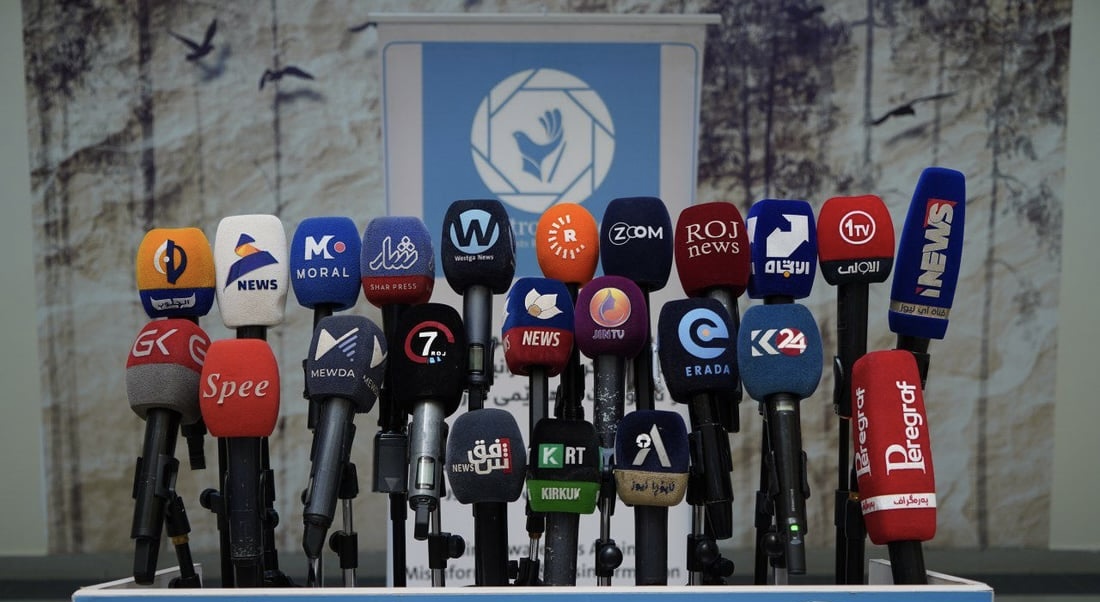
The establishment of regulatory bodies like the “Kurdish Language Council” works to monitor the use of Kurdish and develop indigenous terminology. The role of Kurdish indigenous media – local television and radio channels – plays a central role in protecting Kurdish by presenting educational and cultural programs in Kurdish.
Educational Curriculum
Incorporating Kurdish into school programs and teaching children from an early age about the importance of Kurdish helps build a strong linguistic foundation. From an academic perspective, emphasis on linguistic research and support for studies related to Kurdish language development and purification from foreign words helps enhance its use in academic and media spheres.
Awareness Campaigns
Awareness campaigns about the importance of Kurdish and its role in protecting cultural identity can have a significant impact on changing society’s perspective toward the use of foreign words. By encouraging community members, especially youth, to participate in cultural and linguistic initiatives that strive to protect Kurdish and enhance its use in daily life.
Technology and Language
Given the importance placed on technology and language today, progress can be made in technology through linguistic applications and developing apps for teaching Kurdish, making them easily accessible to people to contribute to raising awareness about the language and its proper use. Also, increasing Kurdish writing and content on the internet and social media, using Kurdish in digital space, has an impact on enhancing the use of the mother tongue.
Challenges and Obstacles
Despite all the efforts needed to protect the mother tongue, there are several obstacles and barriers that need to be addressed to reduce and eliminate them, including:
1. Globalization: The increasing influence of globalization and the spread of foreign media creates a major obstacle to protecting Kurdish
2. Linguistic and Indigenous Terminology Diversity: The existence of multiple dialects within Kurdish may become a barrier to unifying and protecting linguistic efforts
However, despite the major challenges facing Kurdish in the Kurdistan Region, there are visible and effective efforts through media to protect Kurdish. These efforts focus on government policies, the role of indigenous media, educational institutions, community efforts, and the use of technology. However, these efforts require unity and continuous cooperation among all relevant parties to achieve the effectiveness and sustainability of these policies in protecting Kurdish and advancing its use against external influences.
*This article was originally written in Kurdish and translated into English for Kfuture Media.