

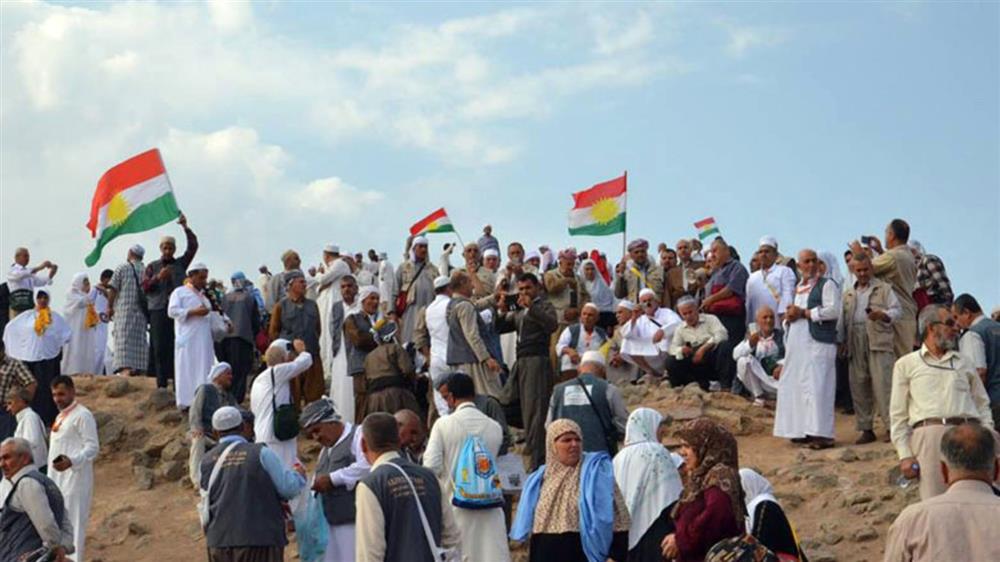
Iraq has ordered all remaining Hajj pilgrims to return via land routes following the closure of Iraqi airspace due to Israel-Iran military exchanges. Over 3,000 Kurdistan Region pilgrims and 30,000 Iraqi pilgrims originally scheduled for air travel must now use overland transportation starting immediately.
Kurdistan Region Accelerates Land-Based Returns
Karwan Stoni, spokesperson for the Kurdistan Region’s Hajj and Umrah Directorate, announced that all remaining pilgrims will return by land within the next two days. Over 2,000 pilgrims have already returned via overland routes, with approximately 3,000 more scheduled for immediate land-based transportation.
The Kurdistan Region sent 5,136 pilgrims for this year’s Hajj, with only one fatality reported during the pilgrimage. Originally, 1,646 pilgrims were designated for land travel, departing on June 12 and returning on June 14. The remaining 3,490 pilgrims were scheduled for air travel with returns planned between June 14-20, but airspace restrictions have forced route changes.
Stoni emphasized that no decisions have been made regarding compensation for pilgrims who paid premium prices for air travel but are now returning by land. However, he indicated that if Iraqi pilgrims receive compensation, Kurdistan Region pilgrims should receive similar treatment, stating it is “their right” to be compensated for the service downgrade.
Iraq Implements Nationwide Land-Only Policy
Nabaz Ismail, spokesperson for the Kurdistan Region’s Ministry of Endowments and Religious Affairs, confirmed that new directives require all Iraqi pilgrims to return exclusively via land routes. The policy change affects the entire country, with implementation beginning immediately and continuing until all pilgrims return safely.
Iraqi media reports indicate that representatives of Iraqi pilgrims have taken urgent measures to arrange overland transportation and secure necessary transit documents. The delegation is coordinating with relevant authorities to ensure safe passage through border crossings and secure transportation to pilgrims’ home provinces.
Iraq’s official Hajj and Umrah commission issued a formal statement confirming the policy shift, explaining that flight suspensions necessitated the exclusive use of land routes through the Arar border crossing. The commission assured that sufficient buses have been secured for all returning pilgrims.
Regional Airspace Crisis Triggers Transportation Chaos
The dramatic shift in transportation methods stems from the closure of Iraqi airspace following the escalating military exchanges between Israel and Iran. The three-day conflict has created widespread disruption to Middle Eastern aviation, forcing governments to prioritize pilgrim safety over convenience and cost considerations.
The timing proves particularly challenging as the policy change occurs during peak return periods when thousands of pilgrims simultaneously attempt to leave Saudi Arabia. The sudden shift from air to land travel creates logistical complications including extended journey times, increased physical demands on elderly pilgrims, and coordination challenges across multiple border crossings.
Regional aviation authorities have implemented comprehensive flight restrictions as a precautionary measure, affecting not only pilgrimage travel but commercial aviation throughout the broader Middle East corridor. The restrictions demonstrate how regional conflicts increasingly impact religious obligations and civilian travel patterns.
Massive Scale of Affected Pilgrimage Operations
This year’s Hajj attracted over 30,000 Iraqi pilgrims and more than 5,000 from the Kurdistan Region, representing one of the largest annual pilgrimages from Iraq in recent years. The scale of affected travelers highlights the logistical complexity of coordinating alternative transportation for tens of thousands of individuals across international borders.
The Kurdistan Region’s relatively efficient handling of the crisis, with over 2,000 pilgrims already successfully returned via land routes, demonstrates effective contingency planning. However, the compensation question remains unresolved, potentially affecting future pilgrimage planning and pricing structures.
The broader implications extend beyond immediate transportation concerns, as the crisis tests regional cooperation mechanisms and highlights vulnerabilities in religious tourism infrastructure. The successful management of this mass transportation shift will likely influence future emergency protocols for large-scale pilgrim movements during regional instability.
Iraqi authorities are working around the clock to ensure all pilgrims return safely, with coordination extending from border management to provincial distribution networks, demonstrating the priority placed on pilgrim welfare despite challenging circumstances.