
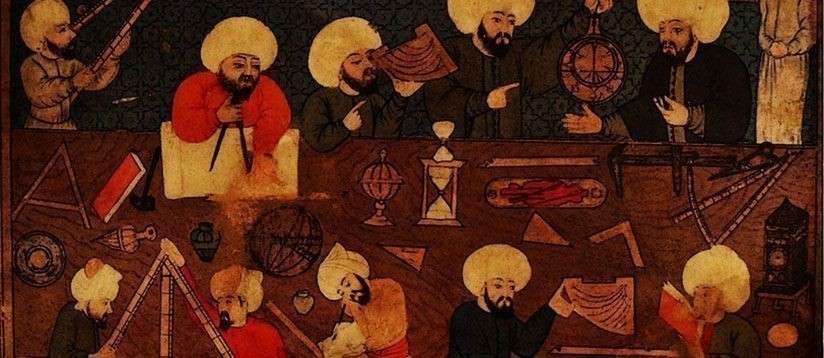
Islamic civilization is not the product of a single specific nation or people, but rather the historical and cultural product of all those peoples who, throughout the history of nations, participated in creating and establishing what is called Islamic civilization. The peoples who participated in enriching Islamic civilization contributed through two main pathways: the pathway of material and spiritual resources and their adaptation in a manner consistent with the fundamental principles of the Islamic religion. The second pathway is the participation of scholars, intellectuals, symbolic figures, their works, and their participation in the history of the nation.
The Kurdish people, after their conversion to Islam, made an effective and influential contribution to Islamic civilization through both pathways. Some of these contributions, such as national customs and Kurdish traditions, can be transferred through social processes to the culture of other communities within Islamic society. The Islamic religion, as a doctrinal foundation, may have played a role in dissolving some customs and traditions, but some other social traditions were not completely eliminated.
It is true that Islam as a religion works toward unity and integration, but in essence, no integration means the elimination of diversity. Kurdish participation in Islamic history cannot be reduced merely to Saladin al-Ayyubi and his military role, as some historians want to portray it. Kurds participated in enriching Islamic history through poets, artists, cultural architects, and several other fields. Perhaps the best Kurdish participation is evident and prominent in the fields of language, literature, and Islamic scholarship. However, the Kurdish vision of coexistence and acceptance of difference is the distinguishing point of Kurdish participation compared to other people’s participating in Islamic civilization. Kurdish participation in this area is the most brilliant point from which other peoples in Islam can benefit.
Kurds have played an effective role in Islamic history through Sufi orders in conveying and spreading moderate Islam. This does not mean that there were no extremist scholars or bloodthirsty warriors among Kurdish figures, but when you observe changes toward reform, Kurdish scholars play a pioneering role in both ancient and modern history. Although Kurdish participation varies according to historical periods.
Throughout history, Kurds have been characterized by participation in the spread, development, and expansion of the history of Islamic civilization, but how beneficial and advantageous have they been from the history of civilization of other Islamic people?
- Originally published in Issue 11, July 2025, of the Journal of Religious Studies by the Center for Future Studies and translated by Nawroz Mohammed for Kfuture.Media.