

Dr. Kurdistan Omar Mohammed / PhD in Sociology
Didar Abuzaid Saadi / Master’s in Sociology
Introduction
Migration is not merely about uprooting from a first home to a second home, but rather it also involves confronting a set of existential and essential questions that continuously remain within the migrant and seek answers. Therefore, the process of migration does not end with arrival at the second home, but rather becomes a beginning for redefining the self in a different environment with a different identity. For this purpose, understanding the influential factors of migration and the migrant’s condition in the first and second countries can enhance our understanding of the phenomenon of migration. To this end, this research consists of two parts. In the first part, an attempt has been made to examine the causes and factors driving migration from the first home, and in the second part, with a philosophical perspective, it discusses the migrant’s second world and the obstacles and questions before them.
Migration from the First Home: The Most Prominent Characteristics and Factors of Kurdish Migration
The phenomenon of migration is one of those phenomena and topics that has historical roots. When we define migration, we can say it is that change of place that occurred yesterday and today and will occur in the future as well, meaning it is a phenomenon of the past, present, and future. This subject has occupied countries of immigration so much that they seek solutions to the drivers of migration and reducing the phenomenon of migration at present, while it has not occupied countries of emigration as much with this issue, including Kurdish society.
Migration is one of the international issues transmitted from the twentieth century to the twenty-first century. In the twentieth century, this issue had a direct connection to the establishment of newly founded states of the Third World. The failure of the national, socialist, and religious projects of new states was one of the main causes of the intensification of migration of different classes and strata of those states toward Western states. One of the groups that constitute a significant number of migrants in the West is Kurdish migrants. Behind Kurdish migration, there are two main factors:
The first is the failure of the citizenship project for Kurds in those states over which Kurdistan has been divided, namely Turkey, Iran, Iraq, and Syria[1]. The second is the stagnation of the internal issues of the Kurdish liberation movement[2], which is no less than the first cause for Kurdish migration.
Another problem of migration relates to the identity of the migrant themselves, both in their own society and in the society to which they have migrated. That identity which they see themselves in, at the first level called self-identity or “I,” which sees its place at the center of a circle in confrontation with “others”—at this level, this type of identity is called self or personal identity. The focus is entirely on the process of self-positioning, through which we draw different images and forms for ourselves and for those relationships we have in the world around us. When we come to the level of collectives, here too collectives within nations have the same analysis and understanding as individuals toward other nations. If we take any group or nation on the face of the earth, even at a practical level of life, they have a cultural accumulation that they have continuously produced through the experience of their own lives and with the passage of history, passing it from one generation to another generation, determining their name and identity—this is the most important capital that remains for society and for individuals[3].
Collective identity requires collective experience and collective memory and is sustained by them. Those experiences that often accumulate in the midst of the existence of groups are transmitted to later generations through history, culture, literature, material objects, and ceremonies[4].
Here, then, the subject of identity crisis comes into play for migrants. Identity means that code by which individuals can identify themselves to others, but when a group or nation faces a situation of doubt and conflict regarding their identity, then receiving the code becomes problematic, and this creates fear of dispersion and fragmentation among generations.
If we consider the above as a theory, when we practice it in Kurdish society, we see that on one hand, migration for Kurds is a historical phenomenon with recurring factors, while at the same time the Kurdish migrant in exile has their own particular crisis.
The question is: what are those things by which Kurds want to identify themselves? For example, Kurdish clothing. Is there any scientific and logical justification for Kurdish clothing? What is our justification for the shirt, vest, shoes and socks, dress and jacket, colors, their forms, their seasons, their use in happiness and in sadness? What is our justification for the Kurdish bazaar, for law, religion, for Kurdish politics? We cannot say it does not exist, but we cannot say it exists and that society has knowledge about Kurdifying clothing, food, politics, and economy, and deals with it carefully, protects it, knows it as its identity, and knows where to apply this expertise. This applies to history, geography, gender, language, knowledge, and dozens of other things. When the individual is empty of these things, it means the definition and identity are weak. Here the second subject comes forth, which often arises from confrontation with another definition. For example, the issues of nation, socialism, state, modernity, and all those other things from the West turned toward the world outside the West, and many nations and states, as a result of interaction and reaction, created an identity for themselves. But we Kurds, with the arrival of waves of modernity, state, thought, ideology, and technology to the Middle East, even until now have not been able to work on all those things and create an identity for ourselves and fill ourselves. When, after three decades of that state which the West created for us, we have not been able to find an answer for the Kurdish army, Kurdish administration, Kurdish constitution, Kurdish economy, Kurdish agriculture, Kurdish democracy, Kurdish technology, and Kurdish foreign policy, then it would not be wrong to say we are in an identity crisis. So what is the identity crisis here? It is that you have an individual in Kurdistan who is empty and cannot, for example, answer neither the question of traditional dress and Kurdish clothing, nor answer the question of modernity and Kurdish democracy. So what is the solution?
The solution is that the individual seeks those answers on their own, and when they cannot find answers to those questions within their own society, they migrate and want to obtain those answers in another society. When they go abroad with an empty vacuum in identity, it is like a white page—whatever definition you print on it, the print quality comes out better. Therefore, we have German, British, and American Kurds without problems, and as much as they have worn the definition and identity of the other, we do not see the influence of Kurdish identity on Kurdish generations in the country of immigration as much. This causes Kurdish migrant families to be close to considering the country of immigration as their own country for their generations, while in contrast, Kurdish society becomes a foreign country for their generations.
On the other hand, Kurdish society in general and Southern Kurdistan in particular is dependent on the war situation and the emergence of new situations after wars. From the 1990s through to 2000, it was dependent on multiple factors that have persisted until today. For example, when individual income in a year for the 1990s drops to $450, the economic factor cannot fail to be a very influential factor in the migration of residents in the Kurdistan Region[5]. When the Iraqi state emerges from the eight-year Iraq-Iran war with great human and material losses, all of Iraqi society must pay the price of those losses, so we cannot say the war factor does not bear the lion’s share of the migration flow of its residents.
But today, after several years have passed, does the country have not stability but hope for political and economic stability? We say no. Why? Because if the chance to migrate is placed before anyone in this society, rejection becomes impossible. Daily, the images speak for themselves—dozens of young people of this homeland subject themselves to a very weak chance and migrate toward Western countries, and the result is the same result as in previous years, which in the best case is deportation and return with a collection of stories and tragic circumstances. But the recurrence of wars and conflicts under various names, the continuation of economic crises, the weakness of a humane and compassionate project, have made everyone’s view such that your own country is the cause of problems and migration to another country is the solution to problems.
At the same time, behind this migration, the Kurdish migrant in the country of immigration has nothing, because when they could not answer those questions that exist in their own society, they become more helpless in answering those questions that they face again in the society of immigration, when a large part of Kurdish migrants have weak projects and programs in their own country and in the country to which they migrate.
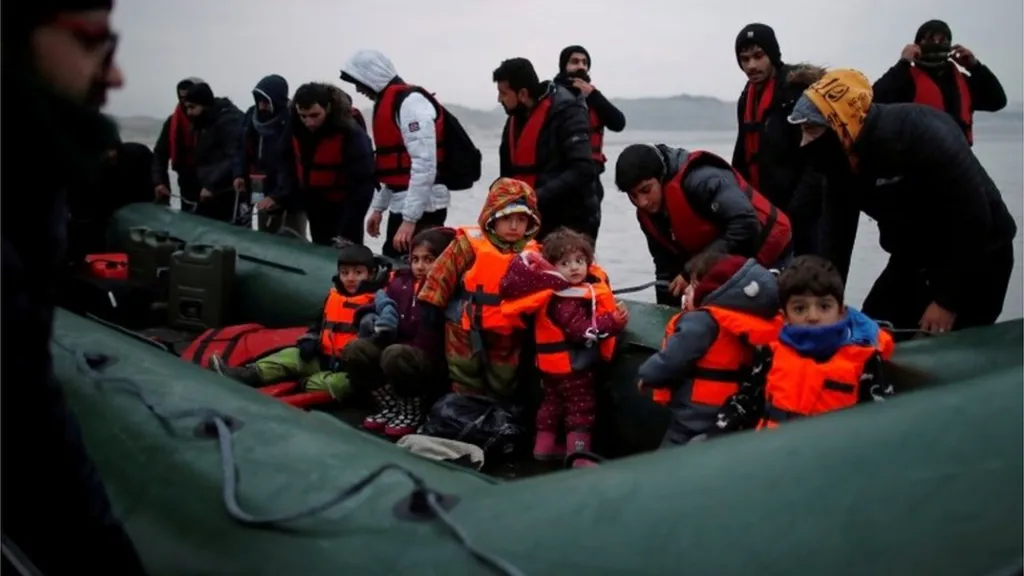
On the other hand, the absence of a national project for such an important issue makes the problem deeper and broader. Therefore, it is normal for everyone that at any time, reckless, unplanned migration occurs in this society. Throughout history until this very moment, the phenomenon of migration among Kurds has been a simple, spontaneous, unspoken, or concealed decision. The reason for this concealment and non-discussion has been like all those other important and fateful subjects that come with noise and pass through, such as Anfal, Halabja, etc. The problem stems from the fact that in itself there are many driving factors in this society, from political to economic, social, cultural, corruption, etc. We all perceive them—old and young, women and men, youth—all of these have created a world of questions for us. But where are the answers to these questions? Where are the solutions and alternatives to these circumstances? This causes a young person to make a spontaneous and incorrect decision to migrate, or a family, or the very tragic image of elderly mothers following their children that we all saw recently in the forests of Belarus, and it became clear how our own country has made us refugees.
Gradually and quietly, this subject has become a place of discussion and a serious project for work on, especially among the educated elite and intellectuals, so that it becomes accumulated knowledge and information that later becomes simple and practical awareness in society about migration—its causes, consequences, dangers, and solutions. This situation has made the decision to migrate and leave much easier than before, at a time when the problems of Kurdish society at present have not had much difference from the past, but now the phenomenon of migration is greater, because if in the past the state was one of the main obstacles to migration, then at present there is no such background seen for binding the individual within Kurdish society or attaching them to an identity within society, especially at the level of Kurdish authority.
With all this context, the question after migration and settling in the country of immigration arises: what does the Kurdish migrant have in the new environment? Here we can say that as long as we have sent an empty person into a systematic society, the process of bewilderment and imitation begins from the first moments—in a way that language, behavior and interaction, clothing, etc., are received very carefully.
Here we refer to another factor from a more distant history that has had an influence on the subject of Kurdish migration flow, which is that migration has been part of the nature and composition of the personality of the individual Kurd. Until the beginning of the 19th century, Kurds were less than 10% settled; the rest were nomadic tribes who migrated from the plains to the mountains and from the mountains to the plains following pasture, or performed annual seasonal migration without paying attention to the political borders of the Ottoman state and the states of Iran. Like the migration of the Jaf tribe, which is a prime example in this issue. When a tribe or family faced an uneven political situation, migration was not a very difficult task for them. At the end of the 18th century, when the Zands lost political power in Iran, Hawraman, as a force affiliated with the Zands, likewise fell from them, came from Eastern Kurdistan to the South and settled, becoming owners of property, pasture, and their own status[6].
That is, internal migration among the parts of Kurdistan was not a difficult task, and there was migration flow from north to south and from east to west of Kurdistan. Therefore, what is discussed in the media and superficially as an influential factor, we can call it a habit and routine of Kurdish society, and Kurds are not ashamed of migration—indeed, it is a source of pride for them. There are people we have seen with our own eyes who do not know why they migrate and do not know why they return, and we can characterize it as a habit—a desire for change of place. This desire exists in all societies, but in Kurdish society it is greater, in a way that if in other societies it is a case, among Kurds it is a phenomenon.
Geography of Kurdish Migration
Here it is important to discuss a subject, which is the geography of migration in Kurdish society in the past and comparing it to the present. The history of Kurdish migration has been internal migration within their own homeland, but when Kurdistan throughout the nineteenth and twentieth centuries was in a state of political instability and its emirates collapsed and remained without a state, this caused it to face war, humiliation, and hunger. Therefore, they began to migrate to stable cities such as Baghdad, Istanbul, Tehran, Damascus, and Cairo, where they became workers, craftsmen, artisans, and owners of their own quarters. When the back door of those countries opened to a better world than Baghdad, Istanbul, Damascus, and Tehran, Kurdish migration to those cities declined and moved toward better places, which primarily are Western European countries. Therefore, the geography of Kurdish migration primarily became toward Europe, where they find themselves more than anywhere else[7].
This very subject takes us into another psychological and social subject, which is the adaptation of the migrant within migration life, which generally means the set of responses by the individual for the purpose of fundamentally balancing their psychological or behavioral state with environmental conditions or new competencies.
In a field study conducted specifically on the subject of adaptation of Kurdish migrants in European countries in 2008, after the researcher works on a sample of 200 Kurdish migrants, they reach a set of conclusions that emphasize that Kurdish migrants have a good level of ability to adapt in European society. This result gives us an analysis that the driving factors of Kurdistan that were previously discussed have worked throughout history so that Kurds in migration can exert all their efforts to pass through the stages of adaptation in a necessary way. According to Eisenstadt’s theory that was implemented in that research, the stages of adaptation, which consist of (self-isolation, agreement, integration, dissolution, assimilation), are passed through after approximately seven years from migration and uprooting from their own soil[8]. This result may be good for the migrant themselves and the migrant generation, as it provides psychological and social balance for them, but from another perspective, it involves a world of justifications and analyses and raises the question of why Kurds can so easily accept the steps of dissolution and assimilation in migration. Is this not related to the fact that Kurdish society continuously accepts migration and receives it normally and is prepared for dissolution and assimilation in another society?
Still on the geography of migration, here it is appropriate to discuss the prediction of change in that geography from West to East. Until twenty years ago, migration was toward the West, and even today the dream and desire for migration is still toward the West, but after contemporary changes, another aspect of the geography of migration is toward the East.
The policy of Western countries toward migration has changed. The main reason for changing Western policy toward migrants has been the increase in the number of migrants in the West. An increase in the number of migrants means an increase in those people who have a culture different from the West. Within Western culture, the migrant either wants to protect their own culture or wants to develop it, or wants to adapt it with Western culture—in both cases, they put pressure on Western culture. Here a confrontation occurs within the dominant culture that wants to tame the migrant’s culture with the migrant’s culture that, whether they want to or not, has placed pressure on Western culture. The increase in migrant pressure on the West has become the reason for changing Western policy on humanitarian, political, and issues specific to migrants.
The process of migration from East to West primarily returns to the collapse of the Soviet Union, the failure of the Islamic experience, and the failure of national states in solving internal problems, which has made the people of regions subordinate to socialist, national, and religious countries lose hope in building a prosperous future. More than that, what had been built before, instead of progress, deteriorated and was destroyed—the examples of Iraq, Afghanistan, Ukraine, Libya, and several other countries made the people of those countries lose hope. On the other hand, the portrayal of the West as advanced and the East as backward, especially by taking advantage of social media and technological advancement and the use of technology in daily life, has made the image of the Western world more beautiful and the East more unpleasant. On the other hand, the humanitarian laws of the West that are not seen in the East. China, Russia, Malaysia, Emirates, Saudi Arabia, South Korea, Japan, and several other countries are examples of stability and technological advancement, but in contrast, their laws are dry and indifferent toward migrants. Therefore, migrants have no guarantee of human rights in entering those countries—whether upon arrival at that state they will be received safely or not. Therefore, despair in the East, portrayal of the West as paradise, and the absence of migrant rights in the developed countries of the East are three main factors for the increase in migration from East to West.
That door which in the nineteenth and twentieth centuries was closed to migrants and was opened, at present the migrant must knock on the door of the West, and the West wants to be selective about whether it receives or not. Whether a country like Germany needs how many migrants and what type it needs and whom it wants and whom it keeps away. The hand of work at present plays a role in receiving migrants; the issue of building a European army and increasing the military budget of European countries in the NATO alliance changes the rate of reliance on migrants. The aging of European society and the weakening of the family has an impact on society’s need for migrants. All of this has caused Europe in particular and the West in general to need migrants, but partisan conflict, especially the far-right on one side and others on the other side, has caused revision of migration laws, in a way that efforts are toward encouraging legal migration and reducing illegal migration. The legal migrant is a skilled worker, those who have knowledge about the livelihood and living of that state to which they are going, and before migration the receiving state has prepared work and a place for them. This type of law is in effect in America and Canada. At the same time, it prevents those migrants who take the road through gangs and rely on human rights in Europe to migrate. This type of migration has become despised and disliked, and the West, to control the number of migrants and the quality and personality of migrants, often overlooks human rights and forcibly exports migrants to another country or deports them to their own country.
In the shadow of globalization and the fluidity of borders, multinational companies and technological advancement, capital and labor are in much greater movement, and airline flights, train and automobile trips, and waterways have greatly increased. Finding work opportunities through social media has increased; foreign workers in the world have developed. With all of this, the market is a great driver of migration. Therefore, as long as the causes related to development are seen, the mixing of societies increases, and one densification of mixing is the phenomenon of migration. Western countries have understood that the phenomenon of migration is a consequence of globalization and is a natural phenomenon, and preventing it is limited. Nevertheless, the situation of the West in general and Europe in particular is not favorable for migration. The decline in per capita income, the crisis of the Ukraine war, and the strengthening of the far-right anti-migrant movement have caused the West to not be the only choice for migration, but for there to be another choice, which is the East.
The remarkable advances of China and the warmth of the Emirates market have caused capital migration, capitalist migration, and skilled labor migration to those countries to be increasing and emerging. In those states, Kurds, like the majority of other migrants, are not after refugee rights and citizenship as much as they are after commerce and working in large companies with high salaries. This type of migration is a new phenomenon and is related to the rise of the yellow dragon of China and the mixing of markets in the world, which works as much on profit as it does not care about identity. Therefore, within this type of migration, identity is not a question—indeed, capital and expertise in contemporary technology are the subject of discussion. Any person who is an owner of capital and an owner of technological expertise is welcomed in the East and becomes established, without skin color, state, and culture creating obstacles. Therefore, we can say this type of migration is not like the type of migration to the West, but rather is another type and is specific to those people who own capital and expertise, and is not suitable for empty-handed persons.
Kurds have turned to this type of migration to a greater or lesser extent. In the Emirates, there are Kurds from East, West, and South working in the fields of commerce, tourism, and restaurants. According to a report, the number of these Kurds in the city of Emirates alone exceeds 2,500 people[9], and there are sources that speak of 50,000 Kurds in the Emirates[10]. Iran is a neighbor of the Emirates, and Eastern Kurds easily reach the Emirates. Likewise, Southern and Western Kurds, because Arabic is their second language, also do not have a major problem with the Emirates market. The crises of Syria, Iraq, and Iran are more of a driver of this migration to those states. However, migration to China is still limited—in 2004, more than 100 Kurdish capitalists settled there, and in 2014 there were 40 Kurdish traders in China[11]. Also, at present, there is another type of migration—student migration to those states for the purpose of study. Some of them who find work do not return and remain there to work. What is noteworthy is that there is a difference between migration to the West and migration to the East. The laws and regulations of the East give importance to capital and commerce, giving little importance to identity. Here the threat to identity is much greater than in the West. Kurds in the West have citizenship or have refugee rights; these two things have enabled Kurds to discuss and protect their identity to a greater or lesser extent. But in the East, these types of issues are not on the agenda. What is defined is capital and expertise along with the citizenship of that state from which they came. Kurds, because they do not have Kurdish citizenship but rather are Iraqi, Iranian, or Syrian, therefore do not have the right to formally form associations, institutions, and gatherings. This makes the problem of Kurdish identity in the East much greater than in the West if a solution is not found for it, especially by the Kurdish authority in the Kurdistan Region. On the other hand, this type of migration is not at a specified rate, and in that regard, detailed statistics are not available, and the main reason is that those Kurds are not registered in those states under the name of Kurds, but rather are registered under the names of the states from which they came. More importantly, because the age of this type of migration is young and relates only to the past two decades, therefore its impacts on identity are not yet apparent. Therefore, future research in this regard will be valuable.
Migration: Perpetual Homelessness
2-1. A Process of Uprooting
Migration is not only a change in the place of people’s lives, but rather it is an existential phenomenon for people with diverse motives such as necessity, hope, fear of the future. Millions of people at the global level leave their place of living and their homeland, not only for the reason of improving their lives, but most often in order not to die and not become victims of dictatorial political systems, or danger due to armed groups and ideology that make religious and national differences the basis of governing the lives of people.
Migration is a deep process of changing people’s lives at the physical, psychological, social, and cultural levels—it even affects the food system and eating of people. Migration makes a radical break in the connections, identity, language, and habits of people, such that the person after migration is no longer the same person before migration[12].
Migration is the process of the migrant’s uprooting from the place of living and homeland, the process of distancing from the memories of childhood, friends, and family, the process of distancing from that place which from the beginning was familiar with the environment, and where feelings, emotions, and initial experiences were formed. The feeling of losing the homeland and place of living creates a deep wound of emotion in the psyche of people. Homeland here means the place of development of language, emotion, and social intimacy. After the absence of that structure, an unclear state of directions is created in which the migrant feels weakness and lack of support[13].
The process of uprooting for the migrant begins before migration, due to war, political oppression, and economic pressure. At the time of the migration process, the migrant’s body is on the road, but the interior and psyche of the person are still in the homeland. In sociology, this state is called “twisted biography,” meaning life no longer goes in a straight line forward, but rather goes in a twisted direction to directions[14]. This process of uprooting is not only at the geographical level, but rather has a deep impact on the interior of the person—the sense of peace and the private image of the self that creates a radical unease in the personality and relationships of the person with themselves and their surroundings.
After arrival in the new country, the process of self-adaptation and marginalization begins. The process of self-adaptation is a long process of deep suffering. The majority of refugees spend several years in this process in which they feel loneliness and alienation. Several linguistic, social, and cultural barriers solidify before them, which sometimes, as radicalized behavior, they seek a radical stance following conservative religious groups to alleviate the deep feeling of loneliness and statelessness for them. In many cases, the migrant in the new country begins the process of searching for their own culture and social characteristics, as an assertion of their identity against the identity of the new country.
In this, we see that they create various social groups and attempt to create a new homeland in the form of their original homeland. What makes this process more bitter is the process of adaptation and the defeat of the migrant in the new country. In the sense that the more the migrant adapts and obtains a good chance of life in the new country, the less attention they pay to meeting with their compatriots and co-nationals. In another sense: the process of radicalization of many migrants in the new country is due to non-adaptation and finding a good opportunity for living. Often the process of reaching the goal and self-adaptation is not only related to the migrant, but is related to the new country—how much it has a strong system for including migrants.
The most complex feeling for the migrant is when the right of legal residence is not clear in the new place and they do not know whether they can stay or not. This causes them for several years of their age to be unable to make plans for work and residence; the feeling of defeat overtakes them and weakens them[15]. Many of the migrants, despite the complexity of life circumstances, can adapt and work, learn the language and manage their lives, but the hardest thing is that they always have that feeling that here is not mine, I am not a part of this society, and they have a feeling of being strangers to people and places.
2-2. Living in Two Worlds
Migrants live between two different worlds: life within a new society that is full of cultural and social differences, and life of their original society from which their internal and cultural values originate. They are in perpetual search psychologically, socially, and emotionally, between the original homeland and the new society. This search and movement becomes a cause of change in their language, thinking, and relationships. The migrant feels they are a stranger to old and new friends. In the original homeland, they cannot stay, and in the new homeland they are restless. This reality (dilemma) may become a cause of creation or destruction. The person who has two homelands also has two states of being a stranger. When they visit the country, many things have changed—they do not recognize them and cannot adapt with them again. That set of values, norms, and personal characteristics that they brought to the new homeland causes them not to adapt with the new place. Therefore, the refugee lives in two places and no peaceful place remains for living. They have two homelands and no homeland.
The migrant has a deep identity problem and even until death they find a solution for it with difficulty. Adorno speaks in detail about the distorted life of the migrant and refers to the difficulty of a right life in a situation full of error. He speaks of the difficulty of finding a good life in a society full of strangeness in which people feel a deep strangeness with their surroundings. When homelessness is not only a state of distancing from the original society of the person, but rather is a process of continuous despair[16].
Modern society has created a situation where people can never feel unity and peace with themselves and their surroundings. Any person who migrates always feels they are in perpetual search for a new home, between self-adaptation and rejection, between nostalgia and the future.
Adorno speaks of homelessness (Unbehauheit) in which the meaning is not only place, but rather is an internal and external state, because home is a symbol of peace, independence, warmth, and affection, while this state is not always present for the migrant. The majority of migrants live in poor places of residence, lifeless and without private space, without peace. Stronger than all of these is that feeling that you are never in your own home—you are distant from the homeland and its memories, even the existence of places has changed for you. Adorno speaks of how modern society has created a foundation in which people feel strangeness. In analyzing the process, he not only identifies the consequences of the phenomenon, but carefully explains that foundation which is the main cause of the creation of this phenomenon[17].
On the other hand, Edward Said speaks of how diaspora is not only a place for being a stranger, but rather is an opportunity for developing critical thinking. The migrant looks at society and its phenomena with a different perspective, becoming a careful observer of the homeland’s situation[18]. The migrant person develops a deep new consciousness, as a result of which often a new force and energy of creation arises that benefits both the original and new society. As we mentioned before, migration is not only a change of place, but rather is an existential and psychological act in which the migrant lives in an abnormal state and identity crisis, because they leave the environment of their upbringing. Paul Ricoeur speaks of how identity is created in the process of narration, when people narrate their lives in the form of a straight direction, where continuity is the main point. When that process is interrupted, as in the case of migration, the migrant faces a major internal tremor. People need to rewrite their biographies between pre-migration and post-migration life, always searching for their identity[19].
Alongside the identity crisis, many migrants face trauma due to fleeing from war, violence, national and religious discrimination in the original place and new society, as well as fleeing through illegal routes and all the problems that come with it.
The main point of this situation is the feeling of losing the homeland and previous social roles. This situation of losing social roles for many migrants becomes a cause of depression and perpetual physical pain without a specific physical illness (Psychosomatischer Beschwerder), especially after arrival in the new country. A new situation is created in which the migrant has a great need for others for managing the most ordinary daily affairs, which creates a great feeling of powerlessness and weakness in them.
One of the problems that many young migrants face is the process of their radicalization and search for a feeling of intimacy in extremist religious groups to alleviate the feeling of losing family and homeland, especially for extremist Islamic groups, as we observed during the era of ISIS ideology.
The majority of ISIS suicide bombers were not children of the streets of Teyran, soap makers, and suburbs, but rather were born in Paris, Berlin, and various cities of Europe. The main reason for this radicalization is not related to their understanding of religious texts, but rather is the process of young people’s search for a specific radical identity against racial discrimination and injustice in dealing with them.
Some of them originated from being treated in childhood as a citizen who in daily life is not given the same recognition and respect, or is not treated as part of society, despite the fact that many of them, apart from the language of the original country, do not know their mother tongue well. Extremist Islamic groups exploit this feeling of undervaluation and religious and national discrimination and easily, with a moral language formula, make it into a moral conflict between our superior religious chosen “we” with their dominant oppressive Western “they” who oppress us because we are carriers of the great truth.
The stories of young people’s failure in education, life, and work are given a religious and racist interpretation and are cultivated in various religious groups. Migration is a complex process in the lives of those people who have experienced it, which profoundly and comprehensively manipulates people’s lives. A large part of migrants retain the feeling of being strangers and homelessness until the end of their lives with them.
Some migrants make this situation into an opportunity as a new beginning—they create a better life than before, but many migrants feel a great internal conflict in which many symptoms of psychological illness are created in them and several personality characteristics are formed in them that remain with them until the end of their lives.
Conclusion
The constant state of economic and political instability has continuously occupied the Kurdish mind with searching for another home, even if the migration is at the cost of uncertainty and the unknown of the second world, because what is important in migration is departure and fleeing from the first soil before there is certainty about the place to which they are migrating. This situation, which has originated from a historical root, has left the Kurdish individual between two perspectives: life in a first unsuitable and unstable home and a second foreign home, and has had an impact on personality, worldview, and even identity. The uprooting of the Kurdish individual from a familiar geography to a strange geography brings existential questions and different feelings after them, which can involve love for the homeland or resentment toward it, failure and progress, lack of identity and self-confidence taking place within it.
- Originally published in Publishing Section by the Center for Future Studies and translated by Nawroz Mohammed for Kfuture.Media.