

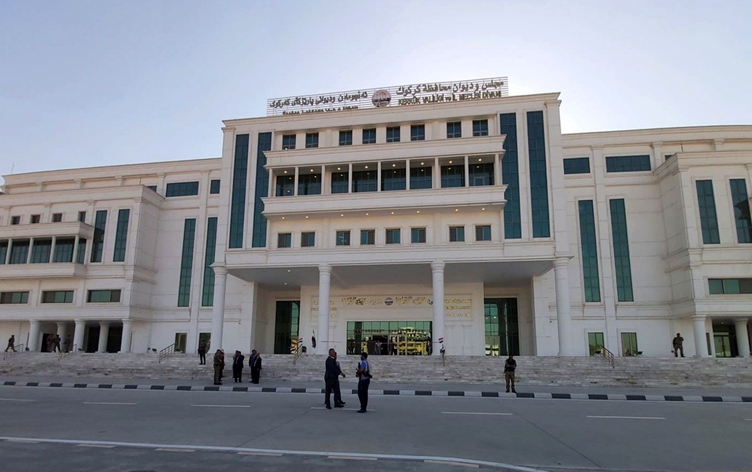
Governor Rewar Taha announces formation of provincial council committee to review position distribution across Kirkuk’s administrative units following Turkmen protests over municipal appointments in Prde district.
Committee Formation and Composition
Kirkuk Governor Rewar Taha announced that the provincial council president has formed a committee to review position balance in all administrative offices and units across Kirkuk’s districts. The move comes in response to dissatisfaction from Turkmen supporters regarding position distribution in Prde district.
The governorate issued a statement clarifying that under the provincial council president’s leadership, a committee has been established to examine positions throughout all Kirkuk districts and redistribute them equitably among ethnic components. The committee comprises eight members from the provincial council, including three Kurds, two Arabs, two Turkmen, and one Christian representative.
The committee members also represent factions that had boycotted the formation of Kirkuk’s local administration. This composition reflects the diverse ethnic makeup of the province and aims to ensure fair representation in the review process.
Kirkuk administration acknowledged that changing the Prde municipality director from one Kurd to another Kurdish candidate triggered the protests, stating they respect the concerns raised by Turkmen citizens. The governorate emphasized that Kirkuk’s administration has the authority to make necessary changes in administrative positions.
Protests and Political Response
The committee’s formation follows demonstrations and protests by Turkmen community members in Prde district, objecting to the replacement of the municipal director. While the position remained with a Kurdish candidate, Turkmen representatives demanded greater representation in the district’s administrative positions.
Hoshyar Hijran, a Patriotic Union of Kurdistan (PUK) member in Kirkuk Provincial Council, stated on July 3, 2024, that the committee’s formation was based on an agreement between the local government, provincial council presidency, and ethnic representatives who are council members, supervised by the provincial council president.
According to the provincial council president’s directive, the committee consists of eight members distributed as follows: three Kurds, two Turkmen, two Arabs, and one Christian representative. This composition ensures proportional representation of Kirkuk’s main ethnic communities in the review process.
The committee’s establishment coincides with protests by Turkmen Front supporters and Popular Mobilization Forces (Hashd al-Shaabi) in Prde district, opposing the appointment of a Kurdish candidate as municipality president. These demonstrations highlight ongoing tensions over administrative appointments and ethnic representation in the province.
Hijran explained that the committee’s activation awaits response from a Turkmen Front member in the provincial council, who is designated to conduct dialogue with Turkmen parties. This consultation process aims to ensure all ethnic groups participate in the position review mechanism.
The provincial council president’s decision mandates that the committee complete its work within one month of becoming operational. This timeline reflects the urgency of addressing ethnic balance concerns while maintaining administrative continuity in the province.
The formation of this review committee represents an attempt to address long-standing grievances about position distribution in Kirkuk, where ethnic composition has been a sensitive issue since the fall of the former regime. The committee’s work will likely influence future administrative appointments and could set precedents for managing ethnic representation in Iraq’s disputed territories.
This development underscores the complex nature of governance in Kirkuk, where Kurdish, Arab, Turkmen, and Christian communities seek equitable representation in administrative positions. The committee’s findings may reshape how positions are allocated across the province’s various districts and administrative units.