
Iraq, home to some of the world’s largest oil reserves, stands at a paradoxical juncture. Despite its immense hydrocarbon wealth, the country struggles with chronic power shortages, rolling blackouts, and a fragile electricity grid. This contradiction reveals a fundamental tension: a nation heavily dependent on oil revenues must simultaneously confront the urgent need to diversify its energy mix. The stakes are high—not only for Iraq’s economic stability but also for its political legitimacy and social cohesion.
The question is clear: Can Iraq continue to rely on oil as the backbone of its economy while embracing renewable energy as a path toward stability and sustainability?
Oil Dependence: A Double-Edged Sword
For decades, oil has been the lifeblood of Iraq’s economy. Nearly 90% of government revenue and the bulk of export earnings come directly from crude oil. This structural reliance has entrenched a rentier-state model, where public spending depends on volatile global oil prices.
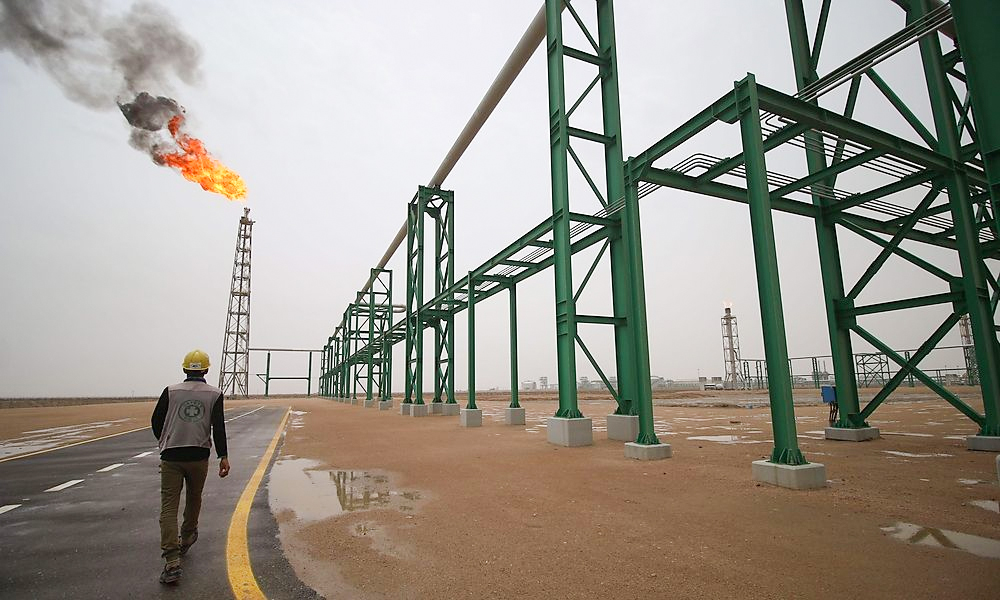
While oil exports generate short-term revenues, they also expose Iraq to external shocks. The 2020 oil price collapse during the pandemic devastated government finances, leaving little room for infrastructure investment. Moreover, the environmental consequences of excessive oil reliance—flaring, emissions, and pollution—add further pressure as global markets increasingly demand cleaner energy sources.
Politically, oil has also fueled central–regional tensions, particularly between Baghdad and the Kurdistan Regional Government (KRG), over revenue-sharing and export rights. Oil, therefore, is not just an economic asset but also a source of political fragility.
The Case for Renewables: Iraq’s Untapped Potential
While oil dominates today, Iraq’s geography offers extraordinary renewable energy potential. With high solar irradiance across much of the country and vast tracts of available land, Iraq could become a regional leader in solar power.
Recognizing this, Iraq has set an ambitious goal: producing 20% of its electricity from renewables by 2030. International partnerships are already in motion. The government has signed agreements with Masdar (UAE) and ACWA Power (Saudi Arabia) to build more than 2 gigawatts of solar capacity, including a $2 billion project in Najaf. Smaller initiatives aim to equip over 500 government buildings with solar panels, a symbolic step toward decentralized generation.
These moves are not merely technical solutions. They represent political signals: that Iraq is serious about diversifying its energy sources, reducing its dependence on Iranian electricity imports, and aligning with global trends in decarbonization.
Barriers to Transition: Old Problems, New Urgency
Despite promising announcements, Iraq’s energy transition faces formidable obstacles:
- Governance and Corruption
Corruption and mismanagement remain pervasive in Iraq’s energy sector. Large contracts often become entangled in opaque bidding processes, undermining both efficiency and investor confidence. - Weak Infrastructure
Iraq’s electricity transmission and distribution network is outdated and fragile. Even if new solar capacity comes online, without significant grid modernization, much of that energy risks being wasted. - Financing Challenges
Iraq’s fiscal dependence on oil paradoxically constrains investment in renewables. When oil prices fall, so do government revenues, reducing fiscal space for green projects. The country relies heavily on foreign direct investment, which can be volatile in the face of security and political instability. - Political Fragmentation
Disputes between Baghdad and regional governments complicate national-level energy planning. Renewable projects require coordination and trust, which remain elusive in Iraq’s fragmented political landscape.
These structural barriers highlight a critical point: Iraq’s energy transition cannot succeed without deep institutional reforms alongside technological investment.
Coexistence or Full Transition?
The reality is that Iraq will not abandon oil anytime soon. Crude exports remain essential for funding salaries, public services, and defense expenditures. However, the pathway forward does not require a sudden rupture with oil. Instead, Iraq can pursue a hybrid energy model, where oil revenues finance the gradual expansion of renewable energy.
This approach mirrors strategies adopted by Gulf neighbors such as Saudi Arabia (Vision 2030) and the United Arab Emirates, which have leveraged oil income to fund massive investments in solar and wind power. Egypt’s rapid solar expansion in the Benban Solar Park provides another regional template for balancing fossil fuels with renewables.
In Iraq, coexistence could mean strategically deploying renewables to offset peak demand, stabilize the grid, and reduce reliance on imports from Iran—without undermining the oil sector’s role as a revenue engine.
Regional and Global Implications
Iraq’s energy transition is not an isolated domestic issue. It carries significant regional and international implications:
- Energy Security: By diversifying its energy mix, Iraq can reduce its vulnerability to geopolitical shocks, including tensions with neighboring Iran and volatility in OPEC oil markets.
- Climate Commitments: While Iraq has been a laggard in global climate initiatives, scaling renewables could improve its international standing and attract green financing.