
As Iraq enters 2026, the country’s energy story is no longer only about oil volumes and budget arithmetic. It is increasingly about diplomacy—how Baghdad manages interdependence with neighbors, how Erbil and Baghdad build durable energy arrangements, and how Iraq converts investment into electricity that citizens actually feel in their daily lives. The hopeful signs are real, but they are also conditional: they depend on governance, transparency, and a conscious strategy to turn energy from a recurring crisis into a platform for stability.
What makes 2026 particularly important is that several initiatives launched in recent years are reaching implementation inflection points—especially in gas capture, power generation, and solar expansion—while Iraq’s regional energy environment remains volatile. This combination creates a rare opportunity: Iraq can use energy diplomacy not as a reactive tool, but as a statecraft instrument that reduces shocks, reassures investors, and lowers the political temperature between competing regional axes.
1) The new diplomatic logic: electricity as legitimacy
In Iraq, energy is not a technical sector; it is a legitimacy sector. Blackouts are political events. Fuel shortages reshape public trust. And external supply disruptions quickly translate into internal instability.
Recent analyses in KFuture have rightly framed Iraq’s electricity crisis as entangled with regional competition—particularly the push and pull between Washington and Tehran that turns energy flows into leverage rather than a service. (See, for example, KFuture’s analysis of the energy crisis and its geopolitical overlays. The lesson for 2026 is straightforward: Iraq’s best defense is not rhetoric, but diversification—of fuels, partners, routes, and technologies.
2) Gas capture as “quiet sovereignty”: GGIP and the politics of flaring
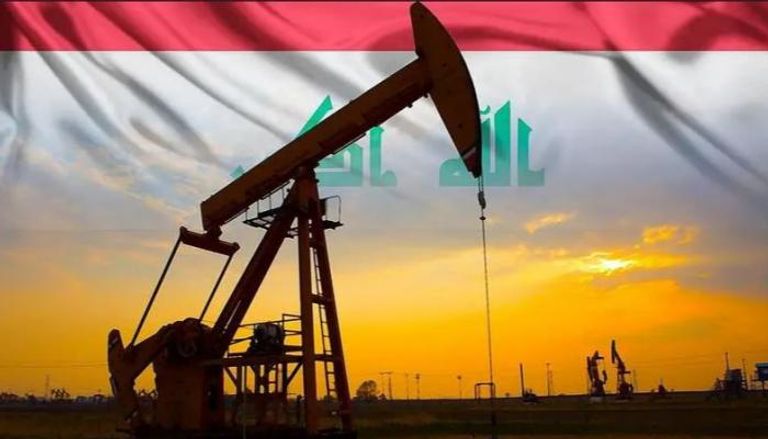
One of the most constructive developments shaping Iraq’s 2026 outlook is the acceleration of major gas and power projects designed to recover associated gas that Iraq currently flares and translate it into domestic electricity.
The flagship in this category is TotalEnergies’ Gas Growth Integrated Project (GGIP)—a multi-energy package meant to improve electricity supply and reduce reliance on imports by capturing flared gas, redeveloping oil production, advancing a large solar facility, and strengthening water infrastructure for southern fields. TotalEnergies describes GGIP explicitly as supporting Iraq’s energy independence and electricity reliability (TotalEnergies – GGIP project page). The company also detailed the “4-in-1” structure—gas recovery, Ratawi field redevelopment, solar, and seawater treatment—in its announcements (TotalEnergies press release).
What makes this relevant to 2026 is the timeline: industry reporting has indicated that parts of the Ratawi redevelopment (Phase 1) were expected to come online around early 2026, which—if delivered—would represent not only higher output but a governance message: Iraq can execute large projects on schedule (Argus report summary).
Why this matters diplomatically:
Gas capture reduces the space for coercion. The more Iraq can generate power from its own recovered gas, the less vulnerable it becomes to sudden external interruptions—and the more credible it becomes in negotiating balanced, interest-based relations with all partners.
3) Solar is no longer symbolic: it is becoming economic and social
A second hopeful trajectory for 2026 is Iraq’s solar turn—both state-led utility-scale plans and citizen-led adoption.
On the strategic side, Iraq has for years explored large solar partnerships. Masdar’s early agreement to develop at least 2 GW of solar in Iraq set an important precedent (Masdar announcement). Reporting has also tracked Iraq’s continued solar negotiations and its renewable targets through 2030 (for example, discussion of Iraq’s renewable share goal and obstacles: Zawya analysis).
On the investment and project-finance side, Reuters has documented the solar component within GGIP and its phased operational timeline, underscoring that Iraq’s solar expansion is increasingly integrated into broader energy security strategy rather than treated as a standalone “green gesture” (Reuters on QatarEnergy stake in the Iraq solar project).
On the social reality side, the most telling development is how ordinary Iraqis are moving ahead even when the grid lags behind. Reuters reporting shows farmers and households installing solar systems to reduce costs and stabilize power access—an organic decentralization that, if matched with smart regulation, can become a pillar of resilience (Reuters – Iraqis turn to solar as the grid falters).
The diplomatic implication:
A country that demonstrates a serious renewable pipeline becomes easier to finance, easier to insure, and harder to isolate. Solar is not only electrons—it is creditworthiness and confidence.
4) The Kurdish dimension: energy diplomacy must be federal—without becoming zero-sum
KFuture.media’s mission centers Kurdish realities across the region. For Iraq, that means acknowledging that energy diplomacy is inseparable from the Baghdad–Erbil relationshipand the stability of energy infrastructure in and around the Kurdistan Region of Iraq (KRI).
KRI’s geographic position and corridor potential—connecting Iraq to Turkey and, indirectly, European markets—make it a natural bridge, but only if legal and political disputes are managed through institutions rather than escalation. KFuture’sown discussion of inter-regional energy diplomacy emphasizes how Kurdistan can shift from periphery to connector when governance, legal clarity, and infrastructure resilience are treated as strategic priorities (KFuture.Media – “Inter-Regional Energy Diplomacy: Iraqi Kurdistan as a Bridge…”).
For 2026, a hopeful energy diplomacy agenda should include:
The strategic goal should be simple: energy must be treated as a shared economic platform that raises welfare in Basra and Erbil alike, rather than a contested symbol.
5) Iraq’s “smart interdependence” strategy for 2026
A hopeful 2026 is not a naïve 2026. Iraq will remain interdependent with neighbors—particularly in gas and electricity exchange. But there is a difference between fragile dependency and smart interdependence.
Smart interdependence means:
Reuters has repeatedly described Iraq’s structural reliance on external energy flows and the strategic motivation behind projects intended to reduce that vulnerability (Reuters – Iraq’s strategy around completing early phases of gas/solar projects; and Reuters’ later reporting on the scale and rationale of the mega-projects, including their role in reducing reliance on imports, also reinforces this direction: Reuters on the GGIP’s broader purpose).
6) Practical recommendations: what Baghdad (and Erbil) can do now
To translate the promise of 2026 into durable gains, Iraq needs an action agenda that is both technical and diplomatic:
Conclusion
Iraq’s best hopeful message in 2026 is not that it has solved its energy crisis overnight. It is that Iraq is changing the structure of the crisis—reducing exposure, expanding options, and turning energy from a recurring emergency into a platform for development and national cohesion.
If Baghdad can align major gas and solar projects with institutional credibility, and if Erbil and Baghdad can treat energy as a shared welfare system rather than a battleground, then 2026 can mark a meaningful shift: from energy as vulnerability to energy as diplomacy—and from diplomacy as survival to diplomacy as strategy.
References (hyperlinked sources)