

By Baram Majid Khan
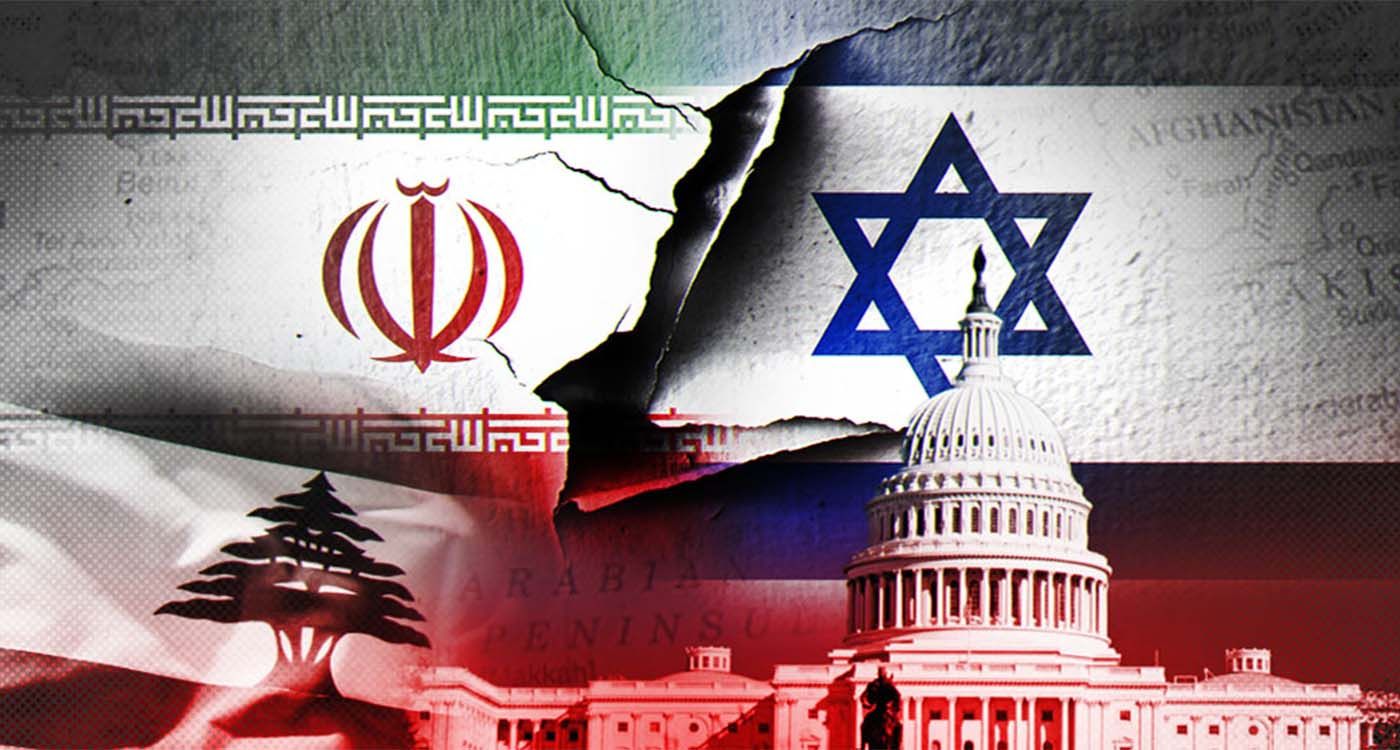
The twelve-day war between Iran and Israel was a historical phenomenon. For the first time, Iran and Israel confronted each other directly. Although a long and distant history binds these two nations together, with the success of the Iranian Islamic Revolution in 1979, Iran’s relations with Israel on one side and Iran’s relations with other countries on the other side deteriorated. Until June 13, 2025, the relationship between these two countries reached the extreme stage of deterioration as a result of Israel’s sudden attack on Iran. For Iran, the “twelve-day war” is an appropriate expression for that particular situation that emerged, although Iran did not officially declare a state of war. However, whether what occurred was a declaration of war or a limited operation by Israel and America against Iran, the situation has not yet ended.
In light of the concept of “conflict and confrontation in international relations and political science,” known as “Conflict,” we proceed with this research. Our main hypothesis in this research is:
Can diplomacy or war resolve Iran’s problems? Parallel to this main question, several other questions become the subject of research, such as: Will the continuation of the state of war between Iran and Israel end with the collapse of the Islamic Republic of Iran? Or does the Iranian government have the ability to defend itself? Will the continuation of this situation have an impact on the map of the Middle East? How?
At the time of conducting this research, the flames of events had not yet been extinguished, which compels us to take a collection of main and secondary questions as the focus of the research, leaving us no choice but to answer them. A set of questions regarding aspects of the conflict between Iran, Israel, and America, as well as fundamental issues such as: economic and social issues, structural problems, and the future of the governance experience in Iran and Israel. Several other international and regional topics related to the legitimate issue of the Palestinian nation.
The scope of the research is confined to the conflict and confrontation between Iran and the countries of the world and the region, from America’s withdrawal from the JCPOA agreement (JACOBA) to the unconditional ceasefire of the twelve-day war between Iran and Israel. However, for the sake of readers of this research who may need more information such as historical background, we refer to them in the footnotes of the research. The research methodology benefits from all methods of academic research. However, the author’s main commitment is to the realism approach in international relations and political science. Based on this theory, our analysis of the concept of international conflict and confrontation and the domestic politics of countries becomes possible.
Our main difficulty in this research is the scarcity of similar research in this field, especially since the events were very recent and sudden. Obtaining primary sources for this topic is difficult and expensive. However, due to the deep-rooted nature of the issue, we have utilized secondary sources such as translated books. The main support for the research has been articles, interviews, and the acquisition of knowledge from credible Iranian and international platforms. Although the approach of this topic is analytical of events, it has not devoted as much effort to collecting information in the research because in our current era, obtaining information from artificial intelligence platforms and global platforms is easy work; the esteemed reader can access such information themselves.
The key words of this research are: Realism, Confrontation, Twelve-Day War, Atom, JCPOA.
- Diplomatic Opportunities
1.1 The Cold Storage of History
Iran in its contemporary history has borne the heaviest burden of political and security problems and conflicts. When world occupying countries entered Iranian territory, this was followed by several wars and then agreements signed with countries of the region and Europe. The duration of this process in Iran lasted two centuries. Those two centuries coincided with the Qajar monarchy regime and the Pahlavi dynasty in Iran. In international relations, it is called the colonial era. Although Iran is one of those countries that did not surrender itself as an occupied state in the meaning of the colonial era, Iran’s relations with European countries created the ground for those countries to calmly and freely penetrate Iranian authority and impose harsh and shameful treaties on the Iranian people. Particularly, Iran’s relations with Russia resulted in several bloody wars. The Portuguese, British, Russians, and Americans directly intervened in Iranian affairs. The totality of Iran’s harsh relations with those countries created several fundamental problems for governance in Iran. [1] The agreements between Iran and Russia, economic and cultural agreements with countries like France and Britain, which brought much dissatisfaction and concern to the Iranian people. Figures such as Mirza Shirazi and Sayyid Jamaluddin Afghani opposed colonial policy. [2] All of Iran’s efforts to rise after signing any agreement ended due to military defeat in that phase. Once again, the same scenario was repeated. They saw that war and peace treaties had no result for Iran except the diminution of Iran and the loss of much of that country’s territory. Iran’s diplomatic apparatus during these two centuries worked in this way, haphazardly and far from institutionalization. Ministries were handed over without having any national archives. [3] Until the era of the Pahlavi dynasty, which took power in Iran, which coincided with economic development, the oil market, and diplomatic movement at the regional and global levels.
Once again, Iran decided to rise. It desired to become a regional power and guardian of the Gulf. It organized its relations with America and benefited from the Cold War to reach atomic science and the dream of obtaining an atomic bomb. [4] But despite many obstacles, until the occurrence of the Islamic Revolution, the Shah of Iran was only able to establish the foundation of Iran’s atomic institution. The Islamic Revolution, with the same path and approach as the Shah of Iran’s era, once again gave momentum to Iran’s dream from the Shah’s era. Iran faced obstacles such as economic sanctions and several harsh resolutions from the United Nations Security Council. As a result, under severe international pressure and the heavy burden of sanctions, the most important and controversial agreement was signed with six world powers, known as the JCPOA agreement. [5]
1.2 JCPOA: The Beginning of the End
JCPOA was the beginning of the end of another phase in Iran’s diplomatic history; from the perspective of the senior officials who concluded this agreement, it was seen as a historic achievement. Within the conservative wing of Iran, it was also opposed. In America as well, in the same way, it was seen by the Obama administration as the beginning of stability and peace in the region. It was also described by Republicans as the worst agreement in American history. Both opposing sides of the agreement were coordinated to overturn the agreement.
If we make a precise definition based on the reality of the concept of the agreement, we return to the conversation between Mohammad Javad Zarif and John Kerry, the US Secretary of State. Zarif points out that: this agreement is neither to my liking nor to yours. Therefore, the agreement is that contract between two sides in which neither side’s wishes are fully considered. If every side of the parties to the agreement had all its interests considered, then we cannot call that an agreement! JCPOA was that agreement between Iran and the (5+1) countries that was neither to America’s liking nor to Iran’s. From this point, all issues remained unresolved and later problems emerged. Neither Iran’s domestic policy genuinely supported the agreement, nor did America, especially during Donald Trump’s first term, which was satisfied with this agreement. The arguments for America’s withdrawal from this agreement are diverse. There are different opinions and different readings of this topic. But generally, this topic is related to the United States of America. However, both Iranian [6] and American researchers agree on the general themes of America’s withdrawal from the agreement. Different from those who link the topic to Trump’s own personality and evaluate Donald Trump’s personality, we can point to some main points that have been discussed in global media.
America believed that Iran’s limitations on the atomic file are not forever. Ultimately, Iran can freely obtain atomic weapons. This is seen as a harsh criticism of that agreement signed between them.
The compatibility of Iran’s atomic activities with the very rapid development of Iran’s missile programs became a matter of attention and danger for America.
The mechanisms of inspectors and investigators from the International Atomic Energy Agency faced many difficulties from the Iranian side, which became a source of concern for America and countries related to that file.
America believed that Iran was not honest in its atomic activities and conducted hidden activities far from the eyes of the agency.
The development and increased activity of Iran’s proxy forces in the region and the deterioration of security and strategic conditions in the Middle East. This frightened both America and Israel in the region. Limits had to be set for these activities.
As for America’s domestic policy, the President of America wanted to erase Barack Obama’s legacy in the region. As a result, in 2018, America officially withdrew from the agreement. This became a turning point for America and Iran and the redrawing of regional policy in particular and global policy in general.
1.3 The Legacy of Qasem Soleimani
Qasem Soleimani was the most charismatic starless general of the Islamic Republic of Iran, whose military influence in the region, as well as the traces of his political actions on the body of the region and the Iranian government, were evident. Soleimani’s friends and enemies agreed that he was the most influential military commander of Iran who emerged after the end of the Iran-Iraq war. [7] There are different domestic and external opinions about this personality. On one hand, he is identified as the father of Iranian-affiliated groups’ military in the region, who, through his policies, provoked America and Israel to wake them from their winter sleep and raised their hands for unprecedented enmity in history against Iran. [8] On the other hand, Soleimani as a military personality had a unifying role in maintaining the balance of power within Iran in favor of the hardline and conservative wing inside Iran. He was the arch-enemy of the Saudis in the region. He was educated in the classical religious school in Iran. The books he always carried with him were prayer books and religious supplications.
From a military perspective, he had managed to place the Israelis under an unprecedented siege in the region. On one side, Hezbollah in Lebanon, and on the other side, arming jihadist Palestinian groups in Gaza. He had the best relations with the Syrian government. After Imam Musa Sadr, he was able to establish Iran’s ideological current in the Levant region through the Syrians. The killing of Qasem Soleimani was the beginning of a major turning point in the subsequent fundamental changes in the region. Iran suffered a backbreaking blow. The void of Qasem Soleimani’s absence created a huge gap both at the level of high command in Iran and gave a deep breath to his enemies who could now step more comfortably in the region. This difficult phase that Iran went through witnessed an escalation of tensions with America, but no diplomatic efforts at regional and international levels could provide an appropriate solution for reconciliation.
1.4 The Sultanate of Oman as Mediator
Between America’s withdrawal from JCPOA and the tensions of Iran’s retaliation against America and the tensions between Iran and America on Iraqi and Syrian soil and Iran’s demonstrative, designed, and controlled attack on American forces and the second term of Donald Trump’s presidency in America, these became the foundation for a round of serious negotiations between Iran and the United States of America.
The Sultanate of Oman as mediator for another round between Iran and America was welcomed by countries of the region and the world. The purpose of these negotiations was both to stop and commit to diplomatic solutions and to reach a foundational agreement where neither party to the negotiations felt a great loss. The framework and form of the meetings were indirect, which was insisted upon by Iran. Five rounds of indirect meetings in Oman, led by Wiktaf, the US President’s special representative, and Abbasi Araqchi, initially created much hope for resolving the issues. [9] But then they reached a deep level of deadlock in the negotiations. Iran had two main objectives: obtaining more time for itself and continuing its atomic program, which it saw in terms of its right to enrich uranium. Although Iran had complete willingness to conduct a new round of negotiations with America, this was because Oman had previously seen a valuable role in the 2015 JCPOA agreement. For that reason, the Sultanate of Oman had good regional and international personality in managing the negotiations. Approval of Oman’s mediation was a strategic decision for both sides. But the issues were the same old issues in a new guise, which gave hope to both sides to reach a satisfactory result. However, after five rounds of negotiations, the same deadlock and closed alley on Iran’s atomic file was created again. The demands of both sides became higher with each round of negotiations. One of the reasons for the failure of the Oman negotiations goes back to Donald Trump’s own personality. Trump is a realistic business personality. Short-term gains were preferable to him than long-term gains with Iran. At the same time, Iran viewed the negotiations with the eye of opportunity and experience. It gave no clear signal or indication to America that it was prematurely ready to compromise on its principles. This diplomacy was called “reciprocal diplomacy.” [10] In reality, the Oman negotiations were a strong testing ground for both America and Iran to understand well whether diplomacy for resolving issues is possible or not. Two additional factors of difficulty in the negotiations brought failure to that round between Iran and America. The first: Israel. The second: the Atomic Energy Agency. Neither of these two sides saw a positive role in the success of negotiations between America and Iran. At a time when Israel attacked Iran when the negotiations had not yet officially ended.
- War and Imposing Peace
2.1 The Red Anthem
With the start of Israel’s attack on the Islamic Republic of Iran, attacks were made on the high military commanders of the Islamic Republic of Iran. That attack can be analyzed in detail. The Israelis always target important and first-rank persons of their enemies. What is called in Iran “structural warfare” or the war of structure and the wall of enemy command. When the killing blow falls on the entire system and command, controlling and directing attacks on the enemy is no longer easy. As was seen and referred to in Iran’s official media and in the words of senior officials, at the moment of Israel’s first attack on Iran, they had very weak ability to defend themselves and respond. [11] The loss of first-rank persons of the war front is not an easy task for any state. The hidden face of the topic was how Israel had managed to penetrate to that degree into the highest military and security authority of Iran and monitor them moment by moment. Israel had also predicted that the responses of the final days of the war, the missiles had significantly increased destructive capability. Israel’s official media did not hesitate to display to global public opinion the attacks by Iran on the center of their country and how much destruction Iran’s attacks created for their country. Israel’s war media were able to attract the sympathy of world countries to their side. In the midst of Iran’s confrontation with Israel, Iran pursues a “strategy of retaliatory self-defense.” [12] This strategy manifests itself in two aspects: withdrawal from the NPT and simultaneously opening the door to diplomacy, so that through this path, it can change the direction of total war to ‘business diplomacy.’ [13]
2.2 War Damage Assessment
According to what The Independent has indicated, in the twelve-day war between Iran and Israel, approximately 1,190 Iranian residents were killed and more than 4,475 people were wounded. In contrast, approximately 28 were killed in Tel Aviv and Beersheba, and approximately 3,000 Israelis were wounded, as The Times of Israel indicated. [14] Although the number of killed and wounded in war is not an indicator of success, did Israel achieve its objectives in Iran? The Israelis believe they were able to target the main bases of the Revolutionary Guards and senior commanders and several atomic scientists of Iran. As for the Islamic Republic of Iran, they believe the victors of the war are them, because Israel could not reach its objective, which was the elimination of the Islamic Republic of Iran. Although the war was not a prolonged open war, in the possibility of the war’s prolongation and the war reaching the shores, the Israelis would face shortcomings. According to many military analysts, Iran’s military capability at sea shows clear superiority. Iranians in their history have had the experience of long-term war. But the forces of Israel, if directed at leaders, could take the direction of the war into an unclear and dark state. In the twelve-day war, the situation could be controlled and did not spread to the Gulf countries and the region.
2.3 The Unexpected Guest
Israel was successful in involving America in the twelve-day war. Without America’s strikes on Iran’s atomic bases, Israel was never capable of eliminating those targets without America’s involvement. Israel’s attacks [truly caused great human and material losses for Iran], but it did not achieve its main objective, which was limiting Iran from obtaining an atomic bomb, which was the main pretext for the attacks on Iran. Operation ‘Midnight Hammer,’ American B-52 bombers’ strikes on Iran’s atomic installations in Fordow, Natanz, and Isfahan, had a great impact on suppressing the attacks on Iran. Those attacks prevented a prolonged war. The attacks did not target all atomic installations. Those installations imposed extremely large financial expenses on Iran. But they were able to stop Iran’s hand from re-enriching uranium for an indefinite period. Iran’s atomic installations, as Javad Zarif indicated, cost Iran nearly 500 billion dollars. [15] Without a single light bulb in Iran operating with atomic energy. If we add those losses that befell Iran as a result of sanctions on Iran due to the atomic file, it is estimated at nearly one trillion dollars. Currently, and in the outcomes of the twelve-day war on Iran and the sanctions on that country, the treasury is empty, and the ability to control financial policy and prevent that historical inflation that it has suffered has been lost, and it is awaiting a severe economic collapse.
2.4 Fire Under the Ashes
The President of America presented America’s National Security Strategy to the American people and the people of the world. [16] In that White House publication, Iran is identified as the main force of destabilizing the region (the Middle East). It believes that Iran has become very weak. America’s actions against Iran and Operation Midnight Hammer have been able to significantly crush Iran’s atomic capability. The common understanding of America’s National Security Strategy is that the Middle East is no longer important to America and will not be the first priority of the American government and President Trump. However, the deep understanding of this topic is that America’s strategy in the region, along with America’s self-protection from a prolonged war that creates grounds for world war, is not in the program. However, America advances its plans for the region through its proxy states such as Israel, Saudi Arabia, and Gulf countries. America has not abandoned the Middle East and Iran, but protects itself from direct war. This does not mean that the possibility of a second round between Israel and Iran has ended. As Admiral Brad Cooper, Commander of CENTCOM, points out in a statement to the US military: we have been able to a great extent to weaken Iran’s strategic power in the region, but we have not been able to weaken Iran’s tactical power. What is meant by strategic power is Iran’s authority and influence in Syria, Lebanon, Palestine, Yemen, and Iraq. But Iran’s tactical power fundamentally has several aspects, such as Iran’s missile capability and Iran’s influence over its proxies in the region, and especially Iran’s ability to reorganize those forces that are dangerous to the region, as ISIS still remains in the region and retains the ability to reorganize itself.
America no longer negotiates with Iran. Rather, it sends its demands prematurely through its messengers to Iran and imposes them. The essence of the issues between America and Iran sees itself in three essential points:
First: What America demands is Iran’s atomic program, which must be permanently shut down and the capability to enrich uranium not remain in its hands. But conversely, Iran will not abandon its atomic program and will advance its atomic file now and in the future. This is the fundamental point of the issue between America and Iran in the region.
Second: America wants to control and limit Iran’s missile capabilities, but Iran conversely believes America does not have the right to set limits for Iran in advancing that country’s military capability.
Third: America wants to stop Iran’s hand in the midst of its proxies in the region and permanently stop those forces from influencing the policy of states in the region, especially Hezbollah in Lebanon, Hamas, Popular Mobilization Forces, and the Houthis of Yemen. Although before and after the twelve-day war, all those forces except the Popular Mobilization Forces suffered a blow to their influence, Iran is trying to reorganize those forces. This disgusts America and Israel in the region. These three factors leave all possibilities openly before another round of pre-war negotiations and a unilateral war in the region.
- Regional Confrontation and Domestic Impact
3.1 Tel Aviv Does Not Sleep
Polls conducted inside Israel reveal that the majority of Israelis support the military actions of Benjamin Netanyahu’s government. At a time when the current leadership of Israel represents the most conservative government in Israel’s history. Netanyahu’s second government, from the beginning of its work, took steps toward implementing its predetermined plan against its enemies. The events of October 7th were a harsh defeat for the current cabinet. It was a security and intelligence failure for Israel. The government was quickly blamed for the failure of managing the country. Israel expanded its attacks on the region to be able to correct the failure of that country’s leadership and present itself as the victor of the war in the history of confrontation with Iran and Iran’s proxies in the region. Israel’s war cabinet had the objective of attacking Iran’s atomic centers and delivering an effective blow to Iran’s missile capability and removing Iran’s military leaders by striking their headquarters and resting places. From an economic strategy perspective, for Israel’s interior, it focused on “energy supply chains” and protecting them during wartime, protecting that country’s economic infrastructure.
Israel’s military and defense strategy relied on several established plans, the main foundations of which can be mentioned: preemptive strike on Iran and weakening Iran’s attack capability on Israel, preparing an anti-missile system against Iran’s missile attacks on its territory, a strategy of attacking atomic scientists and prominent military figures of Iran, simultaneously establishing psychological and mental warfare through that country’s media and its cyber media at the global level, especially using Iranian opposition media for that purpose.
From a diplomatic perspective as well, Israel pursued several precise objectives during the war, including: separation between the people and government of Iran in Netanyahu’s messages with the aim of domestic dissatisfaction and regime change by the Iranian people themselves. Israel openly changed its discourse from Arab enmity to Iran enmity. This is an important point that few thinkers and political and military analysts have mentioned. Israel generally pursues two main objectives since the events of October 7th:
First: reaching a long-term and sustainable agreement in the region within the framework of the Abraham Accords.
Second: weakening the Islamic Republic of Iran in the region.
3.2 Tehran’s Night Watch
Israel’s attacks left a severe impact on Tehran, the capital. Continuous attacks, the displacement of a large portion of Tehran’s residents put a heavy burden on the government’s shoulders. During the war, the Iranian government did not appear in the political and military scene. At the same time, America and Israel’s expectations for a popular uprising were disappointed, and the Iranian people, as a historical cultural nature of that country, chose silence until the end of the war. In Iran’s history, this was the first war of that country where the Iranian people had no opportunity whatsoever to participate and defend their own country. Electronic and missile warfare does not leave opportunity for civilian participation to defend their own country. During the war, no form of public expression of dissatisfaction was seen in Iran; this was a strong point for Iran that enabled it to defend its existence and consider itself victorious in the war. However, according to some of those political leaders such as Dr. Hassan Rouhani, former President of Iran [who now presents himself as domestic opposition], he believes that Iran’s military and intelligence leaders gave incorrect information to the political leadership of that country in assessing Israel’s attack on Iran, believing that that country would not be attacked. Therefore, with the start of the attacks, Iran’s military and political leaders in the first days of the war faced confusion and hesitation, and the counterattack was not carried out at its proper time. However, in the final days of the war, Iran was able to restore balance to its forces.
Conclusion
War is not a platform for surrender, and negotiation is not a field for consent. This is the situation that the Middle East file has encompassed. Building a bright future for the region becomes possible when we look deeply at the region’s past and make the future possible.
After the events of October 7th, the Middle East fell into a frightening geopolitical storm. The gates of hell opened from several directions. A bloody war engulfed the entire region. Iran was the center of events. Gaza and the resistance front were the life-givers of that bloody war. Israel’s objective is achieving peace through force and weakening the Islamic Republic of Iran. At the same time, no clear indication of fundamental change in Iran’s policy in the region is visible. Both paths of peace and war remain openly possible. Iran has lost its cards for conducting balanced and respected negotiations. America is the main party to the peace process and the unilateral war in the region. The atomic file can no longer be used as a strong diplomatic card. Iran’s greatest strategic mistake in the history of its diplomatic work occurred when it did not reach an agreement with the ‘European Troika’ and attracted America, Russia, and China to the negotiations with Iran, ultimately wasting the file. What remains is the development of its military and missile capabilities with the assistance of the Chinese and Russians, whose continued support for backing Iran can also be doubted. The choice of war is an open and close possibility. Israel, after stopping the war with Iran, is also preparing itself for another round of war in pursuit of achieving the final objectives of the war.