
1. Introduction:
In the shifting landscape of Middle Eastern energy, the Kurdistan Region of Iraq (KRI) stands at a uniquely strategic intersection. Nestled between two major energy powers—Turkey and Iran—and bordering a Europe seeking new energy corridors, the region has the potential to transform from a landlocked enclave into a pivotal bridge in the regional energy map.
Over the past decade, Kurdistan’s energy sector has developed rapidly through foreign investments and semi-independent oil exports via Turkey. However, this expansion has also exposed underlying tensions: between Erbil and Baghdad, between sovereignty and dependence, and between opportunity and vulnerability. This article explores how KRI could serve as a functional connector in inter-regional energy diplomacy, the practical opportunities that exist, and the structural and political constraints that persist.
2. Kurdistan’s position in regional energy networks
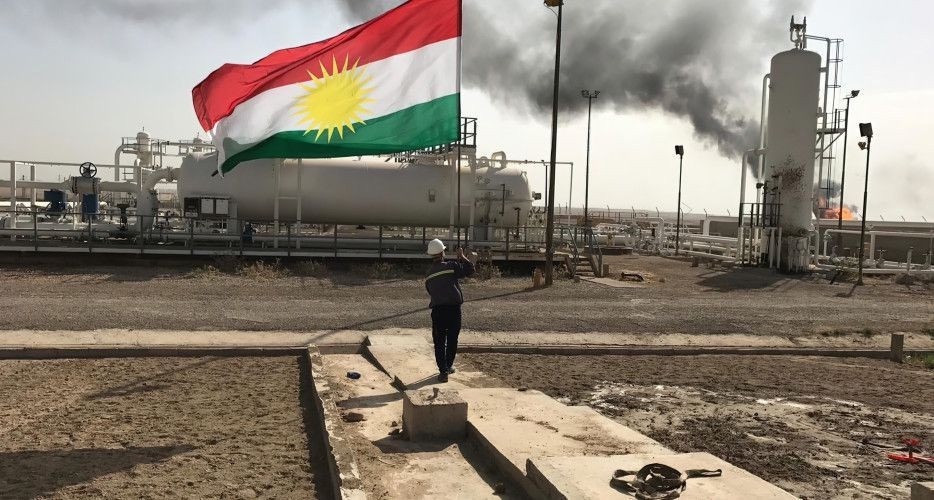
The physical geography of Iraqi Kurdistan offers a rare advantage: proximity to key transport corridors connecting the Gulf, Anatolia, and the Mediterranean. The region’s proven oil reserves are estimated at around 45 billion barrels, while its natural gas potential—largely underdeveloped—could reach 5.7 trillion cubic meters (according to KRG data, 2024).
Existing infrastructure already links Kurdistan to Turkey through the Kirkuk-Ceyhan pipeline, which carries crude oil to the Mediterranean port of Ceyhan. Plans for additional gas export routes—either via Turkey or through linkages with Iran’s pipeline grid—are frequently discussed but rarely realized, owing to political disagreements and investment risks.
Thus, Kurdistan sits atop an energy hinge: geographically close enough to connect supply from Iran and Iraq to demand in Turkey and Europe, but politically constrained from fully acting on that potential.
3. The trilateral dynamic: Cooperation and competition
Kurdistan–Turkey:
Turkey remains the principal export gateway for the Kurdistan Region’s oil. Ankara views the KRI as both a logistical asset and a strategic balancing tool against Baghdad. The 2023 resumption of oil flows through Ceyhan demonstrated mutual dependence, yet disputes over transit fees and international arbitration continue to create friction.
Still, both sides have incentives to deepen cooperation—Turkey seeks secure supplies amid energy diversification goals, and the KRI needs steady revenue streams and infrastructure investments.
Kurdistan–Iran:
While energy cooperation between the KRI and Iran remains limited, shared borders and existing power-grid interconnections offer untapped opportunities. Iran’s expertise in refining and gas processing could complement KRI’s upstream potential. Yet political sensitivities, sanctions, and regional rivalries limit the scope for formal collaboration.
Kurdistan–Europe:
For Europe, diversifying away from Russian hydrocarbons has elevated interest in alternative suppliers. The EU’s 2023 energy diversification roadmap highlights “southern corridor extensions” through Turkey. Here, KRI could play a quiet but vital role—acting as a supplementary source of crude and gas in future network expansions.
4. Barriers to realizing the bridge potential
The vision of Kurdistan as an inter-regional energy bridge remains aspirational for several reasons:
The ambiguous legal status of KRI’s contracts and revenue-sharing with Baghdad deters long-term investors. Diverging interests among Kurdish parties also complicate external negotiations.
Existing pipelines are aging and frequently exposed to physical and cyber threats. Without comprehensive investment in security and redundancy, reliability will remain fragile.
The lack of a unified federal energy law for Iraq undermines legal clarity on export authority and revenue distribution.
Turkey, Iran, and the Gulf states each view northern Iraq through competing strategic lenses. Any energy integration initiative must therefore navigate overlapping zones of influence—economic pragmatism often colliding with national security logic.
5. Pathways to cooperation
Despite the constraints, pragmatic cooperation is possible if built around shared interests rather than zero-sum politics.
Establishing a structured forum among Turkey, Iran, and the Kurdistan Region—possibly facilitated by Iraq’s federal government or regional organizations—could help depoliticize energy exchanges and coordinate infrastructure planning.
International financial institutions (such as the EBRD or IFC) could support dual-use projects—pipelines integrated with fiber-optic data cables or electricity grids—promoting regional interdependence.
Drafting a clear contractual framework for energy exports from KRI, jointly recognized by Baghdad and transit partners, would reduce political risk and attract diversified investment.
Integrating renewable components—such as hybrid gas-solar systems—could align KRI’s strategy with global energy-transition narratives and attract European climate funds.
6. Strategic significance: From periphery to connector
Kurdistan’s potential lies not merely in its reserves but in its position as a mediating geography. Energy diplomacy, when pursued strategically, could transform KRI from a peripheral actor into a regional stabilizer.
By engaging Turkey through economic logic rather than political rivalry, coordinating with Iran on border-energy exchanges, and aligning with European diversification goals, the region can build a reputation as a trust-based corridor.
However, this transformation demands patience and institutional maturity. Without legal clarity, inclusive governance, and resilient infrastructure, even the best diplomatic architecture remains theoretical.
7. Conclusion
Iraqi Kurdistan’s location grants it a rare opportunity: to turn geography into diplomacy. Its role as a potential bridge between the Middle East’s energy suppliers and Europe’s energy consumers will depend on how deftly it manages political relationships, builds credible institutions, and ensures inclusive benefits for its citizens. The test ahead is not only economic—but diplomatic. The KRI must demonstrate that energy can serve not as a source of contention, but as a medium of cooperation across one of the world’s most fractured regions.
References;
• International Energy Agency (IEA), Iraq Energy Outlook, 2023.