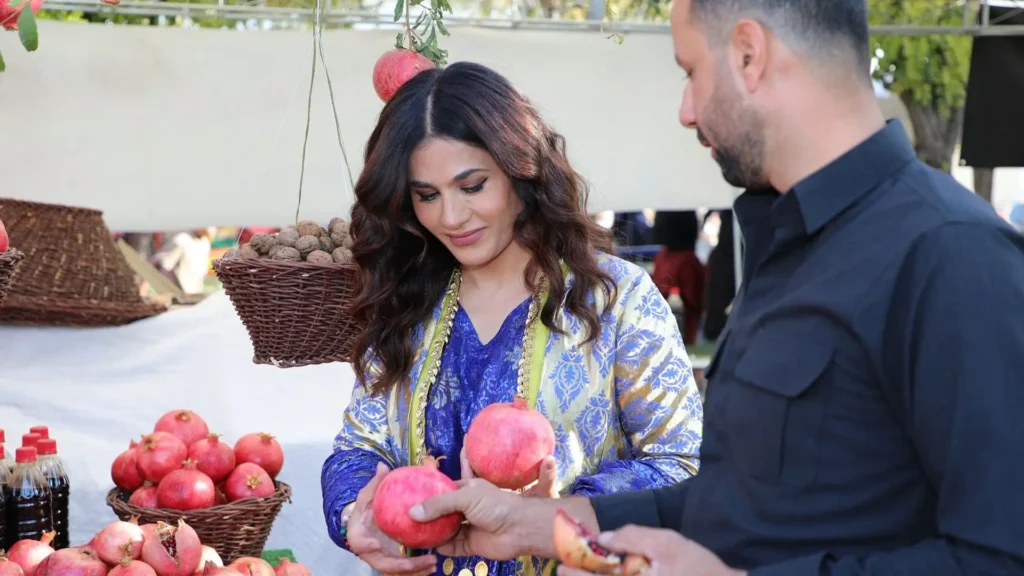

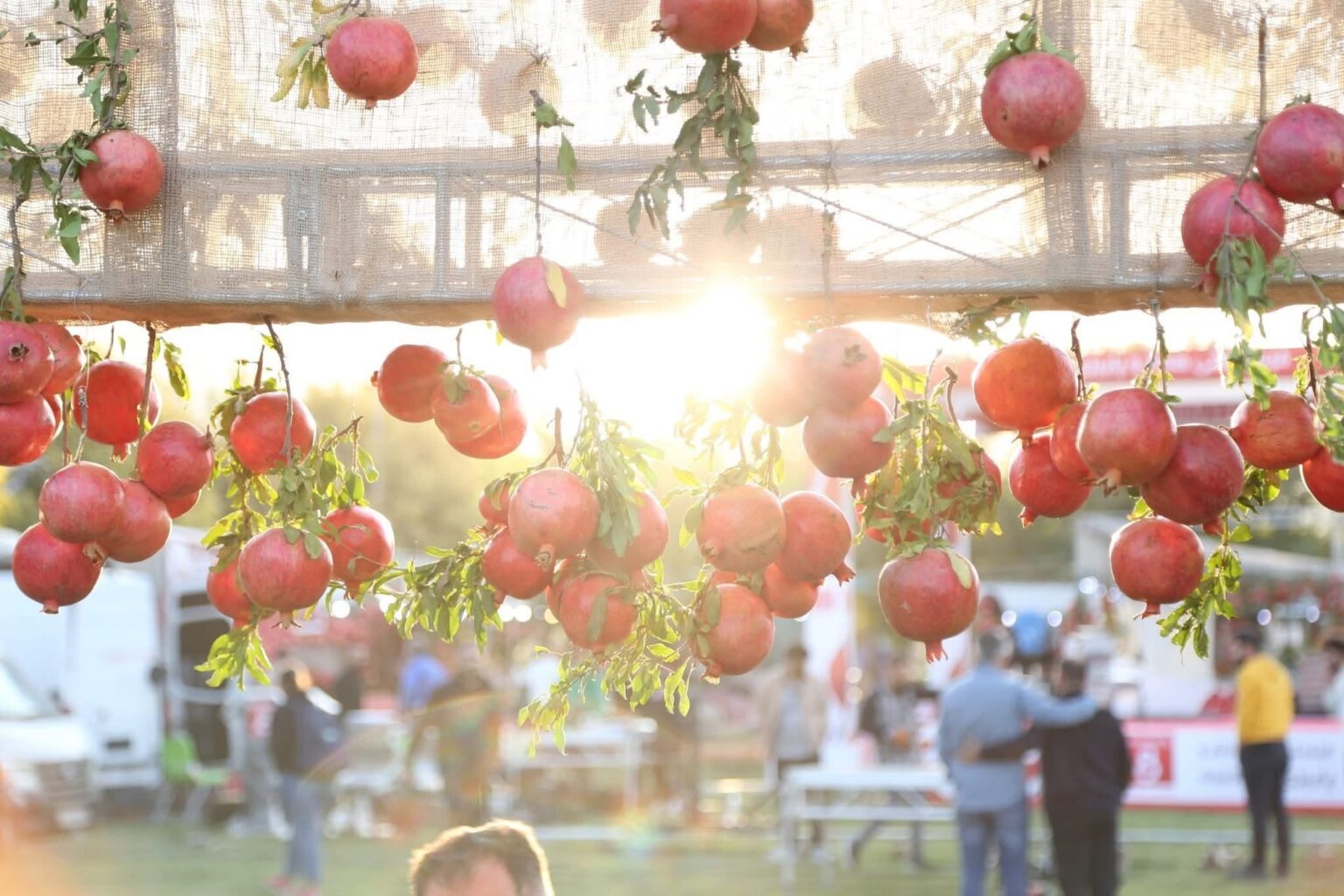
The 15th Halabja Pomegranate and Autumn Festival concluded with unprecedented attendance of 419,700 visitors over three days, generating 1.7 billion dinars in total sales. The eco-friendly event showcased 17 pomegranate varieties, banned all plastic materials, and featured 630 exhibition stalls across agricultural products, handicrafts, and food sections. International diplomats, including representatives from the Netherlands and UAE, expressed interest in agricultural cooperation and importing Halabja’s pomegranate products.
Record-Breaking Attendance and Economic Impact
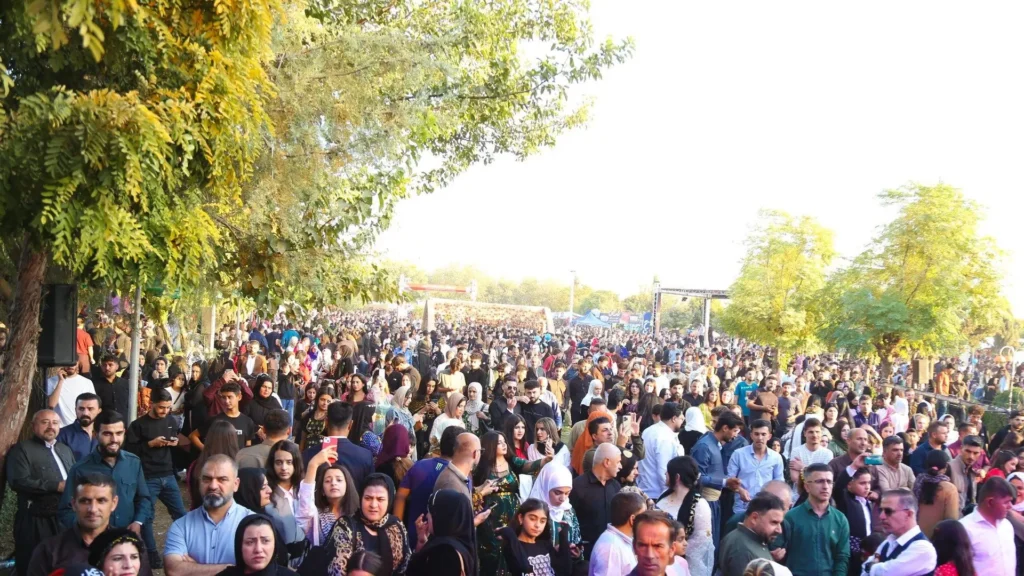
At a press conference, the Governor of Halabja, along with the Directors of Tourism and Agriculture, announced impressive statistics from the 15th Halabja Pomegranate and Autumn Festival. The three-day event attracted 419,700 visitors, marking it as one of the most successful festivals in the region’s history. The economic impact was substantial, with total festival sales reaching 1.7 billion dinars.
The revenue breakdown revealed diverse economic activity: agricultural products generated 700 million dinars, food items accounted for 800 million dinars, and handicrafts contributed 200 million dinars. The massive influx of visitors was facilitated by 81,000 vehicles, 804 buses, and 4,000 motorcycles, while 54 organized tourist groups participated in the event.
Halabja’s governorate had prepared extensively for this large-scale gathering, deploying teams across all sectors including traffic management, transportation, security, healthcare, and sanitation. Specialized welcome and guidance teams fluent in Kurdish, Arabic, and English were stationed throughout the festival grounds to assist the nearly half-million guests who descended upon the city.
Agricultural Excellence and Pomegranate Production
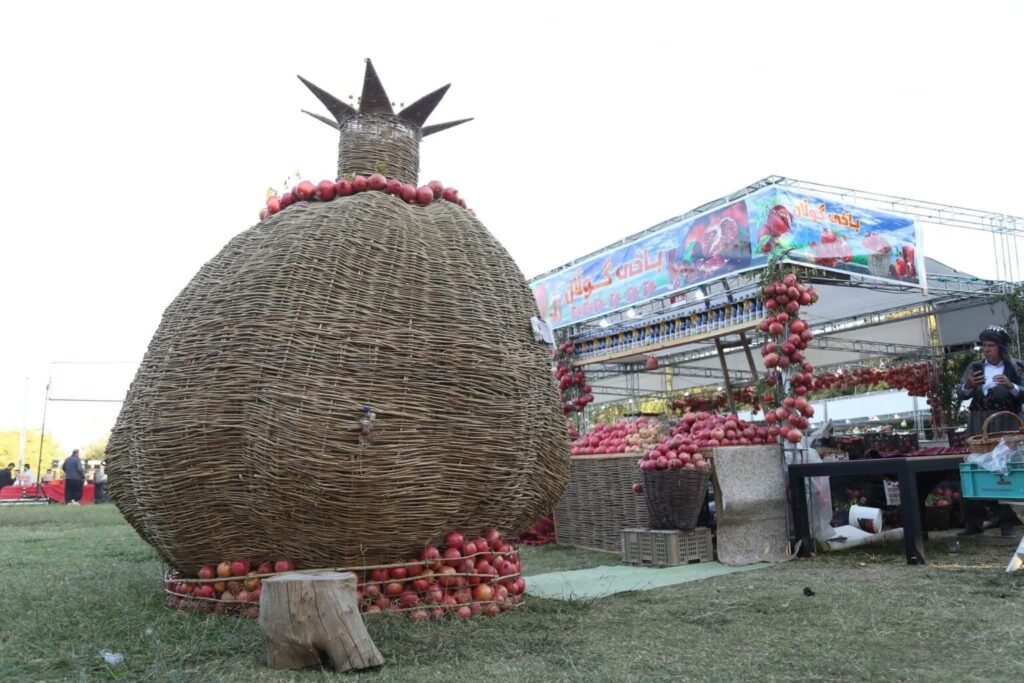
Sitar Mahmoud, Director of Agriculture for Halabja, provided detailed insights into the region’s pomegranate industry. Within Halabja’s boundaries, more than 12,000 donums of orchards exist, with 10,300 donums dedicated specifically to pomegranate cultivation. Approximately 2,300 pomegranate farmers work these lands, contributing to an annual production that typically ranges between 20,000 to 30,000 tons, sometimes reaching 35,000 tons.
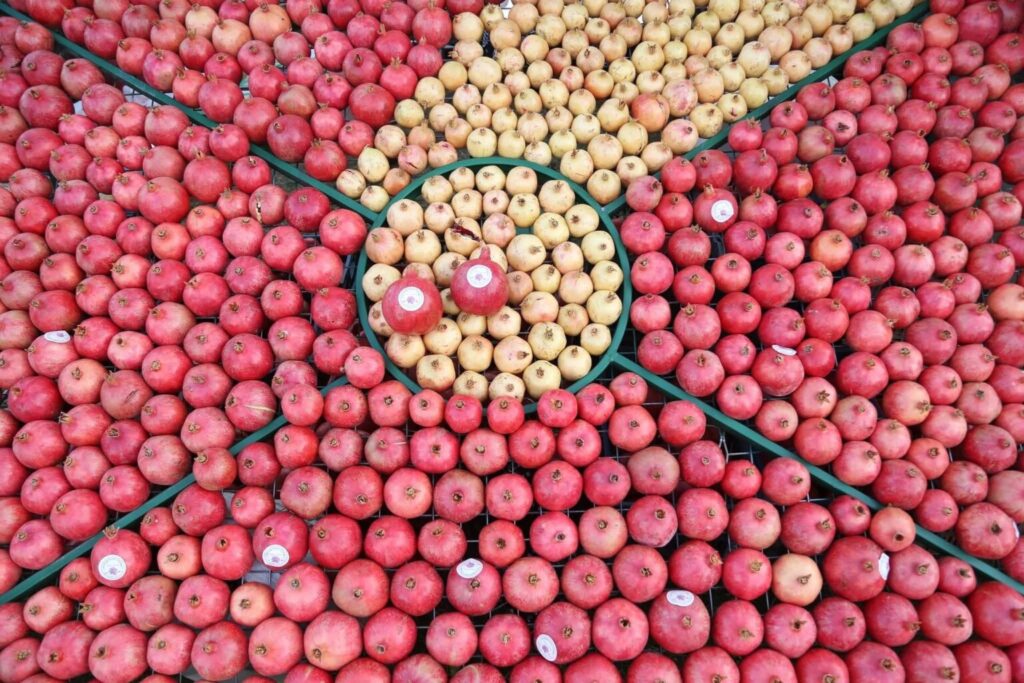
The festival showcased 17 of Halabja’s 26 pomegranate varieties, with the Salakhani variety identified as the finest. Despite insufficient rainfall this season, farmers assured festival-goers that this year’s pomegranate harvest remained excellent and juicy. The region also boasts 1,000 walnut trees, the highest number across the Kurdistan Region.
Beyond fresh fruit, innovative entrepreneurs demonstrated value-added products. One factory owner, Biner Tahir, operates Halabja’s only juice production facility, employing 30 people. His operation produces pomegranate seed oil from discarded seeds and pulp, creating a natural skincare product. Other artisans, like Kawsar Mohammed, crafted medals and necklaces from pomegranates, while farmers produced natural pomegranate syrup—two pomegranates yielding one bottle, priced at 25,000 to 30,000 dinars for 20 liters. One visitor from Dubai reported purchasing Halabja pomegranate syrup for 15,000 dinars per bottle.
International Interest and Export Opportunities
The festival attracted significant international attention, with diplomatic representatives expressing concrete interest in agricultural cooperation. Adriaan IJsseltstein, Consul General of the Netherlands in the Kurdistan Region, participated in the festival and outlined his country’s ambitions for agricultural coordination with Halabja.
“This is a beautiful festival. It’s always a pleasure to visit Halabja and meet its people,” IJsseltstein stated. “I’m especially delighted to be here from the Netherlands and witness all these activities, because we want to build agricultural coordination with Halabja.” He expressed hope that Halabja’s pomegranates and agricultural products would soon appear in Dutch markets, describing this as a promising new export opportunity for local farmers.
Sheikha Farhan, Chargé d’Affaires of the UAE Consulate General in the Kurdistan Region, also attended and described the event as “remarkable.” In her first visit to the festival, she commended Governor Nukhsha Nasih’s invitation and praised the governorate’s initiatives supporting farmers and strengthening the agricultural sector. “The festival is truly unique, and we hope it continues,” she said. “The governorate’s efforts to support farmers are commendable.”
Environmental Innovation and Cultural Programming
One distinguishing feature of this year’s festival was its comprehensive environmental commitment. The organization “Nmakhani” supplied numerous eco-friendly items including cups, plates, spoons, and paper containers, distributing them free to participants. All plastic materials were strictly banned from the festival grounds, making it the first major festival in the region to fully comply with environmental standards.
Chia Qasim, Director of Tourism for Halabja, noted that favorable weather conditions contributed to the festival’s warmth and success. The event expanded beyond commerce to embrace cultural programming, featuring music concerts, singing performances, and photography exhibitions. Artists Bokan Hawrami and Arian Karim participated in the entertainment program.
Approximately 630 stalls were distributed across three main sections: agriculture (for displaying and selling regional agricultural products, especially pomegranates), handicrafts (showcasing handmade products from local women and men), and food (offering various culinary items). The tourism director revealed that preparations began 20 days before the festival, with coordination among travel companies to maximize visitor attendance—initial projections anticipated 300,000 visitors, which the actual attendance significantly exceeded.
Additionally, three days before the festival commenced, organizers conducted specialized seminars for all participants, requesting they offer their products at the most affordable prices. The comprehensive security and traffic plan, combined with artistic programming and environmental consciousness, transformed the festival into a model event that balanced economic opportunity, cultural celebration, and ecological responsibility. Textile merchant Adil Ali Rasul even displayed special shawls worth over $1,000 each, representing the premium handicrafts available. He imports $200,000 to $300,000 worth of shawls annually from Zakho, selling them in Halabja and Hawraman, and has developed weatherproof cushions suited to local conditions.