
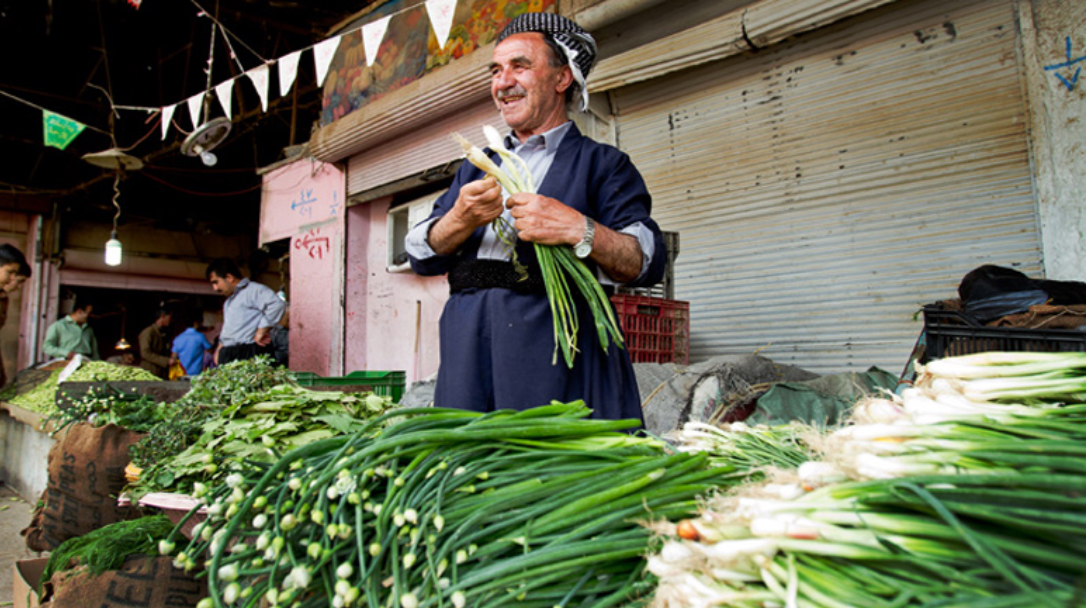
Agriculture in the Kurdistan region has a historical root but this sector is restricted by family based-activity rather than directed by a capable private sector. A development plan had already been proposed in Kurdistan as early in 2008, allocating US$10 billion to be invested during a 10-year period in a partnership between the private and public sectors. The KRG’s intention was to take control of the economic diversification process. However, the development plan was thwarted by six factors. First, the sector was only given US$ 50 million which was insufficient to enable it to substitute for imported foodstuffs. Second, according to an economist commentator, there was not a proper check on how the money was spent. Third, the plan did not indicate clearly the measures that needed to be taken to provide appropriate conditions for developing agriculture during the 10-year period. Fourth, as a former agriculture minister said, implementation of the agriculture plans required controlling the crossing border points to protect local production from unwelcome imports of food, and this was a very expensive task. Fifth, migration from the villages to the cities had deprived rural areas of farmers. According to an economist commentator this migration was mainly the result of government policy after 2003 to recruit large numbers of workers for the public sector. It would be difficult for these workers to return to the villages to work in their farms when they enjoy good salaries in government employment.
Sixth, most important of all, the plan was undermined by the economic interests of the two main political parties – the Kurdistan Democratic Party (KDP) and the Patriotic Union of Kurdistan (PUK). According to former senior official:
This rivalry arose because each party had close links with foreign countries which exported large quantities of goods to the KRI … food imports from these two countries Iran & Turkey are controlled by political elites from these respective parties who take rents for protecting them... he introduced import taxes on goods coming into Kurdistan from Turkey and Iran to protect domestic producers from cheap imports, but the Turkish President and Prime Minister successfully pressured the KRG to remove the import taxes. As a result, local production of these food items has collapsed but the political elites have been enriched by rent-seeking.
In connection with the above situation. Both countries would not like that the KRI be able to stand on its feet in the future because both neighboring countries believe that if the KRI will develop economically, it will destabilize Kurdish parts of Turkey and Iran. Imports of food from Turkey and Iran benefit local consumers because the imports are cheaper than locally produced foodstuffs, so there is a mixed reaction locally: local farmers suffer, but local consumers benefit. This could be considered as a political dependency of the region. Both countries look at the KRI as their own backyard. According to a former high official the government should have a detailed strategy rather than a vague plan for developing agriculture. For example, the government should provide loans and subsidies to farmers as well as offer to buy agriculture products at competitive prices. However, until recently, we have not seen much effort by the government in attempting to build a strong agriculture sector to contribute to economic growth in the long-term.
The sector currently contributes only 4% GDP, which is a decrease from the 1970s when it contributed more than 20% of GDP. However, there is one sign of a change of heart: because of recent droughts and a huge loss of irrigation water, after more than two decades of experts saying the government must build local dams to store water and reduce water consumption, in 2021 the government has allocated the funds to build several dams.
Finally, Turkey and Iran exert considerable pressure to get the KRI to relax its import bans on their products exported to Iraq. The political parties give support to these pressures, thereby undermining their own and the KRG’s efforts at developing agriculture sector. Former agriculture minister said he introduced import taxes on goods coming into Kurdistan from Turkey and Iran to protect domestic producers from cheap Iranian and Turkish imports, but the Turkish President and Prime Minister successfully pressured the KRG to remove the import taxes. As a result, local production of these food items has collapsed. Neither Turkey nor Iran want the KRG to succeed in its diversification policy not only for reasons of economic self-interest but also because a diversified Kurdistan region could destabilize Kurdish parts of Turkey and Iran.Weak regulatory frameworks and inconsistent policies further contribute to the challenges faced by the agricultural sector in the region.