
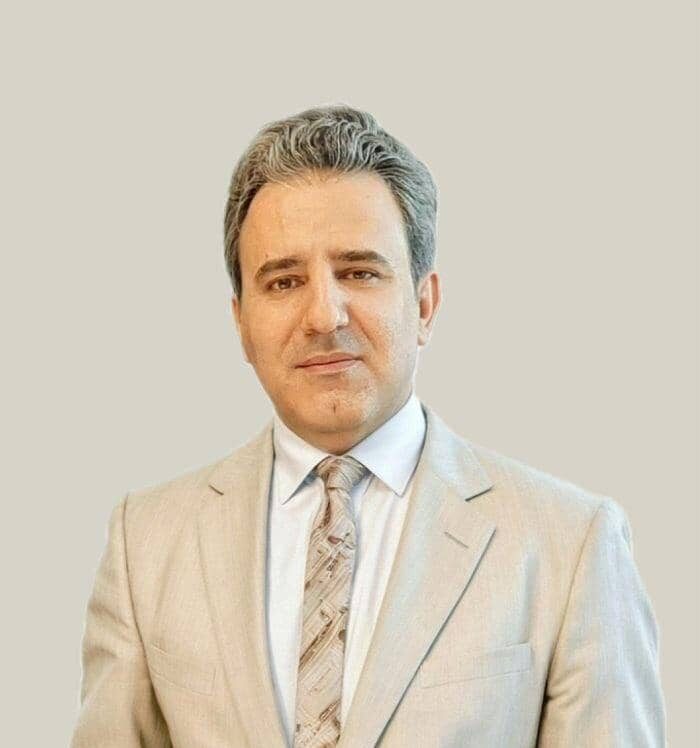
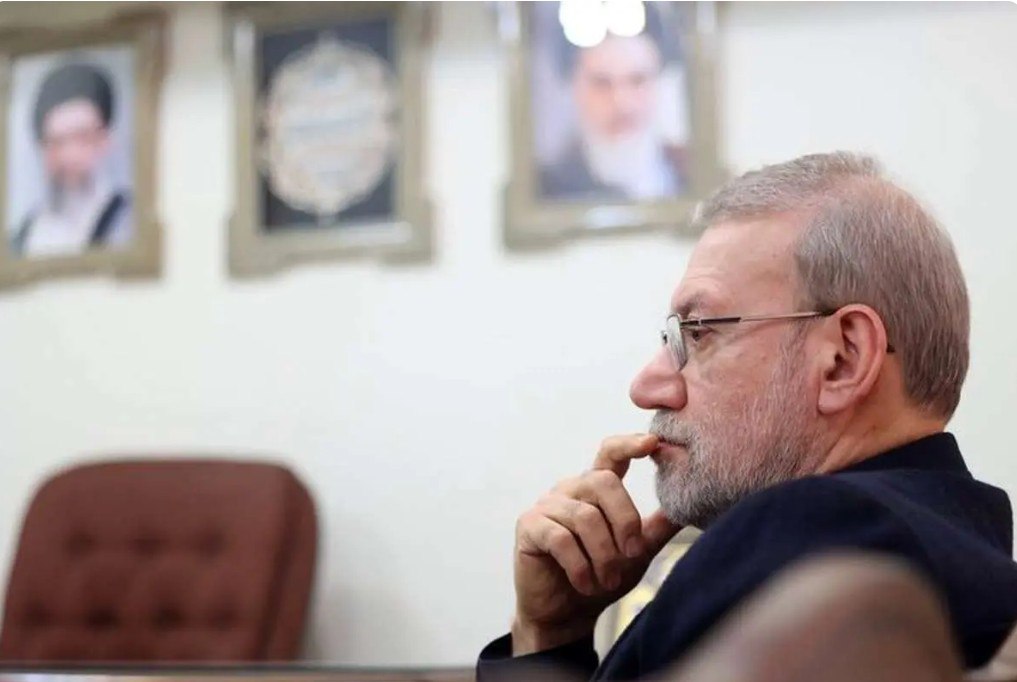
On August 5th, suddenly by decree of Masoud Pezeshkian, a new secretary was selected for the “Supreme National Security Council of Iran,” and that person was none other than Ali Larijani, the veteran principlist politician. This appointment appears to have occurred under the influence of his recent political activities and positions on one hand, and under the impact of the difficult situation of the Islamic Republic of Iran’s domestic and foreign policy at the current sensitive juncture on the other hand.
The Importance of the Supreme National Security Council
Since 1989, with the revision of the constitution and according to Article 176 of the constitution, this institution was established as one of the most important decision-making centers in the areas of national security, foreign policy, and defense of the Islamic Republic of Iran. This institution serves as the supreme authority for decision-making and formulating the country’s grand security strategies, and acts as a communication bridge between Iran’s military, political, and security institutions and organizations. In recent years, many sensitive files in domestic and foreign policy, including policies related to hijab or negotiations related to the nuclear file, have been in the hands of this council. Therefore, under current conditions, it holds very significant importance in the structure of the Islamic Republic of Iran’s system.
Who is Ali Larijani?
“Ali Ardeshir Larijani” is a veteran principlist politician born in 1957 in the city of Najaf, Iraq, who comes from one of the influential political families in the Islamic Republic of Iran. His father, Ayatollah “Mirza Hashem Amoli,” was one of the influential Shia clerics, and he himself is also the son-in-law of Ali Motahhari, one of the main theorists of the Islamic Republic. The Larijanis have been and continue to be among the most influential families in Iran’s political arena, to the extent that during a ten-year period, he himself was the Speaker of the Islamic Consultative Assembly while his brother was the head of the judiciary, and his other brothers have also held and continue to hold high positions.
Ali Larijani has held high posts and positions since his youth and from the age of 22 at the beginning of the revolution. In his political record, in addition to serving as Speaker of Parliament, he has also experienced deputy leadership of the Revolutionary Guards, advisory roles to Ayatollah Khamenei (the Leader of the Revolution), secretary of the Supreme National Security Council, head of the Radio and Television Organization, Minister of Culture and Islamic Guidance, and membership in the Expediency Discernment Council.
Fall and Dawn Again in Politics
While in recent years his qualifications for two different presidential election periods had been rejected by the Guardian Council, and the influence of both him and his family had been considerably diminished, it appears that the rapid events and developments of recent months and his supportive positions toward the Islamic Republic system and its leaders on one hand, and the need for change and developments among key policymakers on the other hand, have caused his star of fortune to shine again in the sky of Islamic Republic of Iran politics.
Larijani’s Four Missions
It appears that under the current difficult conditions in which the Islamic Republic finds itself, the three main missions of Ali Larijani as the new secretary of the Supreme National Security Council include the following:
1. Preventing the occurrence of internal instabilities
2. Creating balance and coordination between rival political and security currents
3. Preventing further weakening of the resistance front
4. Finding a formula to prevent another attack on Iran
Difficult or Impossible Missions?
It appears that at the current time, Ali Larijani’s most important mission is helping to find a formula to prevent another attack on Iran by finding a middle-ground solution for the nuclear file. This issue has gained double importance given the proximity of the deadline for the activation of the European trigger mechanism against Iran’s nuclear file.
Larijani, together with the government and ruling body, must first find a way to prevent the activation of the trigger mechanism, and then reach an agreement with the Americans under these difficult conditions to find a new deal in which Iran gives fewer concessions compared to America’s demands! This is a matter as complex and confusing as a tangled ball of yarn.
His other mission, which he has been trying to accomplish in recent days, is preventing the reduction of influence of the resistance front and Iran’s proxy forces in Iraq, Lebanon, and Yemen. In Lebanon and Iraq, existing processes are moving toward disarming “Hezbollah” and “Popular Mobilization Forces,” and Iran is trying to prevent this issue. However, the very fact that Larijani was forced to avoid using the usual route through Syrian airspace—Iran’s former strategic ally—when flying from Iraq to Lebanon because the government of Ahmad al-Sharaa did not allow him to use Syrian airspace, and also the unwillingness of Lebanon’s foreign minister to meet with him, indicates that preventing further weakening of Iran’s proxy groups in the resistance front is a very difficult mission.
The Outlook Ahead
Ali Larijani, who a few years ago wrote a critical and heartfelt letter in response to his disqualification by the Guardian Council in the presidential elections and signed and published it with the title “Servant of God,” is now tasked with solving files in the most sensitive historical situation of the Islamic Republic. If we don’t say accomplishing these tasks is “impossible,” they are at least “very difficult.” Now it remains to be seen how much he can find practical and effective formulas for this complex and difficult situation. Given the speed of developments and events, it appears he has no more than a few weeks of opportunity, and it remains to be seen whether he can help the Islamic Republic in this dangerous historical path and turn, or not!