

Dr. Hoshman Ata
Introduction
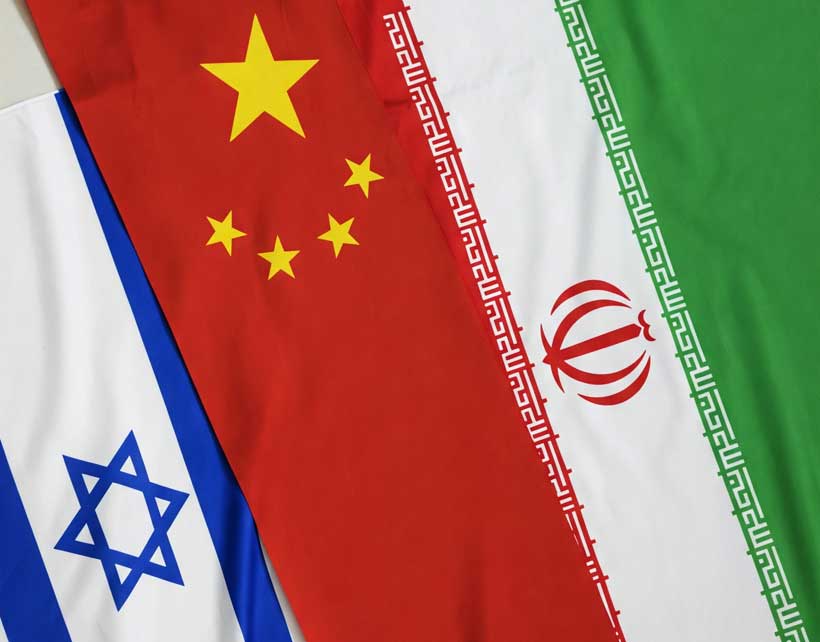
The Islamic Republic of Iran, as one of the most influential regional powers in the Middle East since seizing power in 1979, has been engaged in confrontation and cold war with Western powers, particularly America and Israel. This conflict and hostility has passed through several forms, stages, and proxy wars over more than four decades. Following the events of October 7, 2023, and the onset of the Hamas-Israel war, the conflict and hostility of Israel began in several phases with strikes against Iran’s proxy forces in the region, culminating in direct Israeli attacks on Iran. Although Iran had restrained itself from direct war and confrontation with Israel through several phases, particularly after the rise to power of reformist President Masoud Pezeshkian, who intensified diplomatic efforts to negotiate over Iran’s nuclear program, at the height of those meetings and in the early morning of June 13, 2025, Israel launched intensive attacks on Iran, thereby initiating a direct war between the two countries using air power that continued for twelve days. During those twelve days, contrary to Israel, which had direct assistance and support from America and other countries, Iran appeared isolated and without genuine support. Iran’s allies, Russia and China, did not have the impact on the course of the war and its termination that was expected, which has raised many questions and assumptions about the nature of relations and the degree of trust these powers have among Iranians. This research seeks to examine this issue from several perspectives, particularly from China’s viewpoint, in order to ultimately answer the question of why China did not have a strong position and stance during the twelve-day war.
China and the Twelve-Day War:
The People’s Republic of China has always emphasized in its foreign policy the principle of non-interference in the internal affairs of other countries. This principle is one of the fundamental pillars of the international system it seeks to establish (China’s position on the Darfur crisis in Sudan and the Syrian civil war, and its efforts to prevent external intervention in these two issues, are evidence of China’s foreign policy in emerging crises). For this very reason, it has no desire to participate in military alliances, lest Beijing be drawn into an unwanted confrontation. Unlike American policies that resort to direct military intervention or strong political and economic pressure in regional and international crises, China prefers to establish its position as a neutral mediator and a responsible actor and advocate for peaceful resolution of crises ([1]). In reality, this Chinese thinking is partly due to China’s internal dynamics. The Chinese are averse to America’s direct intervention regarding Taiwan and its use as a pressure card against China. Therefore, within Chinese political elite thinking, they always deal with sensitive global issues with self-protection and caution. On the other hand, China is currently preoccupied with economic development; any entanglement in global crises affects the slowing of that rapid trajectory by which its thriving economy is recognized.
The approach of non-interference in the internal affairs of states within the framework of Chinese foreign policy has been defined as “building an international community with a shared future,” a concept that emphasizes cooperation, peaceful coexistence, respect for national sovereignty, and resolving conflicts through dialogue. China attempts to distance itself from the image of a power that disrupts the international system, and instead presents itself as an actor that values global stability and uses diplomatic tools to reduce tensions.
According to Iranian researcher Barout Kubzadeh, the reason China did not participate in and strongly support Iran during the 12-day Iran-Israel war can partly be attributed to Iran’s military capability in controlling the crisis. He believes Iran was able to inflict significant damage on Israel’s infrastructure and military centers without needing direct external assistance. Moreover, Iran made no formal request for intervention or support from its allies, and Iran and China have no mutual defense pact, so China’s absence cannot be considered as that of a reckless country in assisting its allies. In analyzing China’s behavior, he also believes it is necessary to consider the temporal limits of the conflict. Comparing the 12-day Iran-Israel war with the first 12 days of the Russia-Ukraine war reveals that China did not intervene in the early stages of that war either, but over time became one of the main buyers of Russian oil, and now even some military equipment and war materiel reach Russia through Chinese companies. Therefore, expecting China’s immediate intervention in a short-term confrontation like the Iran war does not align with the logic of Beijing’s foreign policy ([2]). Also, regarding the difference between Iran-China relations and America-Israel relations, it must be said that the relationship between America and Israel is a deep ideological, strategic, and fundamental relationship. Israel, as a regional actor, is in reality a Western creation for controlling Middle Eastern developments—a tool for securing the geopolitical interests of the West, particularly America. This is clearly evident in the unconditional political, military, and security support from the West to Israel. He also believes that without this Western weaponry and diplomatic support, Israel could not withstand powerful actors like Iran ([3]).
In contrast, Iran’s relationship with China has a different nature. China views Iran as a strategic partner in West Asia. The 25-year strategic agreement between the two countries and China’s support for Iran in international organizations are evidence of this. However, Iran has different characteristics compared to China’s other regional partners, as it shares with China a discourse of opposing the unipolar hegemonic order dominating the world and confronting American hegemony. This partnership has become the foundation for a kind of strategic understanding between Tehran and Beijing ([4]).
On June 14, Chinese Foreign Minister Wang Yi conducted a phone call with Iranian Foreign Minister Abbas Araghchi. According to the official website of the Chinese Foreign Ministry, in that conversation Araghchi told his Chinese counterpart: “Israel has seriously violated international law with this attack. Israel’s military operation is very dangerous and may drag the entire region into comprehensive war. He expressed hope that the international community would issue a unified call to urge Israel to halt its military operations. Seyed Abbas Araghchi thanked China for understanding and continuous support of Iran’s position and expressed confidence that China plays a more important role in advancing peace and regional stability ([5]).
In response, Chinese Foreign Minister Wang Yi stated: “China immediately and openly expressed its position after Israel’s attack on Iran. China openly condemns the violation of Iran’s sovereignty, security, and territorial integrity and strongly opposes these reckless attacks that target Iranian officials and result in civilian casualties. China supports Iran in protecting its national sovereignty and defending its legitimate rights and interests and securing the safety of its people. These actions by Israel seriously target and violate the objectives and principles of the United Nations Charter and the fundamental values governing international relations. Particularly, Israel’s attacks on Iran’s nuclear facilities have set a dangerous precedent with catastrophic implications. China supports the international community in upholding justice and taking a stance at the earliest time. China also calls on countries that have influence over Israel to make concrete efforts to restore peace” ([6]).
It appears the Chinese Foreign Minister wanted to lower the level of Iranian expectations from China, and therefore concluded the conversation as follows: “Currently, the regional situation is at a critical and fateful moment. China is ready to maintain contact with Iran and other relevant parties to continue its constructive role in reducing tensions. He expressed hope that the Iranian side would ensure the security and safety of Chinese diplomatic facilities and personnel” ([7]).
According to China expert Oliver Conrad, with the end of the Iran-Israel war, China as an aspiring global superpower has faced a dilemma: how to simultaneously possess position and influence while not militarily and security-wise participating in confrontations. This new complexity comes at a time when America has once again engaged in confrontation and development of diplomacy in the Middle East, to whose energy security Beijing has tied itself ([8]).
After Israel’s attacks on Iranian territory and subsequently the bombing of the Fordow nuclear facility by America, the expectations of Masoud Pezeshkian for rebuilding relations with the West were effectively shattered. This became apparent when Iran’s ambassador to the United Nations announced that Washington had not left room for negotiations ([9]). This hopelessness regarding the West may once again force Tehran to search for alternatives and turn to other options, such as the “Look East” policy that began during the era of former Iranian President Mahmoud Ahmadinejad ([10]).
For Iran after the twelve-day war, China is seen as an unavoidable option at the center of the regime’s survival strategy. For China, this Iranian desire faces major obstacles due to Western sanctions, especially if Iran implements its threats to close the Strait of Hormuz in response to any future Israeli or American attack. Considering that China imports approximately 45% of its oil and 30% of its liquefied natural gas through the Strait of Hormuz, closing that route creates a major threat to the country’s energy security. In response, Beijing has accelerated efforts to diversify its energy supply routes, particularly by resuming plans for the Siberia 2 pipeline, which had been stalled due to price disputes. According to researcher Ahmad Abdullah, the twelve-day war has created a crisis for China called the “Hormuz Dilemma,” which has endangered China’s energy security and the future of its development ([11]).
In this context, greater concern arises due to the possibility of regime change. Benjamin Netanyahu, Israel’s Prime Minister, has addressed the Iranian people several times. In 2024, on the anniversary of October 7, he sent a message to the Iranian people stating “you will soon be free,” a message he repeated one day after the start of the war on June 13. Trump briefly confirmed this statement and announced “if Iran’s current regime cannot make Iran great again, why shouldn’t that regime be changed?” although he later stated at the ceasefire that they do not intend to change Iran’s political regime ([12]). On the issue of regime change, China has chosen silence. It appears the experience of Bashar Assad’s regime change in Syria, who was a close friend of Russia, is an instructive lesson for China. A more Western-friendly Iranian government without economic sanctions, similar to Arab Gulf states, could present new opportunities for deeper economic and diplomatic relations with Beijing. China’s renewed attention to the Siberia pipeline from now indicates the reality that continuing relations with the Islamic Republic is becoming increasingly costly.
The Iran-Israel war has sharply highlighted the limits of China’s Middle East engagement. Despite the development of economic presence and strategic partnerships in the region, in reality Beijing’s role during the confrontation was marginalized. While America demonstrated military and diplomatic dominance, China’s calls for reducing violence, resorting to dialogue, and mediation proposals were largely ignored ([13]).
Although strategic rivalry between China and America exists everywhere, if the Iran-Israel war had continued, China might have taken a strategic breath in competition with America in the Indian Ocean and Pacific Sea. This would have allowed Beijing to consolidate more power in Asia while Washington was occupied. On the other hand, rapid resolution of the war by America strengthened that country’s position as the main actor of security stability in the Middle East and left Beijing in an insignificant role ([14]).
The Iran-Israel war has highlighted a weak point in China’s Middle East strategy. It became clear that China relies on an unstable region for obtaining oil and gas, alliance with Iran which has faced multiple crises and has neither influence nor presence to resolve problems. These events are reflections of the broader competition between America and China at the global level. However, as long as China is not ready or unable to participate more strongly in regional transformations, its position will remain weak and it will continue to face challenges to its global hegemony ([15]).
Development of China-Iran Bilateral Relations After the Twelve-Day War:
The war revealed the weaknesses of Iran’s defense system and air force. Although Iranians were able to target the heart of Israel through ballistic missiles and inflict damage, Iran’s power compared to Israel was very limited. By the end of the war, Israelis had complete control of Iranian airspace, to the extent that Israeli aircraft flew low over Tehran’s skies. This was a source of great pain and suffering for the Iranian regime. Therefore, after the war, Iranians are seriously seeking to acquire advanced air defense systems and fighter aircraft. In this regard, Russia is not a good option due to the Ukraine war and the uncertainty and complexity of its relations with Iran. The only option is China, although according to observers, the technology and design of Iran’s smart missiles known as Hypersonic Missiles have been provided by China. However, Iran’s political and military leadership has its eye on China’s J-10 fighter aircraft, especially after it proved its capability exceeded France’s Rafale fighter in the brief India-Pakistan war.
Following the end of the twelve-day Israel-Iran war in June 2025, China has accelerated its strategic relations with Iran by renewing commitments to rebuild Iran’s infrastructure, expanding technological coordination, and strengthening diplomatic relations. China’s political stance and behavior reflect its broader objective of building its sphere of influence and hegemony without the participation of Western powers ([16]). Iran’s position as an important region due to geographical importance and rich energy infrastructure can become a center and axis in China’s strategy of building a multipolar world. Although Iran appears as a defeated state after the twelve-day war, China wants to exploit this situation as an opportunity to strengthen its position in the region.
Several months after the war’s end, there is some irrefutable evidence indicating that China-Iran relations have become more active. For example, reaffirming the continuation of the 25-year strategic cooperation agreement, accelerating infrastructure and railway construction projects, expanding the level of coordination in several sensitive technological fields such as artificial intelligence and communications. On the other hand, the diplomatic discourse of both sides has become closer in emphasizing the protection of state sovereignty and confronting Western pressures ([17]). These stances indicate a new phase in their bilateral relations.
The clearest sign came on June 10, 2025, when Iranian Foreign Minister Abbas Araghchi and Kong Piao, China’s ambassador in Tehran, openly reaffirmed their governments’ strong commitment to full implementation of the 25-year strategic cooperation agreement ([18]). Rather than allowing this long-term pact to fade in geopolitical complexity, this step by both sides was interpreted as a message of self-determination and strategic continuity.
The strengthening of relations became more evident on the sidelines of the Shanghai Cooperation Organization summit. When on September 2, 2025, Iranian President Masoud Pezeshkian and Chinese President Xi Jinping held a bilateral meeting, both not only reaffirmed their pledge to deepen strategic partnership but also announced the decision to accelerate major infrastructure projects previously outlined in the 25-year plan, particularly building high-speed railways and major international transit routes. Far from symbolism, these steps signify China’s visible commitment to Iran, with Iran having a central and primary position in the Belt and Road Initiative ([19]).
The expansion of Iran-China cooperation in the mentioned areas is not merely an empty political display, but indicates a mature partnership. While military cooperation is less openly visible and partly secret, the economic, technological, and infrastructure dimensions of China-Iran relations have visibly intensified since mid-2025. This shows that China has not only chosen to support Iran but wants to more actively engage in the depths of Eurasian relations structure and geopolitical defense ([20]).
These relations may indicate that in the long term, they will have an impact on the Middle East. Connecting Iran to China’s Eurasian strategic framework indicates that the level of relations has transcended classical military alliance and economic assistance to other fields such as economic infrastructure building and technology ([20]). Strategic influence away from Western powers indicates that the more Western pressure increases, the more Iran advances its relations with China.
For China, not only Iran is important, but that country also has relations and common interests with Israel. China’s relations with Israel weakened before the Gaza war in late 2023. American pressure caused Israel’s government to reduce China’s participation in sensitive sectors such as high technology and infrastructure construction of Israeli ports. Beijing’s sharp criticism of Israel’s conduct in Gaza complicated relations; the June 2025 war with Iran worsened the situation. However, despite political tensions, pragmatic economics may withstand those narrow straits. Israeli technology companies and entrepreneurs, who are always pragmatic, may continue pursuing Chinese capital and markets, especially if American investment budgets decline further. However, it seems the era of extensive China-Israel cooperation has ended. For China, this may not be a costly loss. Israel’s strategic weight in Beijing’s global plans is limited, and maintaining trust among Muslim-majority states, most of whom have been disappointed by the West, is undoubtedly more valuable to China.
After the war’s completion, a Jerusalem Center report from Israel discusses the secret export of Chinese weapons and military technology to Iran, revealing that Israeli intelligence and Western observers have identified an increase in Chinese military exports to Iran. Twice in 2025, Chinese cargo aircraft landed secretly on Iranian territory and unloaded important components intended to revive and expand Iran’s ballistic missile and air defense capabilities. These deliveries came at a time when Israeli airstrikes devastated Iran’s existing missile arsenal and Russian-made air defense systems. While Beijing has openly maintained a neutral stance, intelligence reports show a more complex reality, reporting China’s intensive role in rebuilding Iran’s military power as part of a broader strategic partnership aimed at countering American influence in the region. According to the report, Israel faces a costly dilemma: any direct attack on these Chinese shipments risks dramatically escalating tensions with Beijing ([21]).
Conclusion:
The 12-day war between Israel and Iran intensified the sensitivity of regional stability and the dangers to global energy security. Israel’s attacks temporarily delayed Iran’s nuclear program but could not achieve sustained security or political gains.
While Israel had direct military, intelligence, diplomatic support from America, Europe, and even some Middle Eastern countries like Jordan, Iran was in genuine isolation and loneliness. Allies and friends like China and Russia did not have that level of influence.
In recent years, Iranians have turned to China as an unavoidable option for selling oil and meeting technological and military needs. However, China, to protect itself from Western economic pressures, has dealt with Iran cautiously, secretly, and in limited fashion.
Iranians should not rely on China’s unconditional support during security crises, because China by its nature protects itself from crises and confrontations. On the other hand, it has greater interests with America and other Arab countries hostile to Iran. Therefore, China’s coordination and support for Iran is difficult to reach the level of strategic partnership at present.
- Originally published in Publishing Section by the Center for Future Studies and translated by Nawroz Mohammed for Kfuture.Media.