

The rapid political and security transformations in the Syrian arena have opened the door to a multitude of different scenarios and possibilities for Iraq, placing Baghdad’s political and security balances under a new test. This analysis examines in detail the multifaceted implications of these transformations:
First: Security Dimensions
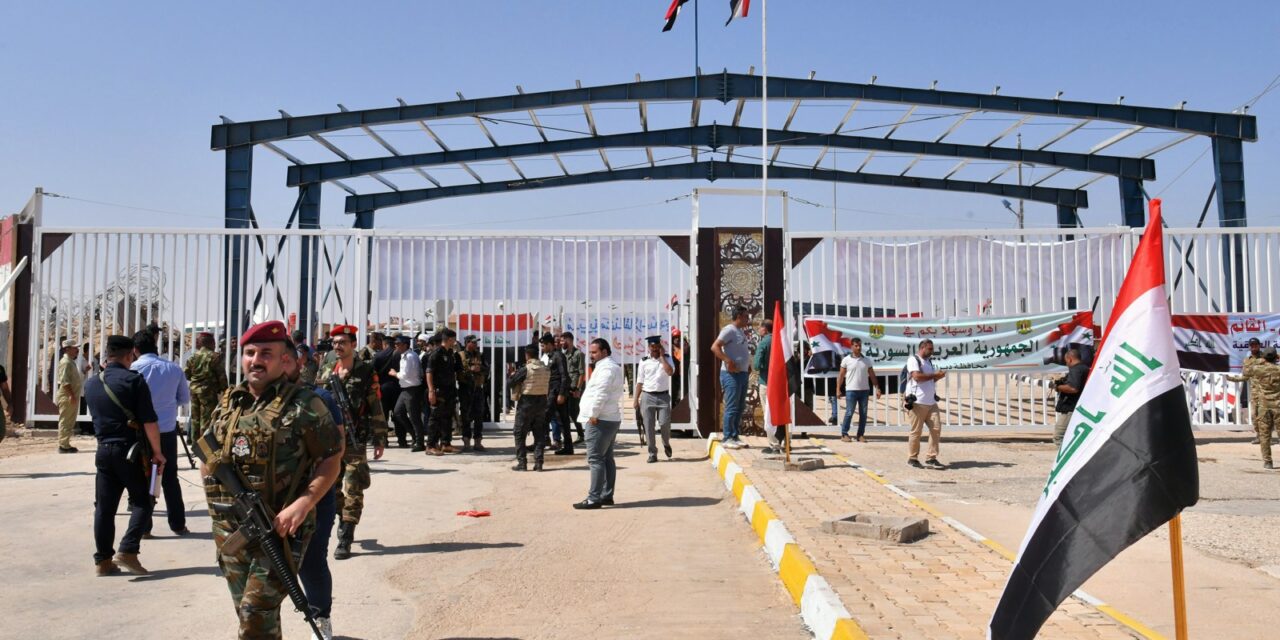
Iraq shares over 600 kilometres of common border with Syria. In some areas, this border has a complex topographical nature, with its breadth deeply intertwined with Syrian territory. Concurrent with this geographical situation, the American military presence in this region continues to face decline, particularly at the “Ain al-Asad” base. Although this border is currently controlled through concrete barriers, trenches, and thermal cameras [1], the dramatic transformations on the Syrian front remain a source of persistent concern for this extensive border.
The situation of ISIS prisons in Syria and the withdrawal of their guards from the Syrian Democratic Forces (SDF/QSD) places Iraq before a dangerous scenario similar to that of 2014, when ISIS began its expansion by breaking down prison walls. In ISIS organizational literature, the strategy of “Breaking Down the Walls” (Hadm al-Aswar) is an established, unchanging principle that is continuously emphasized and treated as a priority [2]. All ISIS officials and “emirs” bequeath this directive to their successors and instruct their fighters not to forget the prisons. This group’s precedent dates back to 2004 when they attempted to target Abu Ghraib prison in Iraq, later successfully liberating 600 fighters in Iraq in 2013, providing ISIS with a strong human infrastructure that became the basis for the 2014 invasions [3].
The replacement of Syrian Democratic Forces in ISIS prisons and camps by new forces opens the possibility of establishing connections and coordination between ISIS inside Iraq and ISIS inside Syria. In this situation, the possibility of targeting borders exists and poses as a new source of threat to Iraq [4].
The field transformations east of the Euphrates on Iraq’s border have direct impacts on the calculations of regional and international actors, particularly Turkey and Iran. One of these states’ cards is mobilizing allied forces and their proxies inside Iraq, which neighbours Syria. In this context, Iraq faces danger on two levels:
First: Iran may attempt to create confrontation between its military wings and Syria’s new authorities on Iraq’s borders; on one hand as retaliation, and on the other to redirect attention from internal crises and the issue of targeting Iran itself.
Second: The transfer of the war between Turkey and the PKK from Syria to the borders of northern Iraq, especially after the PKK lost significant territory in Syria. Although Iraqi authorities do not openly discuss this, “Muqtada al-Sadr” explicitly raised this danger and warned of the possibility of PKK infiltration [5].
There are demands on Baghdad to confront the PKK so that Turkey’s problems and the Syrian crisis are not “exported” to northern Iraq (including the Kurdistan Region). Some supporters of this view believe that while this step was difficult before due to the PKK’s participation in the war against ISIS and Iran’s strong hegemony, now the situation is conducive for Iraq to rid itself of this organization [6].
The transfer of ISIS prisoners from Syria to Iraq (numbering 7,000 individuals, as agreed upon)[7] places Iraq before various burdens of guarding, retailing, and protecting them. While transferring these prisoners to inside Iraq creates a kind of assurance that they will not be used as cards or released, especially since some are known leaders [8], the main problem is that the prisoners transferred to Iraq are “among the most dangerous ISIS leaders”; holders of European, Asian, Arab, Iraqi, and Caucasian nationalities, and their countries are in no way prepared to take them back [9]. Iraq requires expenditure, personnel, and confrontation of consequences to protect these ISIS prisoners.
Second: Political Implications
The change of Iraq’s neighbour on its western borders, from “SDF” to “the authorities of the Sharia government,” is an inevitable choice and at the same time a source of deep concern, especially since the transformation was sudden and not previously prepared for in this manner[10].
The strengthening of a Sunni extremist system that takes great pride in the Umayyad heritage, whose fighters possess ideological and historical enmity toward Shiites, is a source of great concern for the Shiite ruling majority in Iraq. Currently, there is a prevailing belief that strengthening an extremist Sunni Syria aims to confront and besiege Shiite Iraq.
The strengthening of “Sharia authority” west of Iraq also strengthens Turkey’s presence in those areas [11]. This further places Iraq under Turkish hegemony, while Iran is passing through a weakened state. This Turkish hegemony over Iraq’s borders does not stop at politics and security, but may also encompass the water dossier; because after Iraq had disputes with Turkey over the Tigris, henceforth the control and direction of the Euphrates River will completely fall under Ankara’s hegemony.
The dominance of Syrian Sunnis may become an incentive for Iraqi Sunnis to raise the ceiling of their demands and pressures. In this context, some clear indications are available, including the defense by some Sunni politicians of Syria’s new regime (for example, Khamis Khanjar) [12]. Also, parliamentarian “Mishan al-Jubouri” explicitly expressed the opinion that any Sunni who claims not to be pleased with “Jolani’s” seizure of power in Syria is a “false” Sunni [13]. These statements come while the Shiite elite views the situation with anger and concern.
The events in Syria have negative effects on the social fabric and sectarian harmony of Iraqi society. While the Sunni elite considers it their right, similar to the relationship between Iraqi Shiites and Iran, to be sympathetic to Syrian Sunnis, confrontations intensify, especially as Shiites believe Syria’s Sunni regime is terrorist in foundation and support, Umayyad in nature, and not a normal development.
Despite Damascus authorities’ promises to improve Syria’s situation and the return of refugees, according to international reports, security burdens, poor economic infrastructure, and external interference leave this country neighbouring Iraq in a fragile state. This is a source of anxiety and monitoring for Iraq [14].
Of the 347,000 refugees in Iraq, (88%) are Syrian and (80%) of them are in the Kurdistan Region [15]. Any new wave of displacement places additional burdens on Iraq, which fundamentally has financial problems. Moreover, it is highly likely that those Syrian refugees will transfer their homeland’s internal problems to Iraq.
Third: Regional Implications and the Shifting Map of Alliances
Following the events in Syria, the longstanding tensions between Shiites and Kurds automatically moved toward calming. From both sides, there are calls to strengthen relations and normalize the situation; this stems from sensing the common dangers both sides face from the strengthening of “Sharia system” rule in Syria.
In this context, Iraqi official media (which is in Shiite hands) shows conspicuous sympathy for the victims of Syrian Kurds in Rojava and condemns the behaviour of groups[16]. Although this call initially began on social networks, it is gradually becoming a prevailing belief that after Syria, Syrian Sunni groups may target Iraqi Shiites; several indications support this:
The director of the Syrian Observatory for Human Rights emphasized that one of the reasons for America’s abandonment of the SDF was that they were not prepared to fight Hashd fighters and go against Shiite groups [17]. This statement, which is somewhat controversial, is widespread on Shiite electronic platforms and is a subject of stance in the current climate of suspicion and anxiety.
Some video clips from inside Syria have spread showing fighters threatening to cross toward Iraq and specifically mentioning the name “Karbala”[18]; this stirs bitter historical memories in the complex historical relationship between both sides.
Some analyses indicate that the primary target of the new Syrian state’s fighters is overthrowing Shiite rule. This is a golden opportunity for uniting the Shiite elite in Iraq[19].
Beyond the above, the assumed Shiite-Kurdish alliance is not ideological, because Kurds are majority Sunni by denomination and should have been closer to the Sharia regime, but currently their political and constitutional interests are intertwined in managing Iraq, distributing revenues, and confronting the common enemy: extremist Sunni jihadists. Also, the SDF issue and the abandonment of this American ally is a source of concern for Iraqi Kurds and Shiites alike, because under the Trump administration, the level of trust in Washington is weak and “political dealing” is decisive. Nevertheless, the margin for marginalizing the Kurdistan Region at the Baghdad level may be narrow and weak if the Rojava experience is completely and entirely taken into consideration.
Conclusion
This analytical paper highlights the multifaceted implications of Syrian transformations on Iraq’s political and security map. The most important points are:
Security threat and ISIS resurgence: The change in Syria’s prison protection system creates a serious danger to Iraq’s national security. ISIS’s “Breaking Down the Walls” strategy and the possibility of thousands of fighters escaping places Iraq before the 2014 scenario.
Restructuring the balance of power: Syrian transformations have led to the strengthening of Turkish hegemony in the region and the weakening of Iran’s position. This places Iraq under new pressure, particularly in dossiers such as (water, borders, and the PKK issue).
Sectarian polarization and testing coexistence: The rise of Sunni authority in Syria has created a kind of “duality” inside Iraq; while Shiites view it as a threat, some Sunni parties view it as an opportunity to rebalance power inside Iraq. This poses a danger to social fabric.
“Tactical” rapprochement between Erbil and Baghdad: Sensing common danger (extremist groups and border instability) has caused Kurdish and Shiite parties to draw closer to each other. This is a temporary opportunity to resolve some suspended issues between the center and the region.
Humanitarian burdens: Iraq faces a new wave of displacement that is not only a financial burden, but could become a cause for transferring Syria’s internal conflicts to camps and cities in Iraq.