

Dr. Hawraman Karim
The concept or theory of field is fundamentally an invention of French sociologist Pierre Bourdieu. From his perspective, fields refer to spaces of production, movement, and exchange of goods, services, knowledge, or positions, and arenas of competition among actors in their struggle to accumulate, exchange, and control resources of power (capital). Within fields, actors strategize and compete with one another over the unequal distribution of valuable capital and over defining the most valuable forms of capital. Like a magnetic field, the effects of social fields on behavior can be very extensive and not always apparent to the actors ([1]).
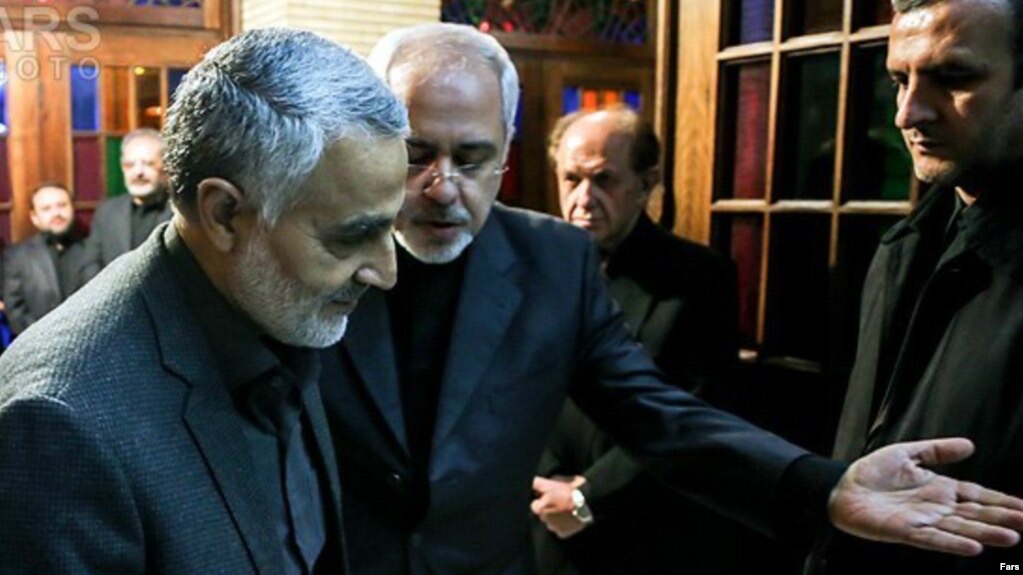
Our focus is on the concept of field and diplomacy in Iran’s foreign policy. The struggle of fields ([2]) in Iran’s foreign policy has manifested itself in the struggle between the powers of “field as action and military power” and “field as diplomacy.” In Iranian policy, sometimes—often—it has been stronger and more tangible than diplomacy and has paid no attention to it. At other times, when power has been unified, as during the era of Ebrahim Raisi, these two spaces have moved in parallel with each other, or as we now see in the era of the Pezeshkian cabinet. However, when Javad Zarif, as a representative of “diplomatic politics,” wants to assert himself and wants to be taken into account, that is when the conflict between the fields becomes acute, and with the revelation of the conflict, the foundation of the regime is placed in jeopardy.
The Nature of Field and Diplomacy
We briefly present an overview of the concept of field politics and diplomacy, and then expand upon this policy within the framework of the strategy, discourse, and practice of the Islamic Republic of Iran. Generally, the characteristics of field include the following:
Nature of action: Being action-oriented, hard-line, based on necessity and display of force;
Main actors: Military and security institutions and defense networks;
Timeframe: Relatively short-term results and rapid decisiveness;
Symbols: Military action, physical presence, hard defense;
Objectives: Providing rapid security, creating deterrence, changing the balance of power in the region.
Regarding the concept of diplomacy, which refers to the space of dialogue, negotiation, and management of international relations through soft and legal instruments, it is distinguished from field by these characteristics:
Nature of action: Dialogue-centered, soft, reliant on persuasion and compromise;
Main actors: Ministry of Foreign Affairs, diplomats, and political representatives;
Timeframe: Long-term process, step-by-step and requiring patience;
Symbols: Negotiation, international agreements, resolutions;
Objectives: Normalizing relations, reducing tensions, achieving international legitimacy, lifting sanctions;
Field in the Policy of the Islamic Republic of Iran
It appears that in unified, stable, and democratic political systems, the relationship between these two spaces is one of “complementarity and mutual support.” In this healthy relationship, the achievements of each space become capital for the other, not rivals to each other ([3]). Success in the field is seen as a force in the diplomatic space, and success in diplomacy creates a platform for strengthening the field. However, this relationship has been complex and full of struggle in Iran’s foreign policy, particularly when reformists and moderate currents such as the wings of Rafsanjani, Khatami, and recently Javad Zarif have taken the reins of foreign policy, and more specifically during times when, due to Iran’s nuclear program, Western countries under American leadership have exerted great pressure on Iran.
In the official discourse of the Islamic Republic, although the relationship between field and diplomacy is complementarity and mutual support, in practice, field encompasses a broader scope than the military space. Field is defined as all “practical and executive spheres of force and power” in which the possibility of hard action and the manifestation of tangible and rapid influence exists. Because most powers are in the hands of the Leader of the Islamic Republic, it is important to understand that what is meant by field policy in the Leader’s discourse is the prioritization of hard, military, and security actions. From this perspective, diplomacy is defined not as an equal partner, but as an instrument for following up and implementing the achievements of the “field.”
If we look back somewhat, in the context of Iran’s presidential election in 2013, one of the journalists, relying on the evidence that foreign policy is determined by the Leader, questioned Hassan Rouhani’s slogan, which called for bringing about change in the course of Iran’s foreign policy if elected president. However, Rouhani rejected that view by pointing to a number of political facts. He said the different foreign policies of the cabinets of Hashemi Rafsanjani, Khatami, and Ahmadinejad demonstrate that not everything has always been in the Leader’s hands. In all cabinets, “the Leader has been the same Leader.” If it has always been so, then how can we justify the conciliatory policy of the Khatami era and the hardline policy of the Ahmadinejad era? During the Hashemi Rafsanjani era, foreign policy consisted of “relations with the West except America.” That same policy, which continued to emphasize curtailing the language of dialogue with America and which the Leader strongly supported, nevertheless occupied Rafsanjani’s cabinet for several years on the issue of releasing hostages ([4]). From that time until now, one of the hot and controversial issues within Iran’s political system has been the subject of foreign policy and the powers of the Ministry of Foreign Affairs within the framework of the two important concepts of “field” and “diplomacy.” Of course, this controversy was discussed only sotto voce until the audio file of the conversation between Mohammad Javad Zarif and Saeed Leylaz was published, which generated significant reverberations and angered the fundamentalists to the extent that they branded Zarif as impure ([5]). From that time, it became clear what conflict existed between diplomacy and field in Iran’s foreign policy, or in other words, what conflict existed at the theoretical and practical levels. It became clear that the gap between field and diplomacy and the reality of “the priority of field” was the main substance of the confrontation in foreign policy.
The condition for having a successful foreign policy is the complementarity and mutual support of both spaces for each other, but the problem with Iran’s foreign policy is that the conflict between these two spaces stems from two different sources. Fundamentally, and by returning to Iran’s constitution and the powers of the Leader and other powers, field has been given more priority than diplomacy. When diplomacy becomes somewhat more tangible, it is precisely when field wants to use that diplomacy for its own interests and advancing its own policies. Iran’s Leader does not hide the fact that decision-making is not the domain of the Ministry of Foreign Affairs; the ministry is only an executor and implements policies. That is, the Supreme National Security Council makes decisions ([6]). Hardliners also hold the same view; for example, Mohammad Javadi Larijani, who was a former deputy of Iran’s Ministry of Foreign Affairs, says: Foreign policy is a reflection of the nature of power. It has a facilitating role and is like a basket that helps us use other achievements that constitute the system’s power in the direction of our interests. Diplomacy is dialogue; otherwise, it has no importance in itself ([7]).
The Roots of Field and Diplomacy Conflicts
Returning to Zarif’s audio file, we can summarize the most important roots of conflict between these two spaces in these several points:
In practice, field has been treated not as a partner, but often as a reference and priority. For example, Zarif refers to the extensive powers of Qasem Soleimani in using the Islamic Republic’s aviation (Homa) to transport weapons to Syria. In this case, the logic of field (the necessity of action) can take steps without coordination with diplomacy (international considerations).
Priority of action over strategy: Where Zarif points out that sometimes the short-term necessities and practicalities of field prevail over the long-term strategic objectives of diplomacy. An example of this was the attack on the Ain al-Asad base, of which the Ministry of Foreign Affairs was not even forewarned.
Speed and immediacy: The results of practical and field actions are faster and more tangible. In an environment full of threats, this speed often appears more important than the complexity and lack of immediacy of diplomatic processes.
Domestic legitimacy: Heroic action in the field creates better legitimacy in public opinion. In the eyes of the people, heroism is more acceptable.
Institutional foundation: The rigidity of military-security institutions in the foundation of Iran’s power structure has an impact on the dominance of field logic.