

In the wake of October 7, 2023, Iran suffered several strategic, political, and economic blows in the Middle East. The limitation of Hezbollah’s capabilities in Lebanon, the fall of Assad’s regime, the 12-day war with Israel, and US strikes on its nuclear facilities were among the most significant occurences that visibly impacted Iran’s position and power in the region, ultimately pushing the region toward a new model of power balance in which Iran is the primary loser.
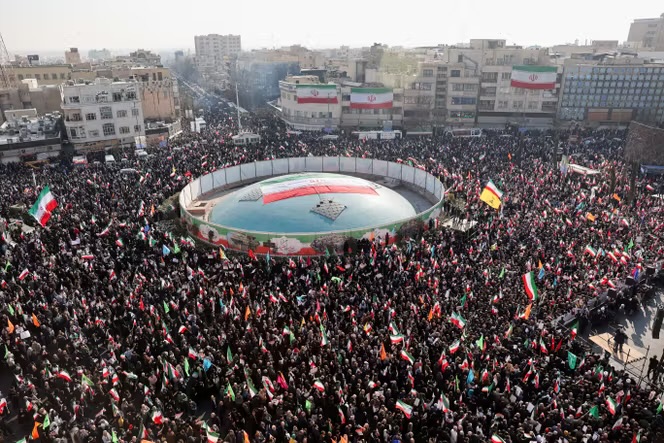
Throughout its history, Iran has witnessed several large-scale popular demonstrations. Two characteristics distinguish the current protests and unrest from previous ones: First, at the domestic level, this is the first time that economic demands, deteriorating financial conditions, and people’s livelihoods have been the main drivers of protests, rather than political and legal demands. The second characteristic, which has regional and international dimensions, is the impact of severe security and economic sanctions and Iran’s strategic retreat in the region. Therefore, although the current protests are not more widespread than other demonstrations, such as those that occurred in 2009, they may be more sensitive and dangerous than previous ones.
Although Iran’s political system since the 1979 revolution has extensive experience in limiting and suppressing popular protests and demonstrations, the system’s instability and international relations on one hand, and U.S. President Donald Trump’s particular approach to managing international crises on the other, have made the issue of intervention in Iran’s and other countries’ internal affairs less sacrosanct than before, with the US using its interventions in Iran’s affairs as a continuous pressure card against that country.
Iran is not a small country like Syria or even Iraq that an external country can easily regime-change; rather, Iranians historically have had a strong attachment to their patriotic identity against external powers. Additionally, among some citizens, the religious legitimacy of the government still has a presence. On the other hand, until now, many opposition forces operate within the system itself, and the external political opposition is neither strong enough to direct the protests nor does it possess unified leadership or a common symbol.
From a regional perspective, due to Iran’s large size and population approaching 100 million people, as well as the presence of several different ethnic groups such as Kurds, Azeris, Arabs, Baloch, and Turkmen in the country—each of which has co-ethnics outside Iran’s borders—the destabilization of Iran’s situation would impact the regional security of neighboring countries, the Middle East, Central Asia, and the Caucasus. This very fact has made Iran’s enemies, including Israel, hesitant to pursue paths such as direct intervention or strikes aimed at overthrowing the Islamic Republic regime. Rather, perhaps the best option for them is implementing change within the country and entrusting that change to the Iranians themselves and their internal components, so that the region does not face another wave of political and security instability and migration.