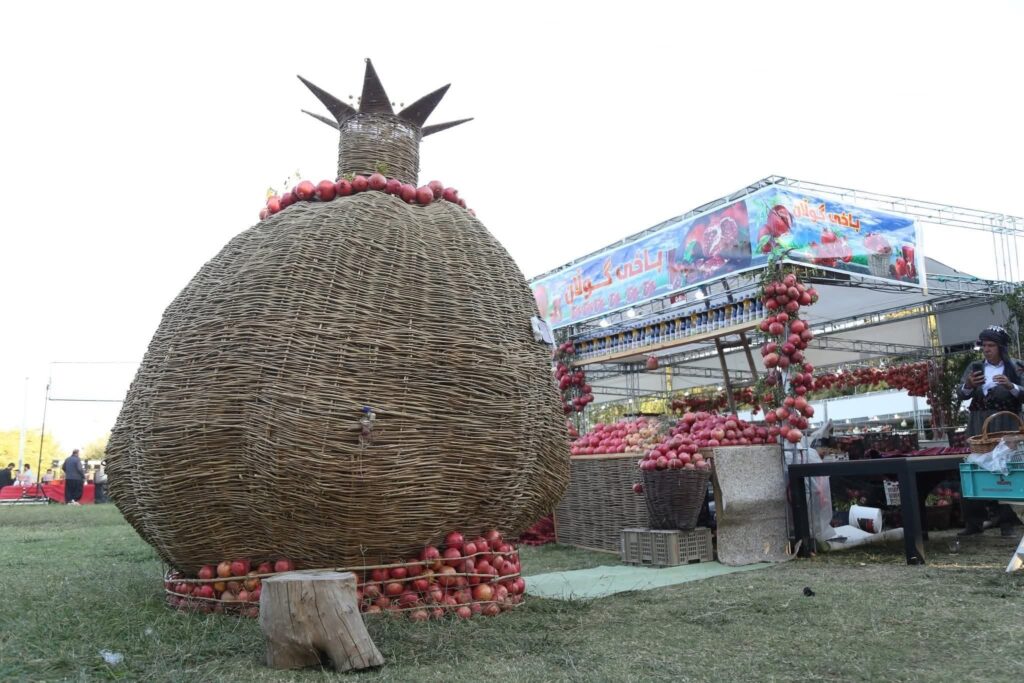

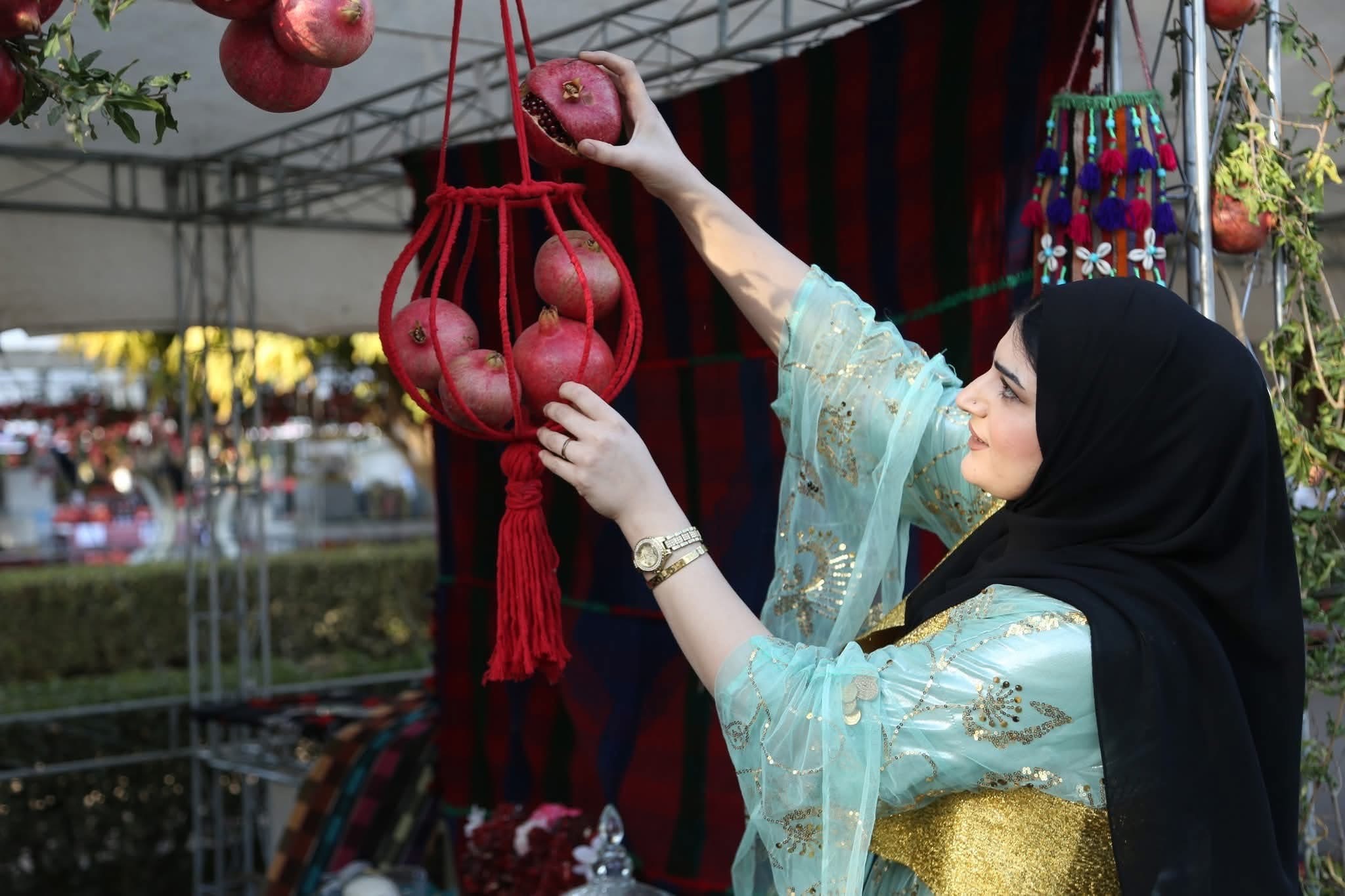
The 15th Halabja Pomegranate and Autumn Festival opened today with extensive participation and meticulous preparations. Over three days, the city expects to host nearly half a million tourists and visitors. The festival showcases agricultural products, handicrafts, and artistic activities while implementing a complete ban on plastic materials. International diplomats, including representatives from the Netherlands and UAE, attended to explore agricultural cooperation opportunities.
Grand Welcome Prepared for Half a Million Visitors
The Halabja Governorate administration has undertaken comprehensive preparations to welcome the massive influx of tourists expected at this year’s festival. All operational teams across multiple sectors—including transportation, traffic management, security, healthcare, and sanitation—have been placed on high alert to ensure smooth operations throughout the three-day event.
Special hospitality and tourist guidance teams fluent in Kurdish, Arabic, and English have been deployed to serve visitors from diverse backgrounds. Chia Qasim, Director of Tourism in Halabja, revealed that preparations began approximately 20 days before the festival’s launch, with coordination efforts extending to tourism companies to maximize visitor attendance. The administration projects that over 300,000 people will visit the festival, though some estimates suggest the number could reach half a million.
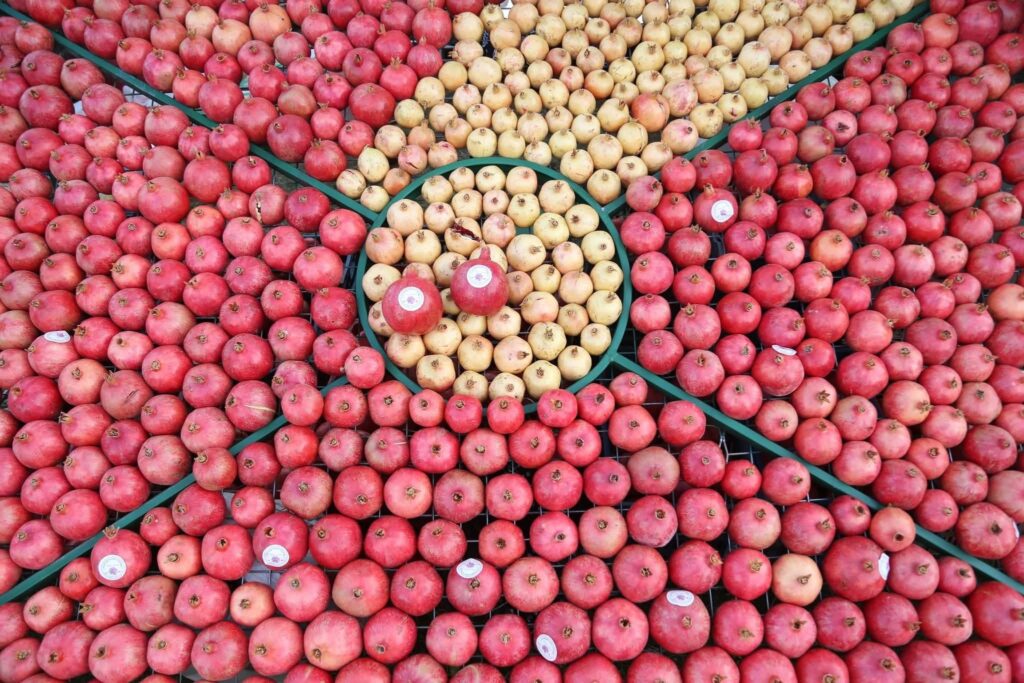
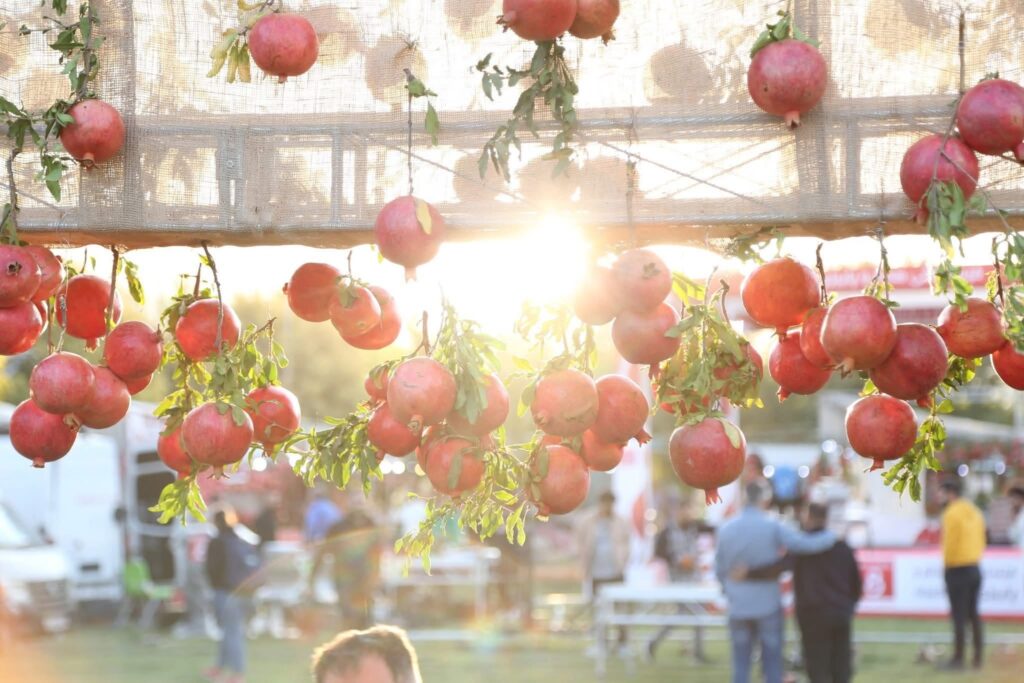
The festival features nearly 630 pavilions distributed across three main sections. The agricultural section displays and sells regional produce, particularly pomegranates. The handicraft section showcases handmade products created by local women and men. The food section offers traditional cuisine and refreshments. According to Qasim, this year’s favorable weather conditions have contributed to increased enthusiasm for the festival, and organizers have added more artistic activities, including music concerts and photography exhibitions.
This Year’s Pomegranate Harvest: Quality Despite Limited Rainfall
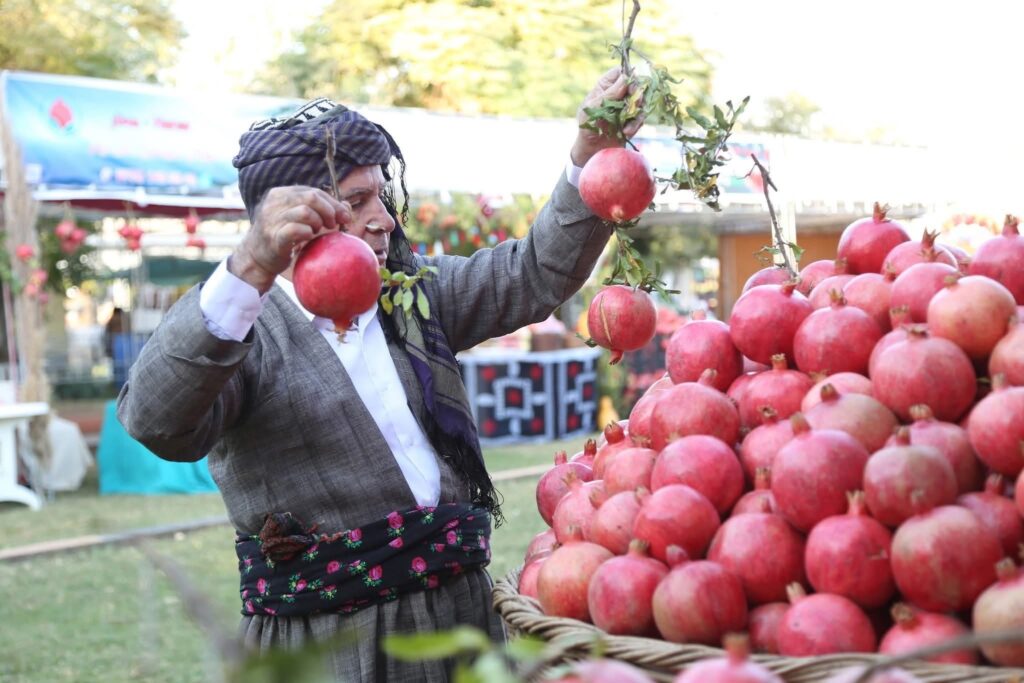
Despite insufficient rainfall this season, Halabja’s farmers have assured that this year’s pomegranate harvest remains of excellent quality and juiciness. Sattar Mahmoud, Director of Agriculture in Halabja, explained that within Halabja’s boundaries, there are over 12,000 donums of orchards, with 10,300 donums dedicated specifically to pomegranate cultivation. Approximately 2,300 pomegranate farmers work these lands.
Mahmoud noted that pomegranate production varies annually but generally ranges between 20,000 to 30,000 tons, sometimes reaching 35,000 tons. He revealed that Halabja cultivates 26 varieties of pomegranates, with 17 varieties displayed at the festival. The Salakhani variety represents the finest pomegranate type grown in the region. Additionally, Halabja boasts 1,000 walnut trees—the highest number in the Kurdistan Region.
The festival also features innovative products derived from pomegranates. Binar Tahir, owner of a juice production factory and one of the festival participants, produces pomegranate seed oil from discarded seeds that would otherwise be wasted after juice extraction. According to him, this natural product offers excellent benefits for skin care. His factory is the only juice production facility in Halabja and has created employment opportunities for 30 people.
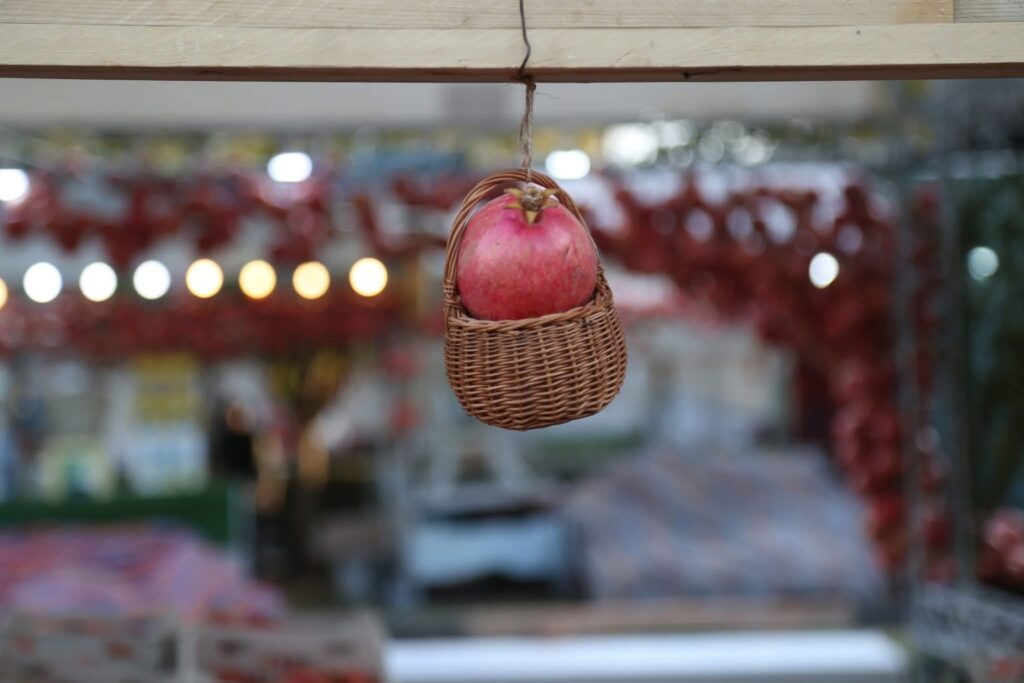
One farmer participating in the festival explained that they produce approximately one bottle of natural pomegranate juice from every two pomegranates without adding any artificial ingredients. A 20-liter container sells for 25,000 to 30,000 dinars. A citizen who had been in Dubai shared that a single bottle of Halabja pomegranate juice there cost the equivalent of 15,000 Iraqi dinars, highlighting the product’s international market value.
Beyond Commerce: Art and Music Enliven the Festival Atmosphere
This year’s festival transcends mere commercial transactions, placing significant emphasis on artistic and cultural dimensions. From the opening day, concerts and musical activities have been integrated into the programming, featuring performances by renowned artists Bokan Hawrami and Arian Karim. This artistic focus aims to create a more engaging and culturally enriching experience for visitors.
The festival also showcases diverse handicraft products. Kawsar Mohammed, a skilled artisan participating in the festival, creates handmade products from pomegranates, including medallions and necklaces. Adil Ali Rasul, known as “Adil the Shawl,” a clothing seller, displays his merchandise at the festival. He revealed that he offers specially crafted shawls, with some pieces priced at over $1,000. Annually, he imports $200,000 to $300,000 worth of shawls from Zakho and sells them throughout Halabja and Hawraman regions. He has even developed a specialized cushion designed to adapt to weather conditions. Before the festival’s launch, organizers held specialized seminars for all participants three days in advance, requesting that they offer their products at the most affordable prices possible to ensure accessibility for all visitors.
An Environmentally Conscious Festival: Plastic is Prohibited
One of the most distinctive features of this year’s festival is its strong commitment to environmental protection. The “Nmakhani” organization has supplied large quantities of eco-friendly items, including cups, plates, spoons, and paper containers, which are being distributed free of charge to participants. The importation and use of all types of plastic materials have been strictly prohibited throughout the festival grounds.
This environmental initiative makes the event the first major festival of its kind in the region to fully adhere to environmental standards. Chia Qasim emphasized that organizers have given special attention to environmental concerns this year, implementing a comprehensive security and traffic plan alongside the plastic ban.
The festival has attracted significant international attention. Adriaan IJsseltstein, Consul General of the Netherlands in the Kurdistan Region, expressed his country’s interest in agricultural cooperation and importing Halabja’s pomegranate products during his participation. He stated, “This is a beautiful festival. It’s always a pleasure to visit Halabja and meet its people. I’m especially delighted to be here from the Netherlands and witness all these activities because we want to build agricultural coordination with Halabja.” He expressed hope that Halabja’s pomegranates and other agricultural products would soon be available in Dutch markets, describing this as a new export opportunity for local farmers.
Similarly, Sheikha Farhan, Chargé d’Affaires of the UAE Consulate General in the Kurdistan Region, attended the festival and described it as “remarkable.” She commended Halabja’s Governorate for its efforts in supporting local farmers. “The festival is truly unique, and we hope it continues,” she said, expressing gratitude to Governor Nukhsha Nasih for the invitation and praising the governorate’s initiatives to strengthen the agricultural sector and uplift farming communities.
The Halabja Pomegranate and Autumn Festival continues for three days, representing not only a celebration of agricultural abundance but also a model for sustainable, environmentally conscious cultural events.