

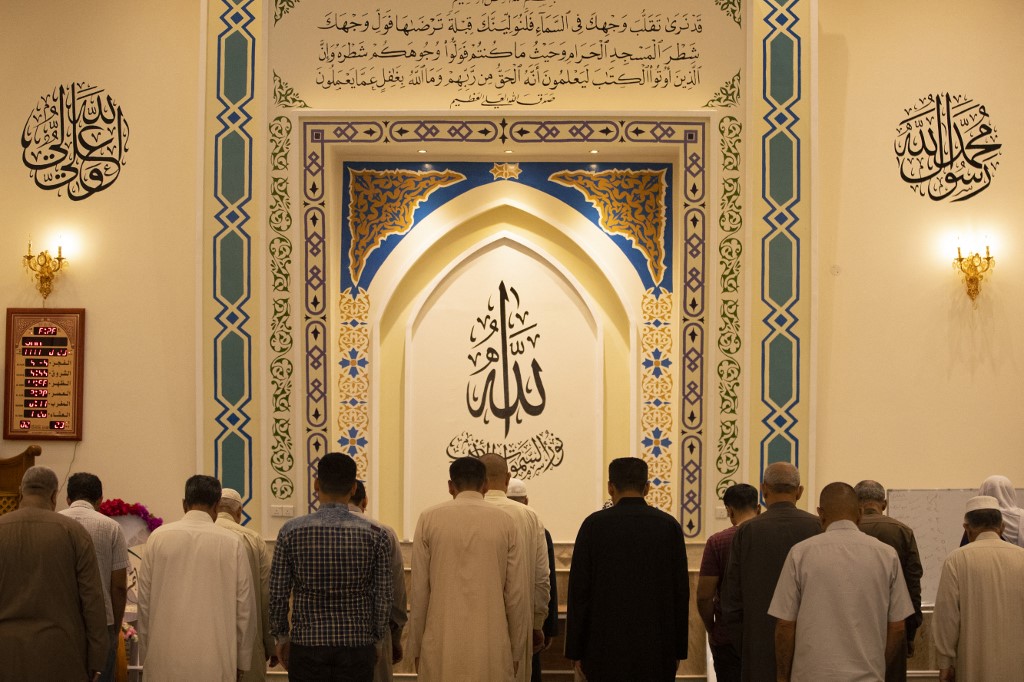
In this interview, Dr. Zirar Sadiq Tawfiq, Professor and specialist in history at the University of Duhok, discusses Kurdish participation in Islamic civilization, highlighting the role of Kurds and the impact of personalities in that civilization. He advocates for taking pride in Kurdish historical symbols and considers this as part of preparation and self-defense for nation-building, which Kurdish intellectuals began working on at the beginning of the twentieth century.
Interview by: Idris Siwayli
Ayinnasi (Interviewer): What is meant by the terms “civilization” and “Islamic civilization”?
Dr. Zirar Sadiq: Civilization (sharistan), as we know in Kurdish, derives from “shar” (city). In Arabic, “hadarah” comes from the word “hadar,” which means the opposite of Bedouin life. Even in English, “civil,” meaning civilized, comes from the city.
Civilization, as we know from dictionaries and particularly the Oxford Dictionary, has many definitions, scopes, and meanings. In brief, it refers to those phenomena and qualities that a nation or people presents in terms of science, literature, art, and architecture, which become the distinguishing identity that differentiates them from other peoples.
This is civilization in brief. I would recommend that anyone who wishes to have more knowledge about civilization, the concept of civilization, the factors behind the formation of a civilization, and the causes of its decline and disappearance, should read a book in Arabic – a concise book by Hussein Mu’nis called “Kitab al-Hadarah” (The Book of Civilization). In it, he extensively discusses what civilization was like, how humans emerged, how they became settled, how they learned agriculture. Initially, humans learned hunting, which itself is a type of civilization. Later, they learned agriculture and the domestication of animals and birds. These developments lead to civilization after the agricultural revolution. There are many books on this subject, including another book we have heard of called “The Story of Civilization” by Will Durant, which discusses ancient civilizations.
Regarding Islamic civilization, we know that Islamic civilization refers to the civilization that emerged with the advent of Islam, appearing in the early seventh century CE, or we can say in the first half of the seventh century CE. It continued until the end of the Ottoman period, though there are some differences regarding when the Islamic period ends. Can everything from that era be categorized as the period of Islamic civilization? This is a matter of much thought and opinion. However, what we know is that Islamic civilization has its primary sources in the Holy Quran and the Prophetic Sunnah.
This civilization is undoubtedly one of the world civilizations, or I can say one of the civilizations of the Middle East and North Africa. Certainly, Islamic civilization, like any other civilization, has taken and benefited from the civilizations that preceded it. Therefore, in the history of civilization, no civilization emerges entirely on its own, cut off from the civilizations that preceded it, or from contemporary and neighboring civilizations.
Islamic civilization undoubtedly benefited from Greek civilization in the second and early third centuries CE during the time of Caliph al-Ma’mun, when dozens and hundreds of philosophical, literary, and even medical and astronomical books were translated. It also benefited from Eastern civilizations, and even from pre-Islamic Arab traditions, such as those of Yemen. Certainly, every civilization, through Islamic civilization, has something new, new innovations. As if to say it is a complement – every civilization repeats some things from its predecessors and adds other things to them, including some other things that are removed. Therefore, every civilization can be a complement to the civilizations that preceded it. Islamic civilization does not fall outside this framework and this definition.
Islamic civilization has its own characteristics. One of its characteristics is that this civilization is bound by the Quran, by the text of Sharia. Therefore, we see that Islamic civilization did not give importance to sculpture or painting, and gave little importance to music, because these things were restricted in the Quran – these things should not be done. This is one of those characteristics that we can say limited Islamic civilization and did not advance in these areas.
If we had had paintings, decorations and illustrations, some palaces, some images of rulers, some images of clothing, now these would have been very important sources for history. But we know these things were restricted in Islam. However, at the same time, Islamic civilization gave great importance to other things – for example, to astronomy, literature, poetry, history, the Prophet’s biography, and it gave much to these things.
We have a historian from the second half of the fourth century CE – tenth century CE, named Ibn al-Nadim, who wrote a book called “al-Fihrist” (The Index). The name itself is clear, so it’s called the Index, meaning a list of the books that had been written up to his time. From this, you know how rich Islamic civilization was – there is no field in which books were not written.
We know that from the beginning of the Abbasid period, in the year 143 CE, paper reached the Islamic world. Therefore, the real beginning of recording the Prophet’s biography, recording poetry and literature, and campaigns began from that time – from 143 to about 240, some ninety years. From this, you know how rich Islamic civilization was, how many books were written – tens of thousands of books. In the Islamic period, books were written on subjects that no one has even imagined now – details of social life, details of aspects of history, many social things that even now we haven’t thought to write about, or thought to write books about. It is so rich.
This, as I mentioned before, is one of the good characteristics, one of the brilliant aspects of Islamic civilization – that it gave great importance to writing. Although the practical aspect of painting, architecture, and illustration were not at that level because Islam did not permit it. For instance, building palaces, temples, and decorative arts in Islam – although during the Seljuk period, particularly Seljuk art emerged for building mosques and the style of windows, mihrabs, doors, and gates. This is Islamic architectural art. But simultaneously, it gave great importance to the spiritual aspect, to the psychological aspect. As I said, those books that remain and are still available are evidence that Islamic civilization was very advanced in terms of writing and composition.
Ayinnasi: It is said that civilization is between giving and receiving. In this context, what did the Kurds give to and receive from Islamic civilization?
Dr. Zirar Sadiq: This is an important question that I would like to dwell on, and it is a living and sensitive topic. Everyone knows this is an undeniable fact – when two nations, two civilizations, or two peoples are contemporary and undoubtedly interaction occurs, they work with each other, relationships are established, they mix.
Everyone knows that during the time of Caliph Umar, Muslims reached Kurdistan through conquest, and then for about two hundred years, Kurds gradually became Muslims and interacted with each other. But unfortunately, in our time, there are some people who may be religious but are not researchers, and they do not understand many historical research issues well. They say all Kurdish pride comes from Islam. Some of them say Islam took everything from the Kurds, leaving nothing of the Kurds. In my opinion, this is very inappropriate talk – it is not so.
Undoubtedly, everyone knows that Islam gave some things to the Kurds and also took some things from the Kurds. If the Kurds had nothing before Islam, then through conquests and Arab hegemony, they would have disappeared like other nations. We know that in Iraq there were Nabataeans and Arameans, in Syria there were several other nations, in Egypt and North Africa there were other nations. These nations either disappeared or became very weak. Only the Kurds remain until now, despite Arab hegemony over them, and later Turkish hegemony and the Seljuk Turkish invasion and then the Mongols. This is evidence that the Kurds possessed the conditions for survival, had deep roots, and maintained their own traditions, so they survived.
But when Islam came, undoubtedly Islam had an impact on those people who gradually became Muslims. For example, an architectural movement was created in Kurdistan in an Islamic style – the construction of mosques. Here it is not necessary to bring much evidence – we have several pieces of evidence in Khurmal and other places. In Dyarbakır, mosques were built from the beginning of Islam. This is from the architectural aspect.
Similarly, in terms of some religious traditions, worship, customs, traditions, and Islamic education, when Kurds became Muslims, undoubtedly this guidance, these laws, and this Sharia that came from Islam certainly affected the Kurds, and according to these new things, these new laws and rules, they organized their lives. There is no doubt about this.
But at the same time, Kurds also served Islam greatly. Kurds gave things to Islam. We have Kurdish scholars – this participation is not from the beginning, not from the first, second, third, and fourth centuries CE, or it is very little. It appears later. We have many Kurdish scholars who served Islam, Islamic jurisprudence, and the Arabic language.
For example, Ibn Hajib – he is the best scholar in the Arabic language, [author of] “al-Kafi wa al-Shafi.” Or we have Ibn Salah al-Shahrazuri, we have one from Dyarbakır who has books on plants – he is from Dyarbakır. We have others. Kurds served Islam greatly, as if they dedicated their homes to serving religious sciences, jurisprudential sciences, and even Arabic language sciences.
Well, as we know, we Kurdistan and the Kurdish people were owners of civilization even before Islam, possessed traditions and musical art, had their own clothing, had their own language. In the Hawraman regions or the mountains of Hakkari, there is a type of Kurdish architecture that has its own characteristics, built in a way that fits with the cold climate of Kurdistan. We can say this is Kurdish architectural art, having no connection with Christianity, Islam, or other nations. This is an independent Kurdish civilization.
On another side, you know how rich the Kurds are in music, folklore, and other literary genres of that time – national literature, stories, verses and ballads, folk songs. One of the Kurdish inventions – it is not known when this was, whether it was before Islam or after Islam – Arabic sources mention the zurna or the reed flute (juzela). This is a Kurdish invention. Arabic sources say so. They say that at the time, Kurdish shepherds invented this instrument, played this music on it, this reed flute or juzela, or the zurna was also something of that nature. It was a wind instrument, producing sound by blowing. They say Kurdish shepherds used this instrument to gather sheep, to call their sheep.
So from pre-Islamic Kurdish civilization, Kurds made inventions in clothing. In a hadith that appears in Sunan Abi Dawud, there was a garment called “al-Kurdi” (the Kurdish one). Some ignorant and unknowledgeable people think this garment was the current Kurdish clothing. This was not current Kurdish clothing. This was a garment that was named Kurdish, just as this garment was made by Kurds and was known by the Kurdish name. It is clear that besides Kurds, this garment was produced, traded, and sent to surrounding countries, reaching the Hijaz, until the hadith mentions that Kurdish one that the Prophet requested or was a garment of that name. This has no connection to current Kurdish clothing. The garment was like a coat worn over other clothes, it was a qamīṣ, it was outer clothing, not inner clothing.
Furthermore, in Kurdistan there was another type of clothing called talasban in Kurdish, tayalisan in Arabic. This was very widespread in the Arab world, outside Kurdistan. In jurisprudential books, in those books that discuss commercial transactions – how legal these transactions are and how to deal with these types of exchanges – Kurdish tayalisan is mentioned. Many scholars, jurists, and followers, most of whom are mawali from the first and second centuries CE, mention these, saying a Kurdish tayalisan was on the shoulder. This is also one of those things recorded under the Kurdish name. There are other things I mentioned in my book “Kurdish Society” – there is Kurdish qadifa, Kurdish abaya, much clothing that was known by the Kurdish name and spread throughout the Islamic world.
Ayinnasi: Another aspect of civilization is intellectual and value-based topics. How were the status and influence of prominent Kurdish personalities in Islamic civilization?
Dr. Zirar Sadiq: The participation and contribution of Kurds to Islamic intellectual topics during the middle centuries of Islamic civilization has several phases.
The first phase: Three hundred to three hundred fifty years of the first [millennium]. In this period, Kurdish participation is very limited, very little. If we look among the dozens and hundreds of Quranic commentators, hadith scholars, and owners of chains of transmission, as well as in those books that provided commentary on the Quran, or scholars of the Mu’tazila, scholars of other Islamic groups, we see very few Kurds among them, very rarely are there Kurds. Those Kurds who exist, their role is weak and they are not well-known and we don’t know who they are.
In my opinion, the reason for this is partly that in this period, Kurds were still becoming Muslims. As we said, in the first two hundred years, up to one hundred fifty years, this phase is the phase of Kurds gradually becoming Muslims. Then Kurds became Muslims but were still not yet loyal to the Abbasid Caliphate – there were many movements. You don’t see a Kurd, for example, who went to Baghdad and participated much. Very few individual cases exist. These were mawali who went to Kufa, went to Basra, went to Baghdad, went to other cities. Their names came up as hadith scholars. One of them, the most famous, is Mahdi ibn Maymun, a very famous hadith scholar, known, reliable, trustworthy. He was one of those people whom Imam Ahmad ibn Hanbal listened to, praised, and said was one of my beloved teachers. This was not from Kurdistan, but from Kufa, Basra, and even some were from Wasit – Wasit is close to present-day Kut, near Kurdistan.
Therefore, in this phase, the role and presence of Kurds in intellectual movement, even literary and enlightenment movements, and attention to Quranic and hadith sciences and other Islamic sciences is very limited and little.
The second phase can be said to be from the Kurdish principalities, from the middle of the fourth century CE – tenth century CE until the emergence of the Ayyubid state and the elimination of principalities by the Seljuks, and later the establishment of the Crusader wars and the emergence of the Ayyubid family.
In this period, Kurds completely became Muslims. Kurdish princes took Islamic names, had good relations with the Abbasid Caliphate, considered them as elder brothers, leaders, and symbols. The Abbasid Caliphs also gave them titles: Nasr al-Dawla, Nasir al-Dawla, Ismat al-Dawla, Samsam al-Dawla, Isama al-Dawla. These names are many, given to the Buyids and later to Kurdish princes.
In this period, the Kurdish role gradually emerges, especially in religious sciences. Kurds were still few in intellectual, philosophical, and rational sciences – in Arabic (al-ulum al-aqliyya) – more in religious sciences (al-ulum al-naqliyya), in the sciences of narration and evaluation of hadiths, Quranic interpretation, those sciences related to creed, principles, jurisprudence, and such things.
These principalities had capitals, and in the capitals there had to be (dar al-imara) and there had to be mosques. In these mosques there were mullahs, preachers, judges, muezzins. People gradually prayed in those mosques. The mosques had chambers where Arabic was taught. Part of the role of ruling Kurdish families was that they became educated. Some of them left Kurdistan. We have a Shahrazuri scholar who reached Andalusia, where he fell into conflict with the Qarasians and was killed. Others left for Baghdad. There are many from Shahrazur, Dyarbakır, al-Qarmasini (Qarmasin means from Kermanshah), even al-Ashnahi, Abdul Aziz al-Shinawi has “al-Fara’id al-Ashnawiyya” – he is from Shinawa. I went to Iran and visited his grave and tomb, and his garden in the city of Shino. There are many others. There is Amedi, even some other cities. For example, Jazari – there are very many. Gradually these emerge and become the second generation. I don’t believe any of them are first-rank, very well-known, but they are known to some extent. They have books, some of them have their own positions, they have interpretations for sciences, for some legal issues, for interpretation of some verses, for interpretation and correction of some prophetic hadiths.
If you read the History of Erbil (Ta’rikh Arbil by Ibn al-Mustawfi), you know how many people there are in that subject who emerged from the fifth century, wrote books and gathered, had scientific and literary discussions, expressed positions, narrated hadiths.
The third phase we can say is the Ayyubid period, when for nearly a century they ruled Egypt and then Syria. These are Kurds who for about a century led a large part and wide expanse of the Islamic world. They raised the banner of jihad war against the Crusaders. Therefore, besides the military class, tribal chiefs, and military aspects, dozens of Kurdish scholars and jurists participated, went there, advanced themselves under the shadow of the Ayyubid state, became scholars, became famous, became owners of schools.
The Ayyubid rulers and distinguished Kurdish princes built dozens of mosques and schools in the cities of Syria and Egypt, most of them following the Shafi’i school. Here the role of Kurdish civilization advanced further.
Ibn Hajib, as I mentioned earlier, his “al-Kafiya wa al-Shafiya” is one of the most important books on Arabic grammar and morphology, having nearly two hundred commentaries, completions, appendices, interpretations, translations, and abridgements – it is so famous. The book al-Kafi – we even have an Egyptian historian named “Kafi Chi” – he was so associated with the book al-Kafi that his name became Kafi Chi. If you examine that book, you know how much echo it has, how much importance was given to it, how it was interpreted, abridged, completed, even translated.
Another of them is Ibn Salah al-Shahrazuri, owner of al-Muqaddima. Ibn Salah’s Muqaddima in hadith science – how much importance was given to it. The fatwas of Ibn Salah, we have Ibn Khallikan, who was a judge, owner of books and “Wafayat al-A’yan.” We have Judge Sadr al-Din Abdul Malik ibn Darbas al-Marani, who was chief judge. Dia al-Din Uthman his brother. Dozens and hundreds of Kurdish scholars, teachers, even historians, writers, and poets were in Egypt, Syria, and other countries and advanced.
On the other hand, in that same period, especially for a time when the Hijaz fell under Ayyubid control, we have many Kurdish scholars in Mecca and Medina, in the Hijaz. These performed pilgrimage and remained there – in Arabic they are called mujawira. Mujawira means you perform pilgrimage then remain in Mecca – they call it mujawira. Many of their names come up there, they played roles.
Also in that period, Kurds advanced greatly in the Sufi movement. We have dozens of Sufi groups, until we have a Sufi path that I can say emerged in the sixth century. That entire path is completely Kurdish. Its leader is Abu Bakr al-Hawari, after him Abu Muhammad al-Shanbaki, then Abu Fa’ih al-Lawani. This tariqa continued to Abdul Qadir al-Gilani for himself and graduated from that school and later continued it.
So therefore, in that period, the Kurdish role and participation is greater and more prominent because they are mentioned more in other sources as well. In the Ayyubid period, a historiographical movement emerged, many historical books were written. In the Ayyubid period, books of “Tabaqat” (biographical layers) were written, more importance was given to them – to scholars, judges, hadith specialists. “Tabaqat Shafi’i” – after the Ayyubid period these books on tabaqat were written. Tabaqat means layers of students, layers of Quranic commentators, layers of Quran reciters. These books emerged greatly. Also books like “Ta’rikh Dimashq” (History of Damascus) and “Ta’rikh Halab” (History of Aleppo) and the history of Cairo emerged. I can say there are hundreds of Kurds expert in various Islamic sciences.
After the Ayyubid period, science declined. In the period of the Mongols, Jalayirids, and Turkmen Qara Qoyunlu and Aq Qoyunlu, in this period the role of Kurdish civilization retreats – not just Islamic but generally scientific, intellectual, and even literary movement in those countries that fell under the control of these states declined, until they are called in Arabic “al-usur al-muzlima” (the dark ages). True, Persian literature advanced, many Persian poets emerged, but my point is if we come to Kurdistan and Iraq, science declined. In Egypt too there was advancement undoubtedly – Egypt did not fall under Mongol control, Cairo became a famous scientific center, at the level of the entire Islamic world.
But after the Ottoman period, once again the intellectual and scholarly movement in Kurdistan advances. I can say it advanced very, very much in the Ottoman period, because besides cities, schools went to villages and towns as well. We have dozens of scholars, for example Abu Bakr al-Musannif is famous, although he was more in Iran in the village of Chor near Marivan. Or Ibrahim ibn Hasan al-Gurani al-Shahrazuri – he lived in Medina, had nearly a hundred students. He is very famous. We have dozens of others. Their names appear in Ottoman period books, in the book “Kashf al-Zunun” by Haji Khalifa, in “Usmanli Mu’alliflari” their names appear, in the book of Baba Mardokh Rohani “Mashahir-i Kurd,” even in the book “Nawdaran-i Kurd,” “Mashahir-i Kurdi” by Muhammad Amin Zaki, in “Qamus al-A’lam” by Zarkali, in “Mu’jam al-Mu’allifin” by Umar Rida Kahhala, in dozens of other books, the names of several scholars, intellectuals, students, teachers, and such types have appeared.
Ayinnasi: Very often prominent Kurdish historical personalities in the Islamic world are treated with neglect and even some unjust accusations are made against them. Away from ideological reading, what is your observation as a historian in this regard?
Dr. Zarar Siddiq: Yes, this phenomenon exists where several Kurdish historical personalities within the Islamic world are underestimated and even subjected to unjust accusations. Undoubtedly, those who do such things have no knowledge of methodology, history, the path of historical transformation of Kurds and Kurdistan, and the region. These are ideological people with different motives. Based on their ideology, they accuse, break down, and diminish anyone who is not like them. These days, many ignorant and unaware people, just to attract attention and become trending, make inappropriate statements about Saladin al-Ayyubi, Sharafkhan Bidlisi, and Kurdish symbols. These people do not deserve a response. These are ideological people.
Kurds have served, scholars have played their roles, but in an era when national consciousness did not exist, how could a Kurdish mullah practice Kurdishness? Until the end of the Ottoman period, Muhammad Amin Zaki says: “We did not know we were Kurds.” The Ottoman state, despite all the criticism and backwardness attributed to it, was never a national state. Dozens of Kurds held high positions during the Ottoman period. We all know these things. This was not because they were or were not Kurds; this was because these people were capable and Muslim, so they were given those positions.
When a Kurdish mullah wrote in Persian or Arabic, this was not because someone was betraying the Kurds or had hatred toward Kurds. The scholarly language was like that. At that time, Persian was common among the ruling class in palaces and the palaces of aghas. It was the same in Turkish. The Ottoman state, previously the Seljuk state, later the Atabeg state, extending to the Jalayirid and then Ottoman – these ruled for hundreds of years, held sovereignty, had everything in their hands, and used the Persian language. Go and see, throughout the entire Seljuk and Atabeg periods, who were Turks, you will not find a single book in Turkish; most are in Persian.
Therefore, when a Kurd did not write in Kurdish, it was because literacy was scarce in rural areas; the percentage was not there to speak Kurdish and write Kurdish – few people would read it. We ourselves know that until a hundred years ago, the literacy rate within the Ottoman state in general, and among Kurds, Arabs, and others, was very, very low. So those who say such things have no knowledge of the world, the world of historiography, science, research methodology, and examination of that historical period, investigation, and detailed study of someone’s life and experiences according to their time and era – not according to your own whim, attacking everyone, blaming them, diminishing them, and attacking them. Such things have no value among historians, academics, and scholars, and are strongly rejected.
Indeed, breaking down and attacking these personalities only benefits those who are ignorant of Kurds and enemies of Kurds. Look at nations – they have someone who was bloodthirsty, an occupier, yet they take pride in him, make statues of him, and visit them. For example, look at the statue of Genghis Khan, that occupier and bloodthirsty Mongol – what he did to the Islamic world and how many people he killed. Now in Inner Mongolia, which falls under the Chinese Republic in northern China, they have made a statue of him, and thousands of people visit it as a symbol of the Mongol people.
Even in this age, there are hundreds of Arabs, Sunni Arabs, who regard Saddam almost like a saint, viewing him like a guardian. All nations are like this. What do they do to our respected, sincere, caring, humble, and just man like Saladin? They say he is bloodthirsty, a collaborator, a mercenary. These things, unfortunately, do not serve the Kurdish people at all, are no solution, and are no cure for Kurdish problems and the movement of Kurdish liberation and our sovereign history. Rather, this is insulting, doubting, and accusing our ancestors.
Saladin, whom enemies praise before friends – how much they praise him, how much they approve of him. Go read those books, for example, “Al-Nawadir al-Sultaniyya wa al-Mahasin al-Yusufiyya,” up to the book of “Mufaddal Kurubi Ibn Wasil,” the book “Rawdatayn,” and dozens of other books – how they speak of the forgiveness, manliness, nobility, and generosity of that man.
These people, unfortunately, do such things, and then it spreads through social media. All our people are idle. There are many people who are not successful themselves, have failed in life, harbor resentment, and would fight with sticks and stones. When you mention someone, they just like to break things down. Unfortunately, even worse, on social media, on these pages and television channels, they go and interview them more. Those troublemakers have dozens of videos spread, dozens of interviews conducted with them.
When I went to Erbil for an exhibition, this issue about Yusuf Zaydan came and went, and all those people spoke, making all those inappropriate statements. When I approached one or two television stations saying I would give clarification, they refused. I am not one of those people who seeks public attention for speaking, but that really bothered me. I wanted to say something on television; they apologized, but someone made trouble for it to become trending, for people to like and pay attention, and this is business as everyone knows – to benefit, for more people to see and watch, and for them to earn more money. So they do these things.
Then these things become a very unpleasant phenomenon. Later I held a seminar where I responded to some things, and I am pleased that you have also asked this question. Well done. I hope it will be published here too and people will read it. These things are far from scientific and are without evidence.
Now, another thing: these people are not familiar with history at all; they don’t know. If you ask them what period Saladin lived in, they don’t know. Tell them who Saladin was, when did he rule? They don’t know. Or say, please name three or four sources for us to mention, to write about, that discussed Saladin’s era – they don’t know. These people have just fallen behind the noise, just selling trouble. They constantly criticize in that society, all for this reason – they know nothing about the subject at all.
Ayinnasi: What can be done to employ Kurdish historical symbols to serve the Kurdish cause?
Dr. Zarar Siddiq: We all take pride in our symbols – in Saladin al-Ayyubi, in Mawlana Khalid Naqshbandi, in Nali of Shahrazur, in Faqi Tayran and Ahmad Khani and our poets. These preserved the Kurdish language. We must remember them. It is commendable that in these years, these figures are being remembered a lot. Last year, Mawlana Khalid was remembered in Sulaymaniyah; this year, Faqi Tayran was remembered in Harir.
We must bring these personalities back to our minds, hold conferences about them, write about them, make statues of them. These are our symbols, our pride. Continuously, one of the conditions for you to be a strong nation is to have a strong civilization, to have a strong history. Therefore, we see that at the beginning of the twentieth century and after the collapse of the Ottoman state, Kurdish intellectuals greatly employed Kurdish history because they knew they had a good background, they had history – they had Karim Khan Zand, they had Mawlana Khalid, they had Saladin al-Ayyubi. They employed these, they had Newroz, they had Mem and Zin.
If you look at those newspapers and magazines from Sheikh Mahmud’s time or those from Istanbul, for example, the magazine “Jin” and “Roji Kurd” and the newspapers of that era, these speak a great deal about Kurds, bring back Kurdish symbols, remember Newroz, publish Mem and Zin. In magazines, for example, in “Roji Kurd,” the first issue has a picture of Sultan Saladin. All of this is that – all this history was employed for the Kurdish liberation movement.
We too must view these as facts and take pride in them, prepare them, and this is self-preparation for nation-building. This is the root, this is the foundation for Kurdish pride.
- Originally published in Religious Studies by the Center for Future Studies and translated by Nawroz Mohammed for Kfuture.Media.