

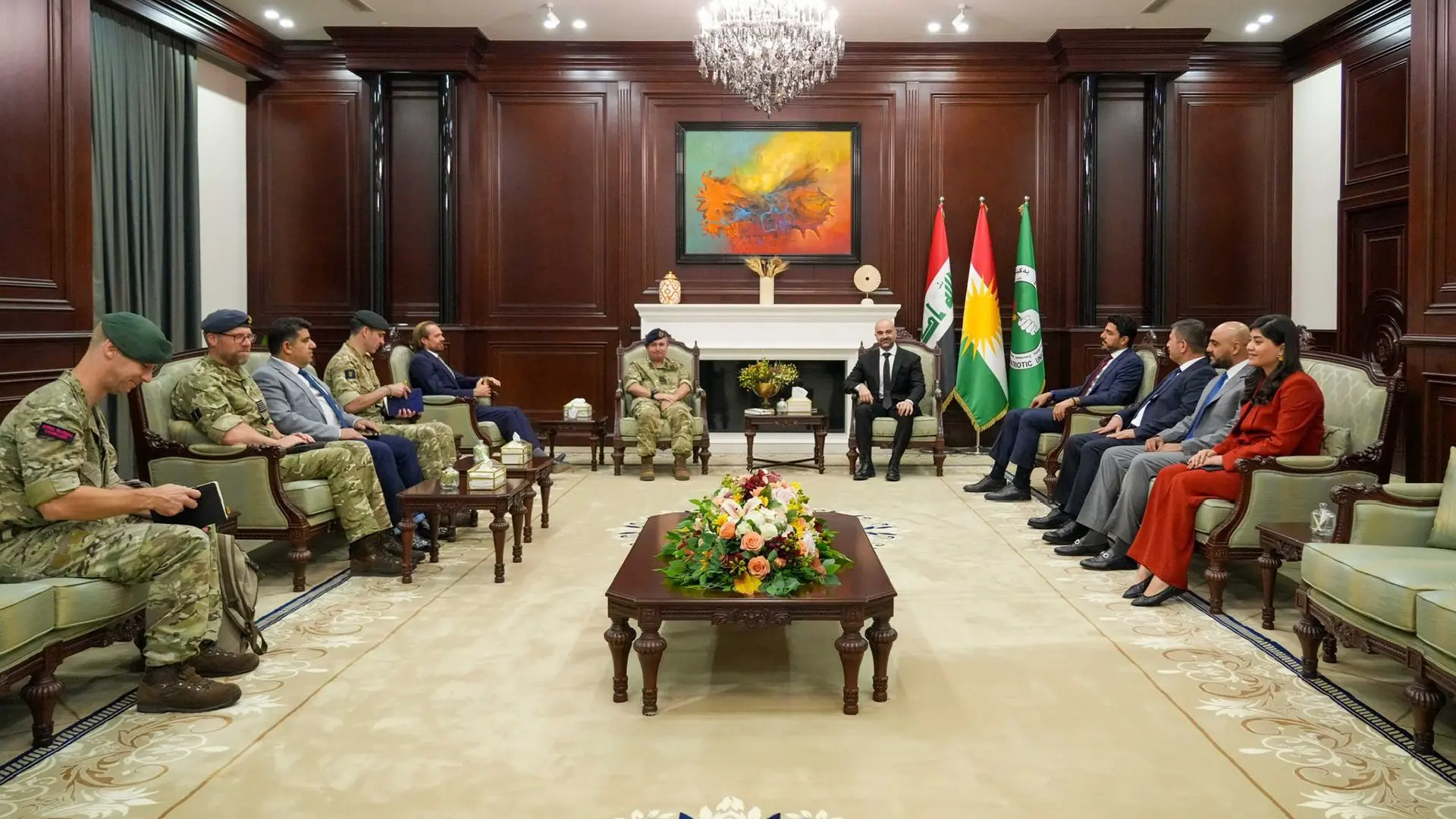
Bafel Jalal Talabani, President of the Patriotic Union of Kurdistan, received a high-level British delegation led by Deputy Admiral Edward Ahlgren in Erbil. The meeting addressed drone attacks on Kurdistan Region’s economic infrastructure, ongoing terrorism threats, and coordination between Peshmerga forces and international allies.
High-Level Diplomatic Engagement and Regional Cooperation
Bafel Jalal Talabani welcomed a distinguished British delegation at the Political Bureau headquarters in Erbil, led by Deputy Admiral Edward Ahlgren, the British Senior Defense Advisor for the Middle East and North Africa. This high-profile diplomatic meeting underscores the continued strategic partnership between the Kurdistan Region and the United Kingdom in addressing regional security challenges.
The meeting brought together key officials from both sides, including Darbaz Kosrat Rasul, Head of the Union’s Relations Bureau, Lieutenant General Ruken Bakhtiar Mohammed, Secretary General of the Peshmerga Ministry, and Andrew Bizley, British Consul in the Kurdistan Region. This diverse representation of political, military, and diplomatic leadership demonstrated the comprehensive nature of bilateral cooperation.
The discussions focused extensively on security developments affecting both the Kurdistan Region and Iraq, emphasizing the critical need for enhanced coordination between Peshmerga forces, the Iraqi Army, and allied international forces. Talabani stressed the importance of expanding these relationships to address evolving security challenges more effectively.
The meeting highlighted the ongoing strategic value of international partnerships in maintaining regional stability, particularly given the complex security environment facing Iraq and the broader Middle East region. Both sides expressed commitment to strengthening existing cooperation mechanisms while developing new approaches to emerging threats.
Terrorism Threats and Strategic Security Planning
Talabani expressed deep appreciation for the crucial role played by allied forces, particularly Britain, in confronting ISIS terrorists and supporting Peshmerga forces during critical periods of conflict. This acknowledgment reflects the significant military and strategic assistance provided by international partners during the fight against extremist organizations.
The PUK President emphasized that terrorism threats in Iraq and the broader region have not been eliminated, requiring new strategies and comprehensive plans to overcome ongoing security challenges. This assessment highlights the persistent nature of extremist threats and the need for sustained international cooperation in counterterrorism efforts.
The discussion addressed the evolving nature of terrorist tactics and the necessity for adaptive security responses. Talabani stressed that traditional approaches must be supplemented with innovative strategies that account for changing threat landscapes and emerging security challenges facing the region.
The meeting underscored the importance of intelligence sharing, joint training programs, and coordinated operations between Kurdish, Iraqi, and international forces. This multilateral approach recognizes that effective counterterrorism requires sustained cooperation across different military and security organizations.
Both sides agreed on the need for long-term strategic planning that addresses root causes of instability while maintaining operational readiness to respond to immediate threats. This comprehensive approach reflects lessons learned from previous conflicts and the recognition that sustainable security requires both military and political solutions.
Economic Infrastructure Protection and Syrian Developments
Talabani identified drone attacks and targeting of Kurdistan Region’s economic infrastructure as major threats requiring immediate prevention measures to protect the country’s stability and economic development. These attacks represent a significant escalation in threats against civilian and economic targets, potentially undermining the region’s recovery and growth prospects.
The PUK President emphasized that such attacks constitute serious security threats that must be stopped to prevent disruption of peace and stability in the region. This concern reflects the vulnerability of critical infrastructure to modern asymmetric warfare tactics, including drone technology that can be deployed by various hostile actors.
The discussion addressed the need for enhanced air defense capabilities and protective measures for vital economic installations, including oil facilities, power plants, and transportation networks. These infrastructure elements are essential for the Kurdistan Region’s economic stability and development prospects.
Syrian developments formed another crucial component of the meeting’s agenda, with Talabani emphasizing the importance of stability in Syria and protection of rights for all communities, particularly Kurdish populations. This focus reflects the interconnected nature of regional security challenges and the impact of Syrian instability on neighboring regions.
The meeting addressed the need for coordinated international efforts to support Syrian stability while ensuring protection of minority rights and preventing spillover effects that could destabilize the broader region. Both sides recognized the complexity of the Syrian situation and its potential impact on regional security dynamics.