
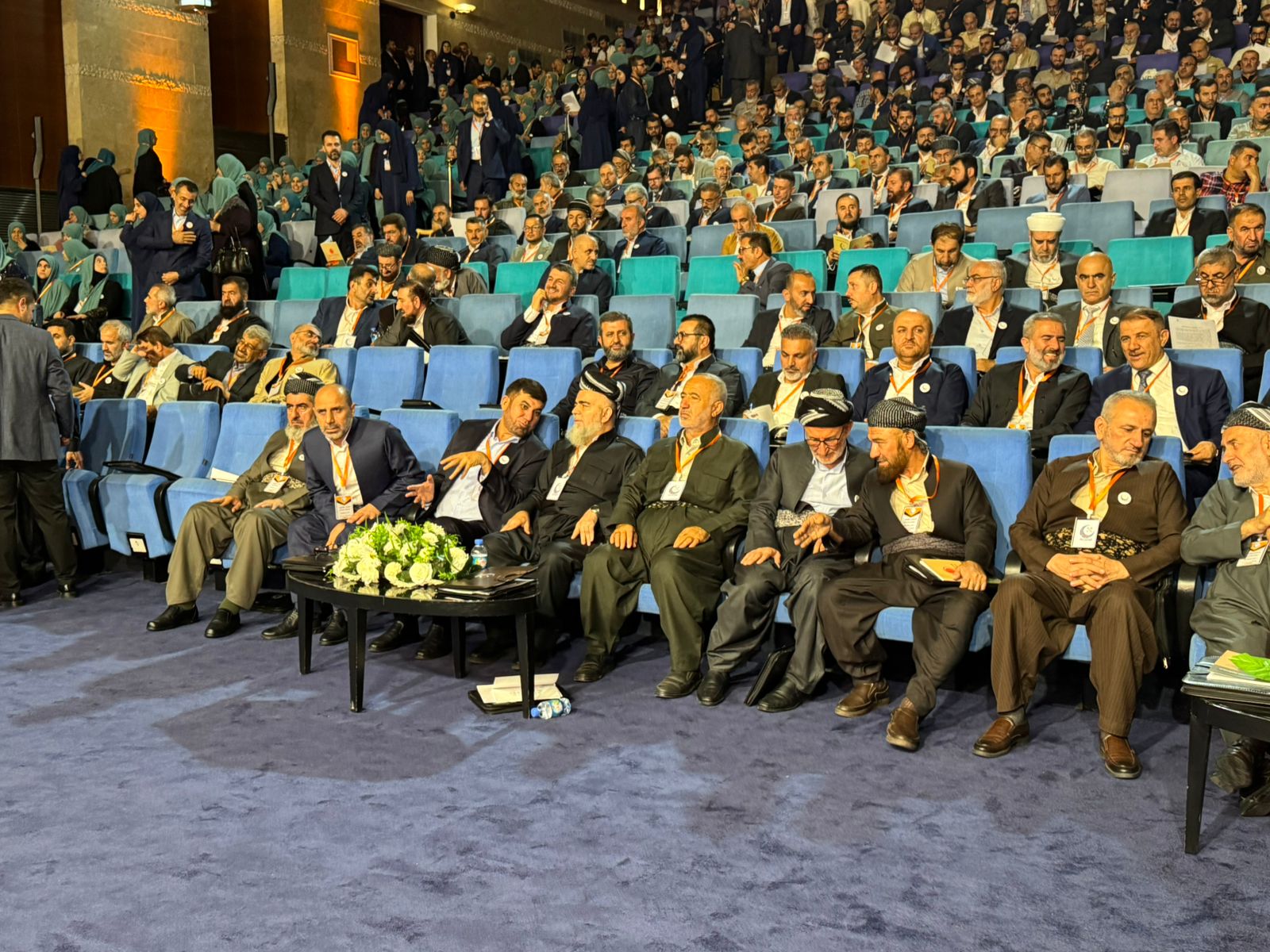
Kurdistan Justice Group (Komal) opened its fifth congress in Erbil with over 900 members participating in a two-day event to elect new leadership and potentially change the party’s name to “Islamic Society.”
Leadership Elections and Selection Process
The fifth congress of Kurdistan Justice Group (Komal) commenced today in Erbil with the participation of more than 900 members across two days of proceedings. Shwan Raber, a congress member, explained that the congress will elect a president and leadership council, followed by the selection of a new political bureau by the leadership council.
The voting process will vary depending on the number of candidates. If only one candidate runs for congress presidency, voting will be conducted openly and transparently. However, if multiple candidates compete, the voting process will be conducted through secret ballot to ensure fair selection.
According to Raber, approximately 910 members have voting rights in this congress, with nearly 180 of them being women. The democratic representation reflects the party’s commitment to inclusive participation across gender lines.
Organizational Changes and Restructuring
Significant organizational changes are planned during this congress. Abbas Mohammed, spokesperson for the fifth congress, previously announced that preparations for this congress began in April, focusing on internal regulations and leadership restructuring.
The leadership council membership will be reduced from 35 to 29 members, streamlining the party’s decision-making structure. The Independent High Electoral Commission will oversee the election proceedings to ensure transparency and legitimacy.
Approximately 80 individuals have registered as candidates for the leadership council positions, indicating strong internal competition and engagement within the party ranks. This democratic participation demonstrates the party’s commitment to internal democracy and competitive elections.
Potential Name Change and Identity Discussion
One of the most significant agenda items involves a potential name change from “Kurdistan Justice Group (Komal)” to “Islamic Society.” This proposal has been included in the internal regulations draft, presenting congress delegates with two options: maintaining the current name or adopting the new designation.
Shwan Raber confirmed that the congress holds supreme authority within the party structure, and the name change decision will be resolved through majority vote. The debate reflects broader discussions about the party’s identity and positioning within Kurdistan’s political landscape.
The name change proposal represents a return to the party’s original identity, as it was initially established in 2001 as the Islamic Society of Kurdistan before changing its name during the fourth congress. This potential reversion suggests ongoing internal dialogue about the party’s fundamental character and public representation.
Leadership Continuity and Succession Questions
Current party president Ali Bapir’s future remains uncertain, as he has not formally declared his candidacy for reelection. Despite widespread member support for his continuation, Raber noted that Bapir has not officially submitted his name to the Supreme Preparatory Committee.
Historical context reveals that Bapir previously attempted to step back from party leadership, but senior leadership council members and party officials prevented his departure. Similar pressure is being applied for this congress, with party members expressing their desire for his continued leadership.
The succession question highlights the party’s reliance on Bapir’s leadership since its establishment. His potential departure would represent a significant transition for the organization that has operated under his guidance for over two decades.
Parliamentary Relations and Political Positioning
While not formally included in the congress agenda, the issue of boycotting Kurdistan Parliament may arise during discussions. Raber indicated that if members raise this topic during congress proceedings, it could be put to a vote, potentially affecting the party’s future parliamentary engagement strategy.
The party currently holds one seat in Iraq’s federal parliament and secured three seats in the most recent Kurdistan Parliament elections. However, the party announced its decision not to participate in the Kurdistan Parliament, maintaining its opposition stance.
This parliamentary boycott reflects the party’s broader political positioning and dissatisfaction with current governance arrangements. The congress may provide an opportunity to reassess this strategy and determine future political engagement approaches.
Historical Context and Future Direction
Kurdistan Justice Group (Komal) has held four previous congresses since its establishment, with the fourth congress occurring in February 2021. During that congress, Ali Bapir was reelected, and his position was elevated from Emir to President, reflecting organizational modernization.
The party’s evolution from Islamic Society of Kurdistan to Justice Group and potentially back to Islamic Society illustrates ongoing identity negotiations within Kurdish political Islam. These changes reflect broader debates about religious and secular political orientations in Kurdistan.
As the congress proceeds over the next two days, delegates will shape the party’s future direction, leadership structure, and public identity. The decisions made during this gathering will influence the party’s role in Kurdistan’s political landscape and its relationship with both regional and federal governance structures.