

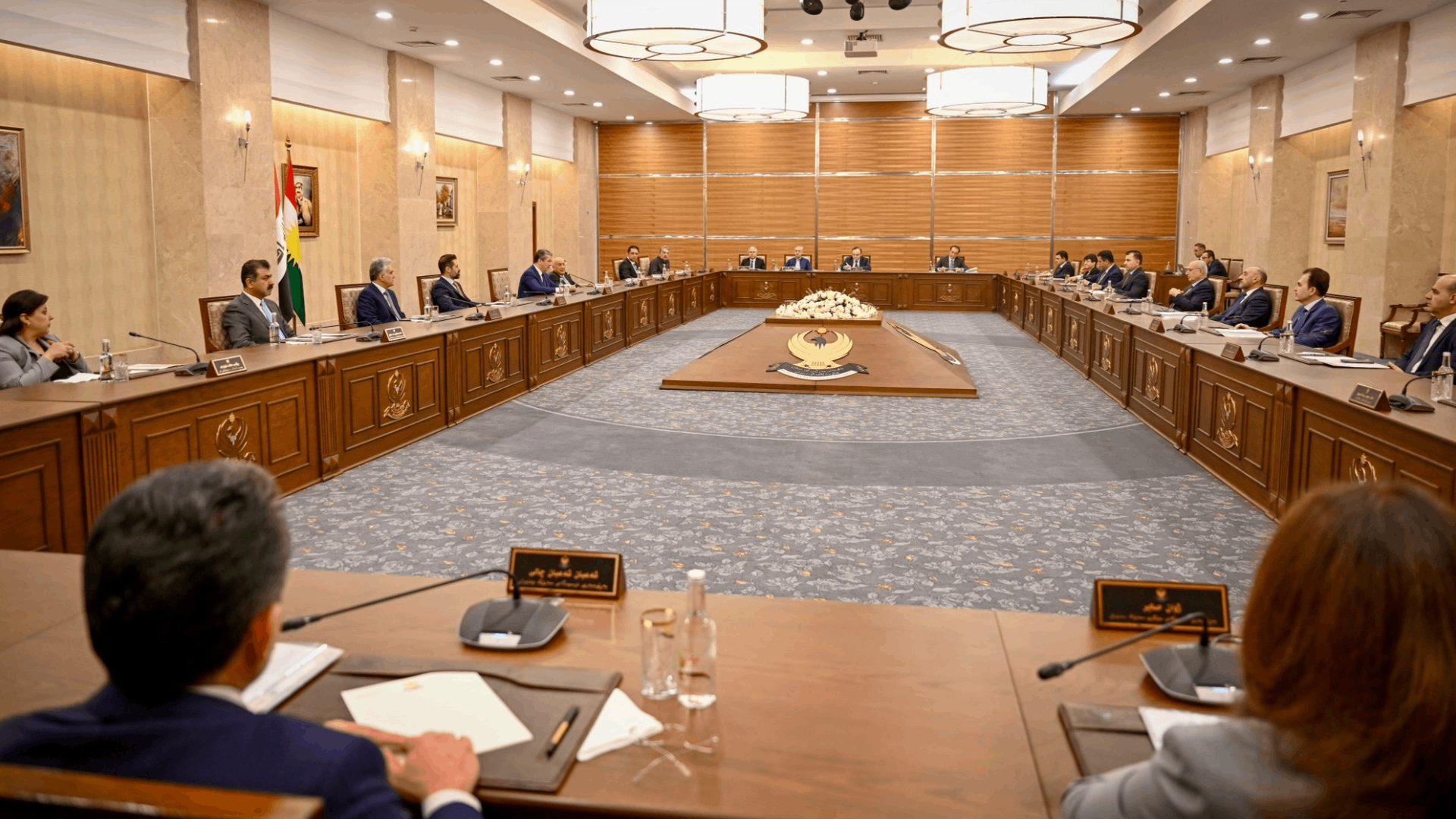
The Kurdistan Regional Government reached a breakthrough agreement with Baghdad on salary disbursements and financial entitlements, while strongly condemning recent terrorist attacks on the region’s oil infrastructure during Wednesday’s cabinet session.
Security Concerns and Infrastructure Protection
The Kurdistan Regional Government Council of Ministers opened Wednesday’s session with urgent condemnation of terrorist attacks targeting the region’s critical oil infrastructure. Prime Minister Masrour Barzani, who chaired the meeting alongside Deputy Prime Minister Qubad Talabani, emphasized the deliberate nature of these assaults on the Kurdistan Region’s economic backbone.
The attacks have resulted in substantial material losses to oil production capabilities, striking at the heart of the region’s energy sector. Cabinet members characterized these incidents as calculated attempts to undermine the Kurdistan Region’s economic stability and energy independence. The severity of the damage prompted immediate calls for federal intervention and protection measures.
The Council issued a direct appeal to Baghdad, demanding the federal government fulfill its constitutional obligations by preventing future attacks and safeguarding Kurdistan’s vital infrastructure. Ministers stressed the need for comprehensive legal action against perpetrators and enhanced security measures to protect the region’s economic assets.
Financial Breakthrough and Salary Resolution
The primary achievement of Wednesday’s session centered on resolving the prolonged financial impasse between Erbil and Baghdad. Prime Minister Barzani and Deputy Prime Minister Talabani delivered comprehensive briefings on their recent negotiations with Iraqi federal officials, outlining the parameters of the newly established understanding.
The agreement addresses the complex issue of public sector salaries that has plagued the Kurdistan Region for months. After extensive deliberations, the Council unanimously approved the implementation of terms that secure monthly salary disbursements and resolve outstanding financial obligations. The federal government committed to transferring necessary funds to cover both current salaries and accumulated arrears.
This financial arrangement represents a significant step toward normalizing the Kurdistan Region’s budgetary situation. The agreement establishes clear mechanisms for future salary payments while addressing the backlog of unpaid entitlements that affected thousands of public sector employees throughout the region.
Diplomatic Engagement and Political Coordination
The breakthrough emerged from intensive diplomatic efforts involving key political figures from both Erbil and Baghdad. The agreement followed detailed discussions that addressed the Kurdistan Region’s financial rights while clarifying corresponding responsibilities within the federal framework.
Deputy Prime Minister Talabani’s role in the negotiations proved crucial, as his engagement with federal counterparts helped bridge longstanding disagreements over budget allocations and salary responsibilities. The collaborative approach demonstrated both governments’ commitment to finding sustainable solutions to recurring financial disputes.
Notably, the agreement received additional support from recent diplomatic initiatives, including high-level meetings between Kurdish political leaders and federal officials. These encounters, particularly involving discussions with the Supreme Judicial Council and the Iraqi Prime Minister, created favorable conditions for the current understanding.
The Council’s decision to implement the agreement terms immediately reflects confidence in the arrangement’s viability. Ministers expressed optimism that this framework will prevent future salary crises while establishing predictable financial relationships between the Kurdistan Regional Government and the federal administration in Baghdad.
The successful resolution of these financial challenges, combined with calls for enhanced security cooperation, marks a pivotal moment in Kurdistan Region-Baghdad relations, potentially setting precedents for future collaborative governance approaches.