
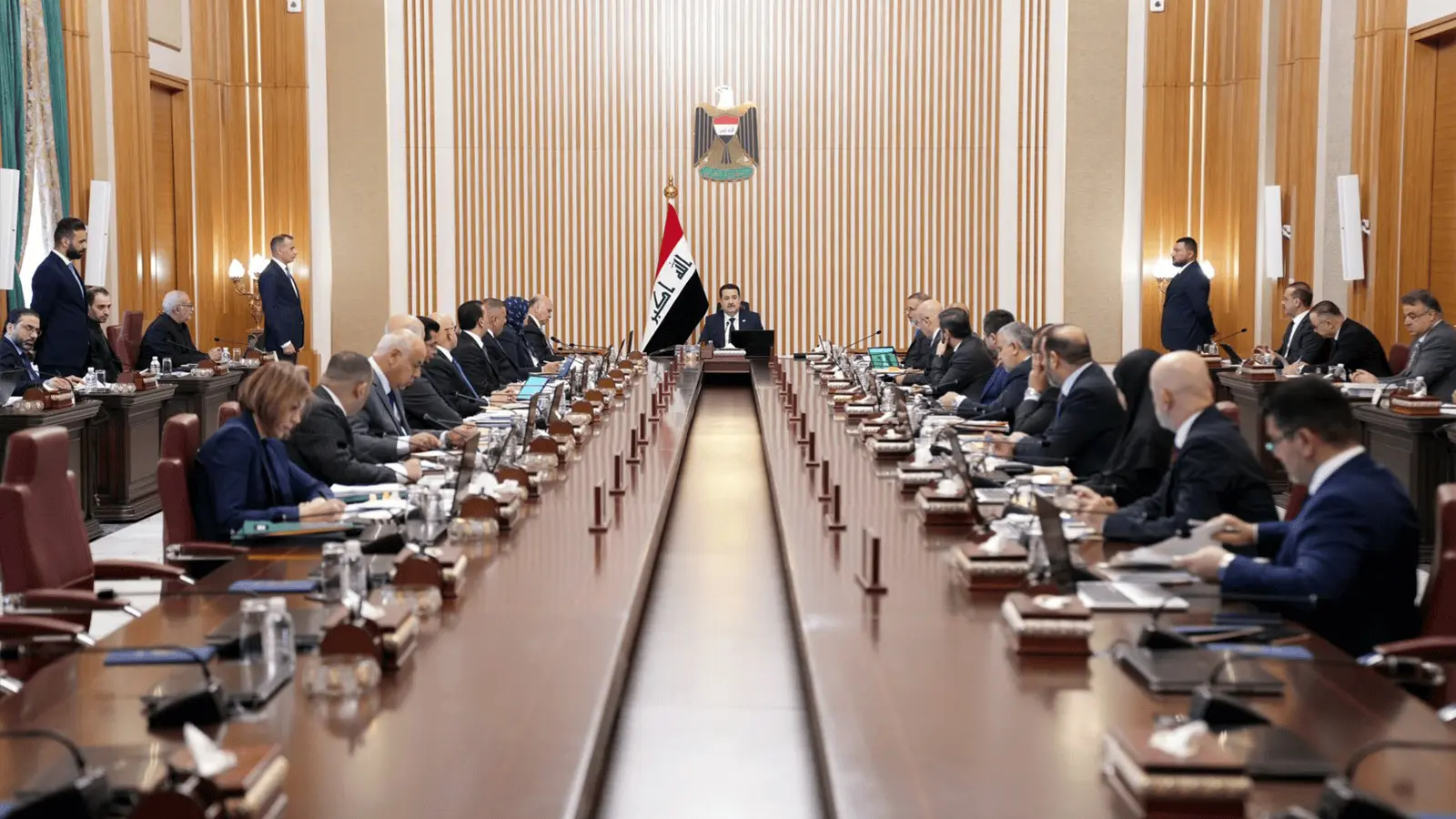
The Iraqi Cabinet concluded its session without approving salary payments for Kurdistan Region employees, despite the issue being on the agenda. Instead, a five-minister committee was established to negotiate with the Kurdistan Regional Government on resolving outstanding disputes over salaries, oil, and revenue sharing.
Cabinet Session Ends Without Salary Resolution
The Iraqi Cabinet meeting held on Tuesday, July 8, 2025, concluded without reaching a decision on salary payments for Kurdistan Region employees. Although the salary issue was added to the session agenda and discussed for an hour and a half, no formal resolution was approved for transferring funds to the region.
A correspondent in Baghdad reported that while the salary matter was extensively deliberated during the session, cabinet members ultimately decided against immediately authorizing payment transfers. This development comes despite ongoing negotiations between Baghdad and Erbil representatives who have been working to resolve the financial impasse.
The decision to postpone salary payments affects thousands of public sector workers in the Kurdistan Region who have been awaiting their compensation. A Kurdistan Regional Government delegation has been present in Baghdad since the previous day, actively pursuing discussions with federal officials to address the various disputes between the regional and federal governments.
Formation of High-Level Negotiation Committee
Rather than approving immediate salary transfers, the Iraqi Cabinet opted to establish a specialized committee comprising five ministers to engage in comprehensive negotiations with the Kurdistan Regional Government. This committee has been tasked with reviewing and harmonizing proposals from both the federal government and the Kurdistan Region regarding salary payments, oil revenue, and income distribution mechanisms.
The newly formed committee includes representatives from key ministries: Justice, Health, Finance, Planning, and Higher Education. According to parliamentary sources, this committee will work to reconcile the different proposals presented by both governments and develop a unified approach to resolving the ongoing financial disputes.
Karwan Yarwais, a member of the Iraqi Parliament from the Patriotic Union of Kurdistan faction, confirmed that the committee’s mandate extends beyond salary issues to encompass broader questions of oil revenue sharing and income distribution between the federal and regional governments. The committee is expected to present a consolidated proposal that addresses the concerns of both parties.
Committee Composition and Next Steps
The five-minister committee established by the Iraqi Cabinet consists of Mohammad Tamim, Deputy Prime Minister and Minister of Planning; Bangin Rekani, Minister of Reconstruction and Housing; Khalid Shwani, Minister of Justice; Salih Hasnawi, Minister of Health; and Naeem Aboudi, Minister of Higher Education and Scientific Research.
Notably, two committee members have direct ties to major Kurdish political parties: Bangin Rekani represents the Kurdistan Democratic Party, while Khalid Shwani is affiliated with the Patriotic Union of Kurdistan. This composition suggests an attempt to ensure Kurdish representation in the negotiation process.
The committee is scheduled to hold its first meeting at 12:00 PM on Wednesday, with a mandate to prepare its recommendations within 24 hours. Following the completion of their deliberations, an extraordinary Cabinet session will be convened to make final decisions on oil and salary issues affecting the Kurdistan Region.
Current information indicates that the committee will conduct evening meetings with Kurdistan Region representatives and Kurdish officials in Baghdad at the residence of Foreign Minister Fuad Hussein. These informal discussions are expected to facilitate the negotiation process and help bridge the gap between federal and regional positions.
Ongoing Financial Crisis
The salary dispute represents a significant challenge for Kurdistan Region employees who have not received their salaries for May and June 2025. This financial crisis has created considerable hardship for public sector workers and their families, while also straining the relationship between the regional and federal governments.
Despite multiple rounds of negotiations between Kurdistan Region delegations and Iraqi officials in Baghdad, no formal agreement has been reached to date. The establishment of the ministerial committee represents a new approach to resolving these longstanding issues through structured dialogue and compromise.
Finance Minister Taif Sami expressed concerns during the Cabinet session about the current mechanism for salary payments, indicating that the federal government requires modifications to the existing arrangements before authorizing fund transfers. These concerns appear to center on transparency and accountability measures for salary distribution.
The committee’s work will focus on developing a comprehensive framework that addresses not only immediate salary payments but also establishes sustainable mechanisms for future financial cooperation between Baghdad and Erbil. This includes reviewing oil export arrangements, revenue sharing formulas, and budget allocation procedures that have been sources of ongoing disagreement.
The resolution of this crisis will require careful balancing of federal oversight requirements with regional autonomy considerations, as both governments seek to protect their respective interests while ensuring that public sector employees receive their due compensation in a timely manner.