

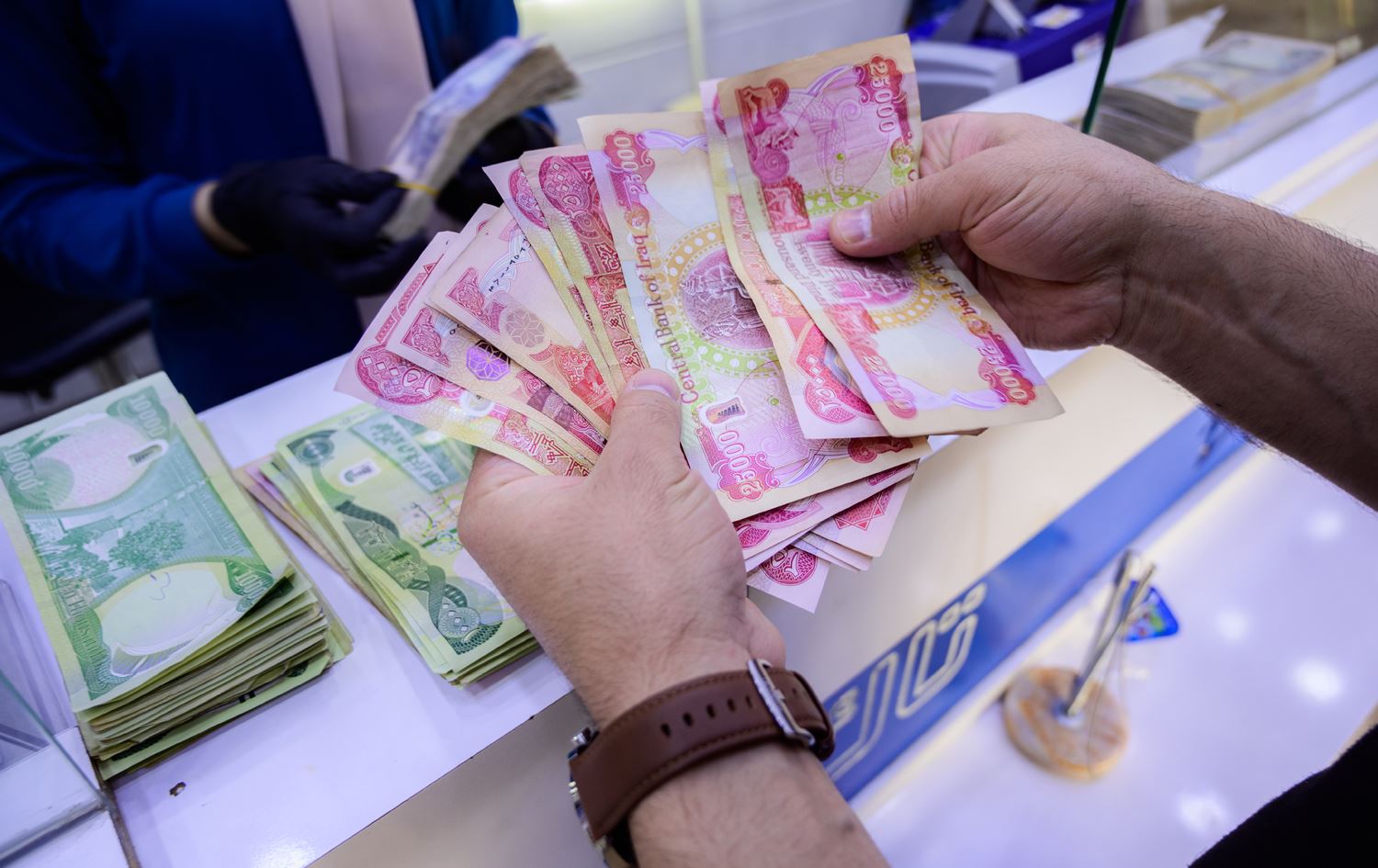
Iraq has been facing a cash liquidity crisis for several months, forcing the government to withdraw more than 3 trillion dinars from company tax deposits to secure salaries for public employees for April and coming months. This crisis results from the single-source income dependency in Iraq’s economy, as 90-95% of Iraq’s general budget relies on revenue from oil sales. Currently, oil prices in global markets are declining, with Iraqi oil selling below $70 per barrel.
On another front, there are additional causes. According to Mazhar Muhammad Salih, the financial advisor to Iraq’s Prime Minister, 85% of Iraqi currency is no longer in circulation due to Iraqis’ preference for keeping money at home rather than depositing it in banks, as they lack trust in the banking system.
Furthermore, due to U.S. sanctions on Iraqi banks for violating dollar transfer regulations and channeling funds to Iranian entities, many citizens have withdrawn their savings from banks fearing their money might be seized.
In response, the Parliamentary Finance Committee has pointed to the impact of U.S. sanctions on banks regarding the shortage of money and economic activity in Iraq.
Iraq primarily depends on the oil sector, which constitutes more than 95% of the country’s total hard currency (dollar) income. Oil represents 99% of the country’s exports.
Nearly 70% of Iraq’s operational budget is allocated for public employee salaries, numbering over 3 million people. According to parliamentary estimates, 60 trillion dinars have been allocated for this purpose.
Meanwhile, Baghdad has not yet sent April’s salary payments for Kurdistan Region employees, which amounts to approximately 950 billion to 1 trillion dinars monthly. In the budget, Kurdistan Region’s share is set at 12.67%.
Consumption expenditure in Iraq is high and has exceeded global standard limits. Therefore, it is predicted that in a new financial crisis that Iraq might face, the government may resort to increasing taxes in the next phase as part of efforts to increase revenue, especially after the International Monetary Fund advised Iraq to reduce its operational budget. However, it appears that political factors and the approaching parliamentary elections at the end of 2025 may cause the Iraqi government’s component parties to avoid this IMF recommendation.
The continuation of this cash liquidity crisis will certainly halt domestic economic activity, as Iraq relies on imports for 80-90% of its domestic consumption. This directly impacts citizens and commercial activity, creating a burden on salary earners and employees.
The increase in the Iraqi Central Bank’s currency (dinar) in January 2025 to 6 billion notes worth 100.3 trillion dinars, compared to 5.7 billion notes worth 78.2 trillion dinars in 2022, reflects the growing need for cash in an economy that almost entirely depends on physical currency.
This 4.7% increase indicates rising financial pressure due to budget deficits and government expenditures, but it also increases inflation fears amid slowing economic growth. The 50,000 dinar note saw the highest growth at 167%, reflecting citizens’ preference for larger denominations to facilitate daily transactions in light of rising prices.
The 22% decrease in printing 5,000 dinar notes and 10% decrease in 10,000 dinar notes indicates reduced reliance on smaller denominations, possibly reflecting the declining purchasing power of the dinar.
The 25,000 dinar note still dominates, accounting for 32% of notes in circulation, emphasizing the continued need for mid-range denominations for daily transactions. This distribution reveals the challenges of managing currency volume in Iraq’s economy, which has weak confidence in the banking system. Data indicates that 90% of money remains outside of banks!
The continuation of this cash shortage crisis in government reveals a structural currency crisis, as Iraq, despite increasing currency volume, suffers from an actual shortage of real money. Dependence on oil, with prices per barrel expected to be lower in 2025, aggravates this crisis, as government expenditure exceeds income, leading to domestic debt, in addition to the existing deficit in Iraq’s general budget.
The lack of effective banking reforms remains a major obstacle, as low confidence in banks hinders efforts to integrate money into the financial system, with wealthy individuals and citizens keeping their money at home. Iraq needs bold policies to diversify its economy and enhance banking confidence to avoid a deeper cash flow crisis.