

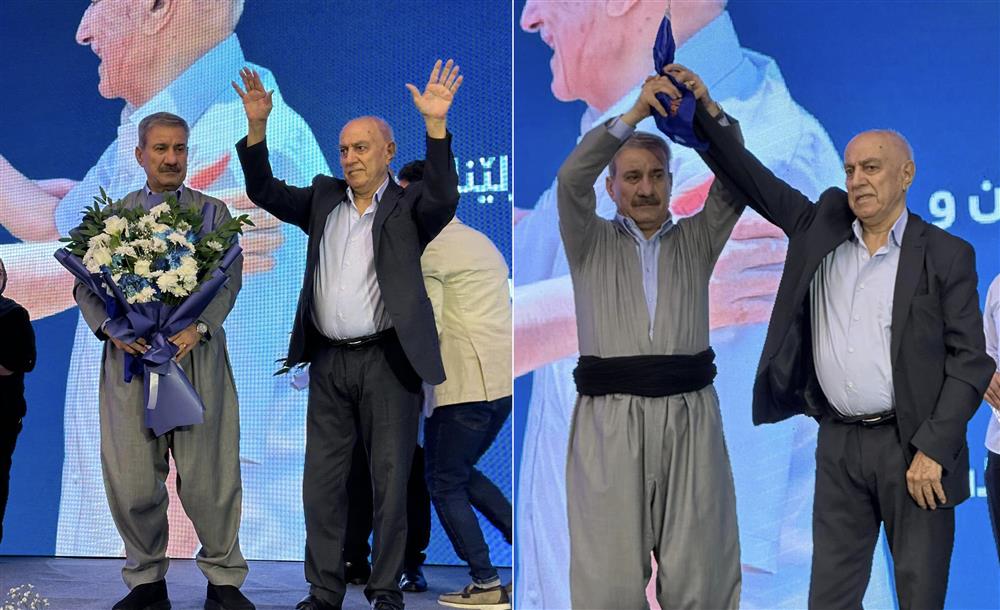
The Change Movement (Gorran) recently appointed a new leader, Dana Ahmed Majid, amid significant internal turmoil and opposition from factions within the party. This leadership change highlights ongoing challenges as Gorran prepares for impending parliamentary elections, raising critical questions about the party’s future direction and relevance in Kurdish politics.
Leadership Transition and Internal Divisions
On Saturday, the Change Movement (Gorran) conducted a leadership handover from former general coordinator Omar Sayyid Ali to Dana Ahmed Majid in a ceremony held in a public park in Sulaimani. This venue choice was particularly noteworthy as it deviated from tradition, typically conducted at the party’s headquarters on Zargata Hill. The hill was closed by the sons of Gorran’s founder, Nawshirwan Mustafa, who cited dissatisfaction with Majid’s appointment as the reason for restricting access. They issued a statement indicating the closure would remain “indefinitely” to maintain order and safety.
This shift in leadership follows a tumultuous period for Gorran, marked by a significant schism within its ranks. The party’s national assembly issued a statement rejecting Majid’s appointment, asserting that the movement’s bylaws mandate that a leader must be elected, not appointed. They condemned the decision as a coup, arguing that it undermines the democratic principles the movement was founded upon. Dler Abdulkhaliq, the party spokesperson, articulated their stance, emphasizing loyalty to Gorran’s core values while condemning the closure of the headquarters, which he described as public property.
Historical Context and Decline of Popularity
Founded in 2009 by Nawshirwan Mustafa, Gorran emerged as a formidable political force in the Kurdistan Region of Iraq (KRI), positioning itself as an alternative to the established parties, namely the Kurdistan Democratic Party (KDP) and the Patriotic Union of Kurdistan (PUK). Its emphasis on reform and anti-corruption resonated with voters, enabling it to secure 25 seats in the regional parliament during its inaugural election in 2009. However, Gorran’s fortunes have waned significantly over the years, exacerbated by unpopular decisions and allegations of nepotism following Mustafa’s death.
The party’s descent can be traced to a series of controversial choices, including appointing Mustafa’s sons to key positions and forming alliances with the KDP and PUK, which many supporters perceived as a betrayal of Gorran’s foundational values. The culmination of these decisions led to a disheartening performance in the 2021 parliamentary elections, where Gorran failed to win a single seat. This electoral debacle prompted a complete resignation of its governing body, including the then-leader, Ali, signaling a critical moment of reckoning for the party.
New Leadership Amidst Speculation
Dana Ahmed Majid’s ascent to leadership represents a pivotal change for Gorran. A former high-ranking member of the PUK, Majid’s previous roles include serving as the governor of Sulaimani and heading the city’s security forces. His return to the Kurdistan Region after over a decade away coincides with the party’s search for new direction and viability ahead of the upcoming parliamentary elections.
On September 19, Ali signed a power of attorney granting Majid comprehensive administrative and financial authority, with certain restrictions. Although the Iraqi High Election Commission (HEC) confirmed Majid’s position as Gorran’s secretary general, his official ratification depends on an upcoming vote by the Gorran National Council, underscoring the critical nature of internal party dynamics.
The National Council had initially slated the vote for November 9, 2024, but it has since been rescheduled to September 21, just before the parliamentary elections. This vote is pivotal as it will shape Majid’s involvement in the elections and potentially dictate the party’s future trajectory. Speculation is rife regarding Gorran’s potential decision to opt out of the sixth round of parliamentary elections entirely, driven by a desire to regroup and strategize in light of past electoral failures.
Internal Challenges and the Road Ahead
As Gorran navigates its internal challenges, it also faces significant external pressures. Recently, Dilshad Omar, the director general of education in Sulaimani, resigned in protest over controversial administrative decisions tied to land registration linked to the Sulaimaniya Agricultural High School. This resignation further tarnished the party’s reputation among its supporters, highlighting ongoing internal disagreements and dissatisfaction with leadership decisions.
In the lead-up to the crucial leadership elections scheduled for September 5 and 7, 2024, Gorran’s ability to address declining popularity and internal divisions will be under scrutiny. Nominations for key positions will be accepted from August 27 until September 2, presenting an opportunity for younger members to advocate for reforms and new directions for the movement. The influence of Mustafa’s family, which continues to exert considerable control over Gorran’s assets, will also play a critical role in shaping the party’s future.
The upcoming elections are seen as a vital opportunity for Gorran to redefine its identity and re-engage with the electorate, particularly in light of the criticisms it has faced for becoming akin to the parties it originally opposed. Established as an alternative political force, Gorran’s internal reorganization and strategic decisions will be critical to its survival and relevance in Kurdish politics.
The Gorran Movement’s Future in Kurdish Politics
As Gorran moves forward, the implications of its leadership transition and electoral strategies will be crucial not only for the party itself but for the broader landscape of Kurdish politics. The alliance with the PUK for the upcoming elections represents a strategic maneuver to strengthen their position against the KDP, although historical tensions between the two parties could complicate this partnership.
With the political climate shifting, particularly as the KDP prepares to field candidates independently in multiple governorates, Gorran’s effectiveness in navigating these dynamics will determine its fate in the upcoming elections. The stakes are high; a failure to regain voter trust could further diminish its standing in the KRI, potentially relegating it to a marginal role in Kurdish politics.
The foundation laid by Nawshirwan Mustafa for Gorran as a voice for reform and anti-corruption must be rekindled if the movement is to reclaim its place in the political arena. The upcoming leadership elections will not only set the course for Gorran’s immediate future but could also signal a turning point in its long-term viability as a political entity within the increasingly complex landscape of the KRI.
Change Movement stands at a crucial juncture. The new leadership under Dana Ahmed Majid may bring fresh perspectives, but the internal strife and external pressures present significant challenges. The decisions made in the coming weeks will be pivotal in shaping Gorran’s identity and strategy, potentially allowing it to rise from its current state of disarray and re-establish itself as a vital force in Kurdish politics. The party’s legacy, once characterized by reform and opposition, faces the test of time as it navigates these transformative changes and seeks to regain the confidence of its constituents.