

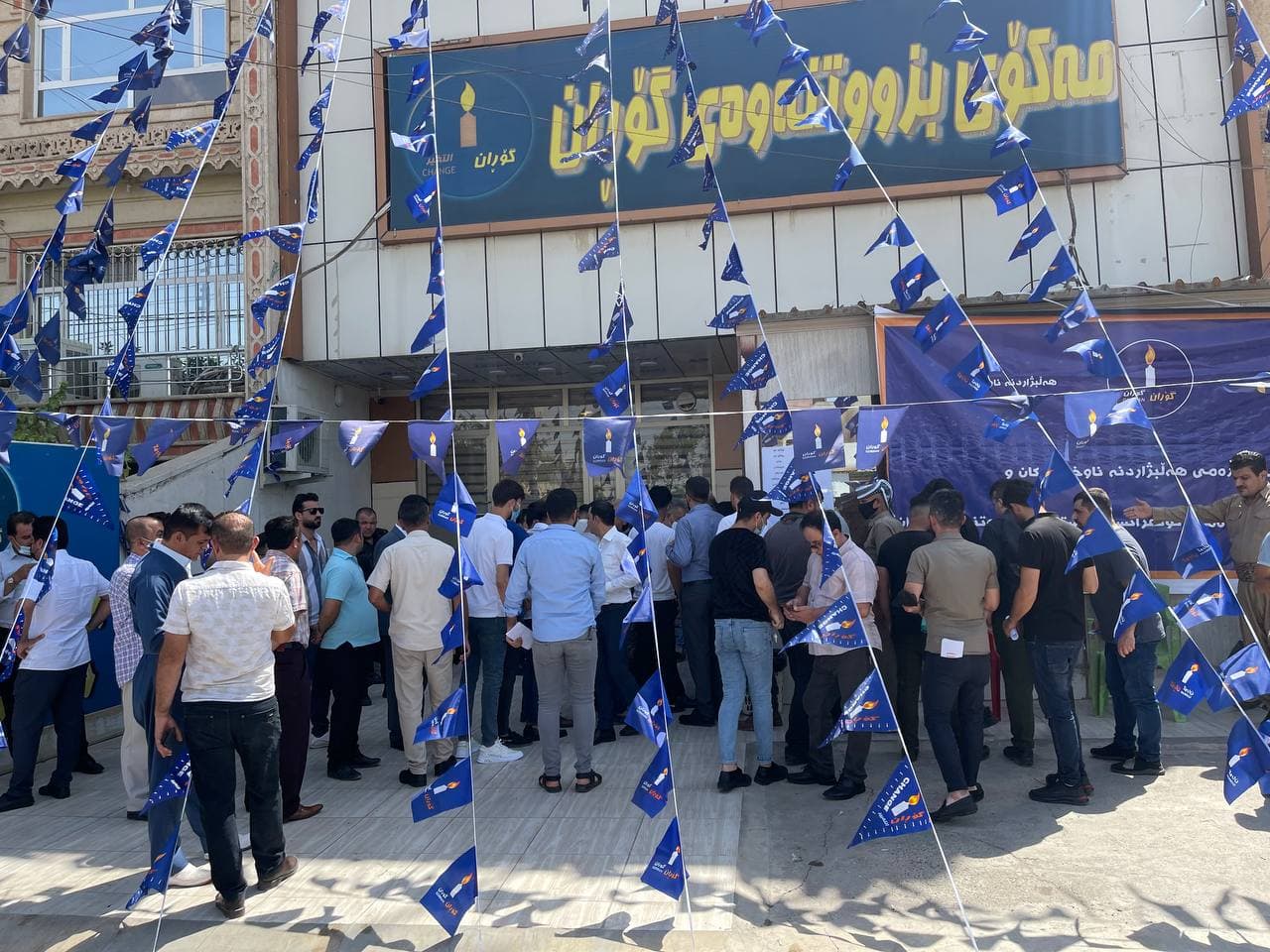
The Gorran Movement is gearing up for significant internal changes next month, with plans to elect a new secretary general and potentially alter its participation in the upcoming parliamentary elections. This move comes in response to recent political challenges and a need for internal restructuring. Will the elections scheduled for early September play a crucial role in determining the movement’s future direction and leadership?
Upcoming Leadership Elections
The Gorran Movement is set to elect a new secretary general on September 8 or 9, 2024. Dana Ahmad Majid, the former governor of Sulaimaniya, is considered a leading candidate for this role. According to a source within the movement, the National Council of Gorran will make this critical decision during its upcoming session. This election is part of a broader effort to revamp the movement’s leadership and strategic approach.
Potential Shift in Political Strategy
Amidst these leadership changes, there is speculation that the Gorran Movement may opt out of participating in the sixth round of parliamentary elections. The source indicated that the decision to potentially withdraw is driven by a desire to reorganize and address internal divisions. This could mark a significant shift in the movement’s political strategy, reflecting broader concerns about its effectiveness and public support.
The Gorran Movement has faced challenges in recent elections, notably failing to secure any seats in the 2021 parliamentary elections despite forming an alliance with the Kurdistan Patriotic Union (PUK). This poor performance has led to a critical reevaluation of its political approach and participation in future electoral contests.
Internal Restructuring and Key Appointments
In recent developments, the Gorran Movement has made temporary changes in its leadership roles. Dilshad Omar, the director general of education in Sulaimaniya, resigned in protest against the registration of land related to Sulaimaniya Agricultural High School. His resignation has been viewed as a stance against certain administrative decisions, impacting the movement’s perception among its supporters.
Following Omar’s resignation, Tanya Osman has been appointed as the interim director general of education in Sulaimaniya. Osman, previously serving as an advisor to the Ministry of Education for the Gorran Movement, will hold the position temporarily until a more permanent solution is found. The movement’s internal sources suggest that Mahabad Mustafa, the director of education in Dukan, may be nominated officially for the role in the future.
The Gorran Movement’s recent leadership changes and strategic decisions highlight the ongoing challenges it faces. These include internal disagreements and a need for realignment with its core values and public expectations. As the movement approaches its leadership elections, it is expected to address these issues and potentially introduce new leadership that aligns with the evolving political landscape.
Electoral Process and Future Prospects
The Gorran Movement’s upcoming elections for its General Administrative Committee, General Coordinator, and Oversight Board are scheduled for September 5 and 7, 2024. Nominations for these positions will open on August 27 and close on September 2, 2024. These elections are seen as a critical opportunity for the movement to address its declining popularity and internal divisions.
Sources close to the movement indicate that the elections will be particularly significant, as current General Coordinator Omar Said Ali faces potential internal challenges. There is growing interest from younger members advocating for reforms and a fresh direction for the movement. The influence of Nawshirwan Mustafa’s family, the movement’s founder, is also expected to play a key role in shaping the outcome of the elections.
Founded in 2009 by Nawshirwan Mustafa after his departure from the Patriotic Union of Kurdistan (PUK), the Gorran Movement has been a prominent political force in the Kurdistan Region of Iraq. It gained notable success in the 2013 Kurdistan Parliament elections, surpassing the PUK and securing the presidency of the Kurdistan Region Parliament. Despite its previous successes, the movement’s recent performance in elections has prompted a reevaluation of its strategies and leadership.
As the Gorran Movement prepares for these pivotal elections and potential changes in its political strategy, its future direction will be closely watched. The outcome of the leadership elections and the decisions made regarding participation in upcoming parliamentary contests will significantly impact the movement’s role in Kurdish politics and its ability to address current challenges effectively.